What is EDM?
Before we talk about the fluid, we need to understand the machine. EDM stands for Electrical Discharge Machining.
Imagine trying to cut a piece of super-hard steel. A saw might break. A drill might get dull. So, engineers use lightning.
EDM uses thousands of tiny electrical sparks to melt and vaporize the metal. It is like using a tiny, controlled lightning bolt to carve a shape.
But here is the catch: You cannot do this in the air. You must submerge the metal and the cutting tool in a special liquid. This liquid is called the Dielectric Fluid.
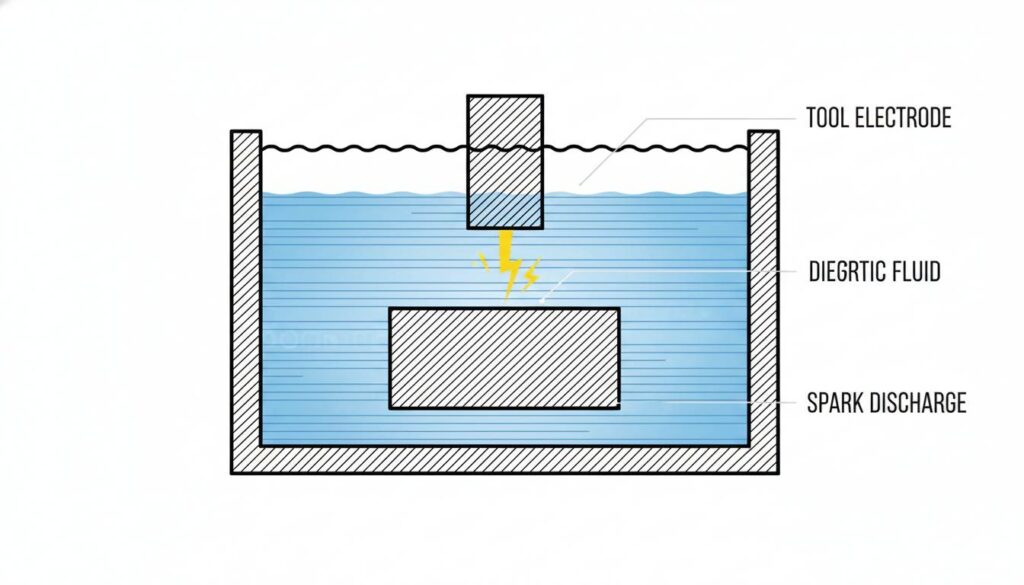
Technical Diagram: A simple 2D schematic of an EDM machine. Show a tank filled with blue liquid. Inside the liquid, show a rectangular metal workpiece and a tool electrode above it. A bright yellow spark connects the tool to the workpiece.
The Three Main Jobs of the Dielectric Fluids
This liquid is not just water from the tap. It has three very important jobs. If you take the fluid away, the machine stops working immediately.
1. The Insulator (The Gatekeeper)
The word “Dielectric” is a fancy science word. It basically means “Insulator.” An insulator is something that does not let electricity pass through it easily. Rubber is an insulator. Copper wire is a conductor.
In EDM, we want a powerful spark.
- If the gap between the tool and the metal was filled with air, the spark would be weak.
- If it was filled with salt water, the electricity would just flow quietly without a spark.
The dielectric fluid acts like a dam. It holds the electricity back. The electrical pressure (voltage) builds up and builds up. Finally, it gets so strong that it punches through the fluid. SNAP! You get a very hot, very powerful spark.
Why is this good?
It concentrates all the energy into one tiny point. This makes the cut very precise.
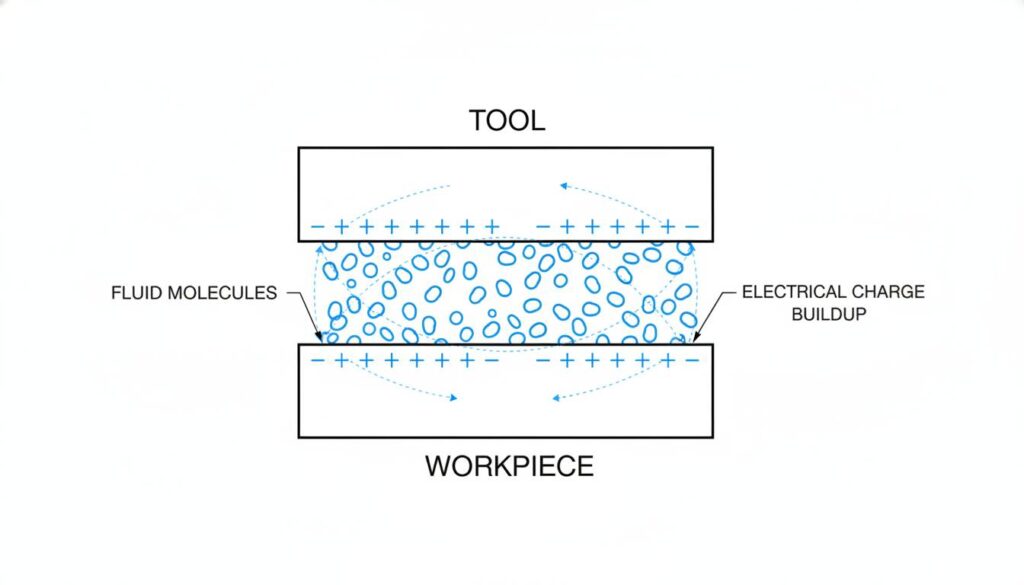
Technical Diagram: Close-up diagram of the gap between the tool and workpiece. Show the fluid molecules acting as a barrier. Show a buildup of electrical charge (plus signs on top, minus signs on bottom) waiting to burst through the fluid.
If the fluid let electricity flow through it easily (like a wire), would we ever get a big, powerful spark to cut the metal? Why or why not?
2. The Coolant (The Firefighter)
Sparks are hot. Extremely hot. An EDM spark can reach temperatures of 8,000°C to 12,000°C. That is hotter than the surface of the sun!
If we didn’t cool things down, two bad things would happen:
- The Workpiece: The metal we are trying to cut would melt into a shapeless blob.
- The Tool: The tool we are using to cut would melt away.
The dielectric fluid surrounds the spark. As soon as the spark turns off (which happens thousands of times per second), the fluid rushes in. It absorbs the heat and cools the metal down instantly.
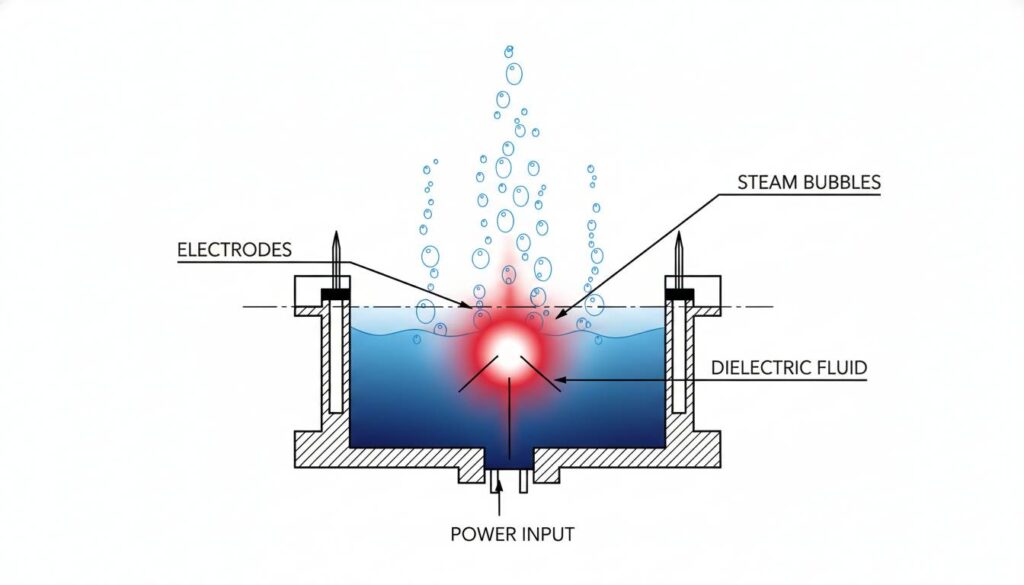
Technical Diagram: A thermal vision style illustration. Show the spark as a bright red/white hot center. Show the surrounding blue fluid absorbing the heat, with steam bubbles rising away from the spark zone.
Think about a blacksmith putting a hot horseshoe into a bucket of water. What happens to the temperature of the metal? What happens to the water?
3. The Cleaner (The Trash Collector)
When the spark hits the metal, it blasts a tiny piece of it away. This creates dust. In EDM, we call this dust chips or debris.
Imagine digging a hole in the sand. If you don’t move the sand out of the hole, the hole fills back up. You can’t dig any deeper.
The same happens in EDM. If the tiny metal chips stay in the gap:
- They can cause a short circuit (a bad connection).
- The spark will hit the floating chips instead of the solid metal.
The dielectric fluid flows constantly. It is pumped through the gap like a hose. It flushes the chips away from the cutting zone so the next spark has a clean spot to hit.
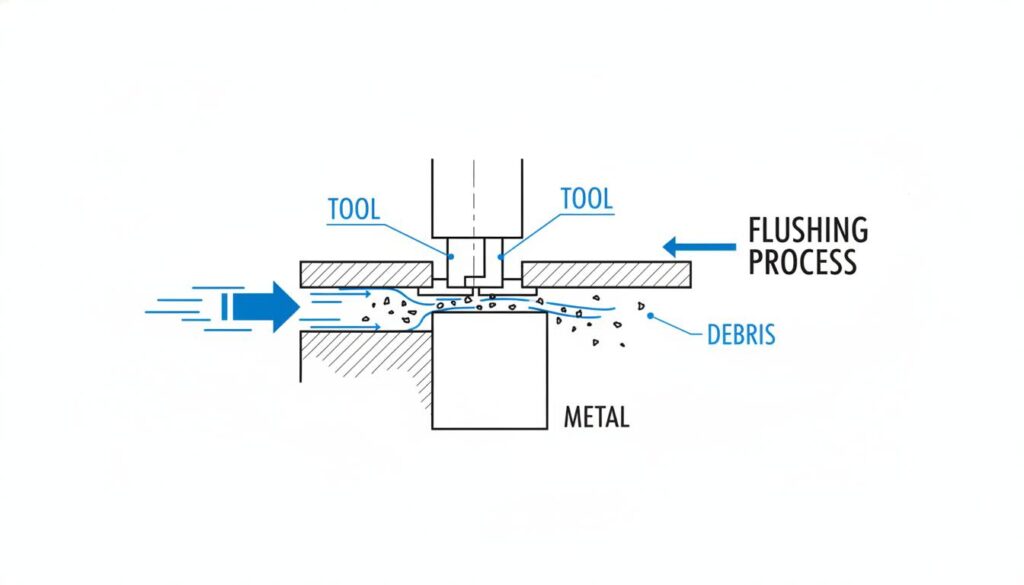
Technical Diagram: A cross-section view showing the “Flushing” process. Arrows show the fluid flowing rapidly through the gap between the tool and the metal. The fluid is carrying away small black specks (debris) out of the cutting zone.
If we stopped the flow of the fluid, the “trash” (metal chips) would pile up. How would that change the shape of the cut we are trying to make?
Types of Fluids Used
Engineers usually pick one of two fluids, depending on the machine.
Hydrocarbon Oil
This is usually a thin oil, almost like Kerosene.
- Used for: Die Sinking EDM (making molds).
- Pros: It creates very sharp sparks.
- Cons: It can catch fire if you aren’t careful!
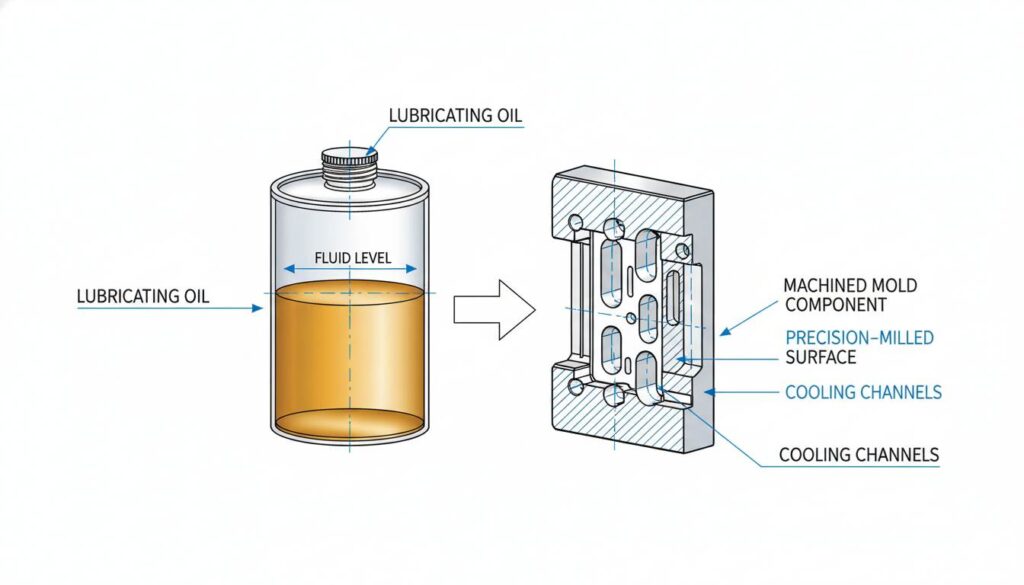
Technical Diagram: A photo-realistic illustration of a clear container filled with amber-colored oil. Next to it, a metal mold component that was machined using this oil.
Deionized Water
This is water that has had all the minerals (like salt and calcium) removed.
- Used for: Wire EDM (cutting shapes with a wire).
- Pros: It cools very well and flows fast. It doesn’t catch fire.
- Cons: If it gets dirty, it starts conducting electricity too easily.
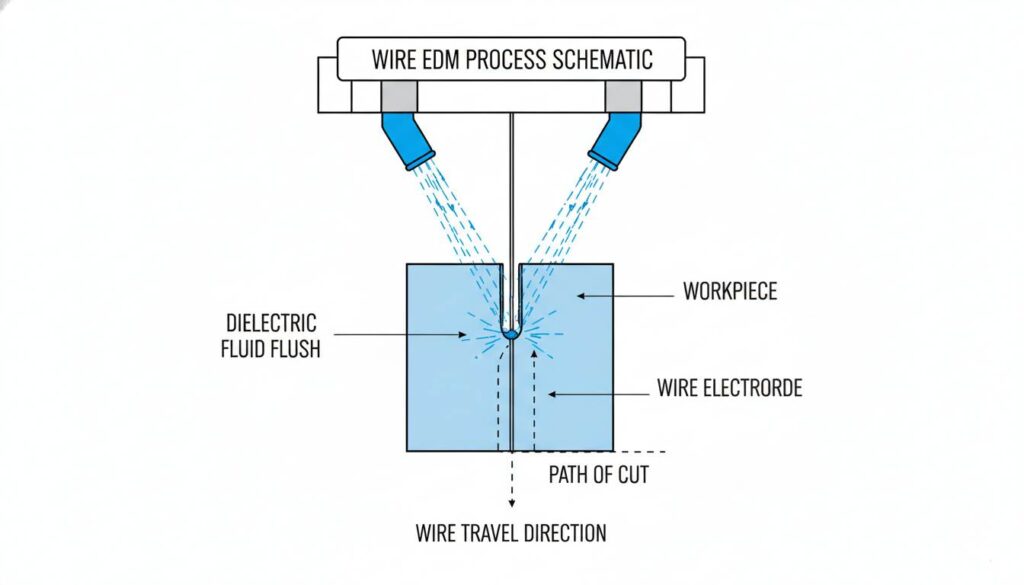
Technical Diagram: A schematic of a Wire EDM machine. Show a thin vertical wire cutting through a metal plate. Show clear water nozzles spraying high-pressure water directly at the wire.
Summary Checklist
To get full marks on your exam, remember these three words:
- Insulate: Stops the current until the spark is strong.
- Cool: Keeps the metal from melting into a blob.
- Flush: Washes away the metal dust.
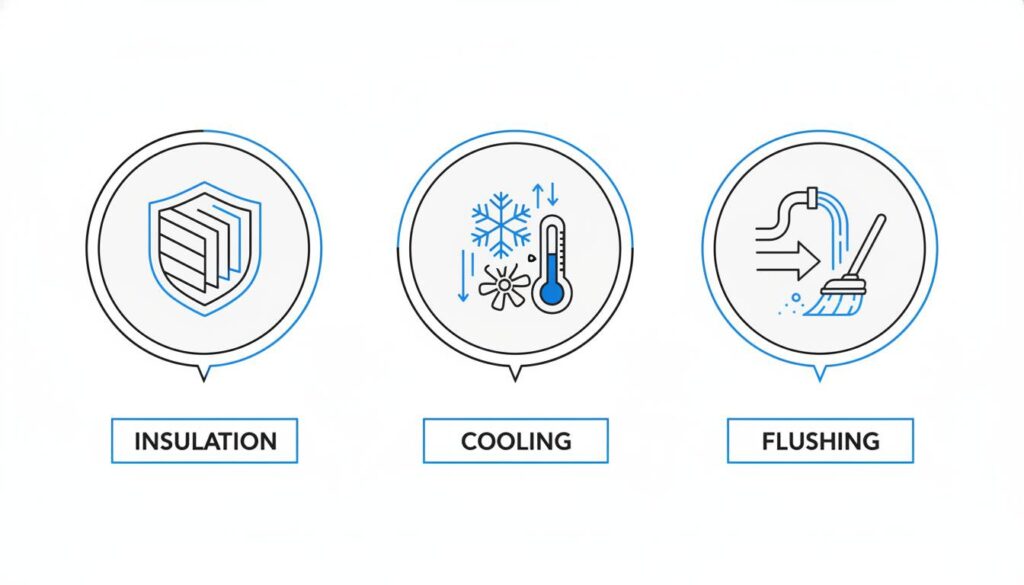
Technical Diagram: An infographic chart with three icons. Icon 1: A shield (Insulation). Icon 2: A snowflake or thermometer (Cooling). Icon 3: A broom or water hose (Flushing). Label each icon clearly.
