Table of Contents
- What Makes Extendable Robotic Arms Unique?
- Industrial & Manufacturing Extendable Robotic Arm Applications
- Space, Autonomous Systems, and Drone Applications
- Medical, Education, and Home Extendable Robot Arm Projects
- Extendable Robotic Arms vs. Other Robotic Solutions
Introduction
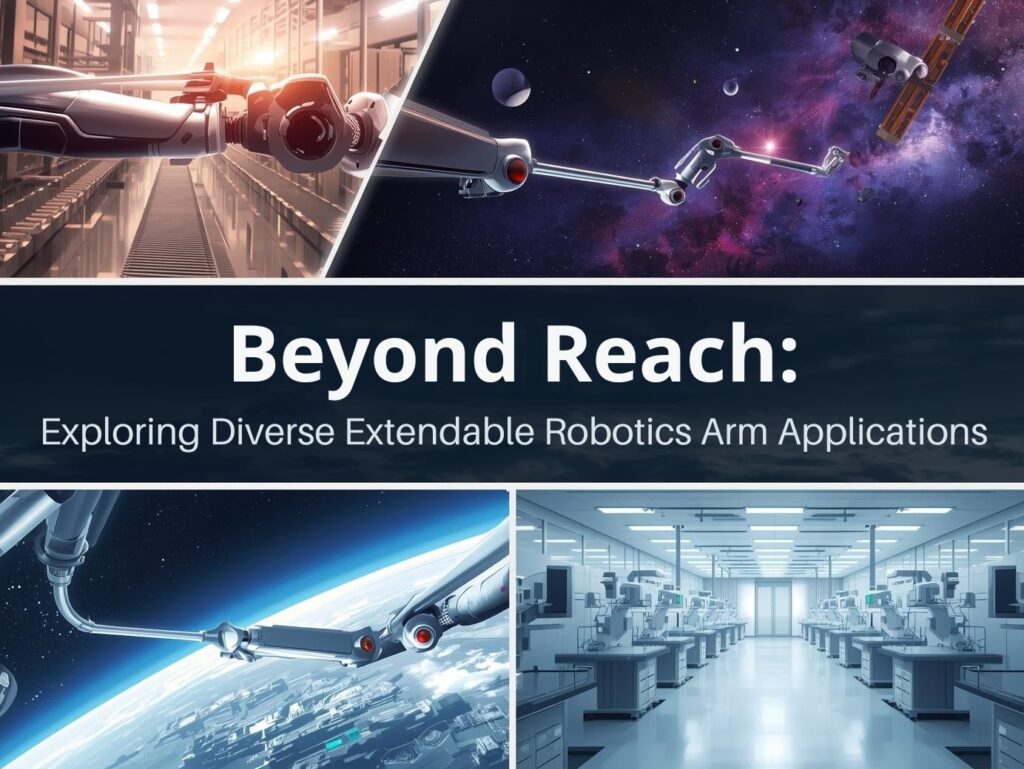
Extendable robotic arms are transforming industries by providing unparalleled access to challenging and hazardous environments. Their unique ability to reach further and operate with precision in confined or dangerous spaces makes them invaluable tools across numerous sectors. This post will delve into the wide array of extendable robotic arm applications, highlighting how they enhance safety, efficiency, and capability from industrial settings to the depths of space.
[amazon bestseller="Robotic Arm" items="2"]Key Takeaways
- Extendable robotic arms offer unparalleled reach and precision, revolutionizing access to challenging and hazardous environments.
- Their applications span diverse sectors, including industrial inspection, space exploration, advanced medical procedures, and educational robotics.
- Key advantages include enhanced safety for human operators, increased efficiency in complex tasks, and remarkable versatility in dynamic environments.
- Technological advancements in materials and control systems enable these arms to maintain precision over long extensions.
- From industrial automation to home assistance, these robots are enabling new capabilities and redefining human-robot interaction.
[amazon bestseller=”Robotic Arm” items=”2″]
What Makes Extendable Robotic Arms Unique?
Understanding the core mechanics of these innovative systems is key to appreciating their diverse uses. Unlike traditional fixed-reach robots, extendable robotic arms leverage specialized designs for dynamic length adjustment.
Defining “Extendable” in Robotics
The term “extendable” refers to a robotic arm’s capacity for variable reach, often achieved through telescopic mechanisms or linear actuators. These designs allow for dynamic length adjustment, providing a versatile robotic arm uses across many scenarios. Modular robotic arm applications further enhance this by allowing customization of reach and payload capacity. This enhanced dexterity and maneuverability are crucial for operating in confined or obstructed spaces, distinguishing them from their static counterparts.
Key Advantages Over Traditional Robots
Extendable robotic arms offer significant benefits, including access to hard-to-reach or visually obscured areas, such as inside machinery or pipelines. They vastly improve operator safety by keeping humans out of dangerous zones, a critical aspect for a robotic arm for hazardous environments. Their versatility allows them to adapt to dynamic or unpredictable environments, and they reduce the need for extensive scaffolding or access equipment, leading to considerable time and cost savings. These long reach robotic arm applications demonstrate their inherent value.
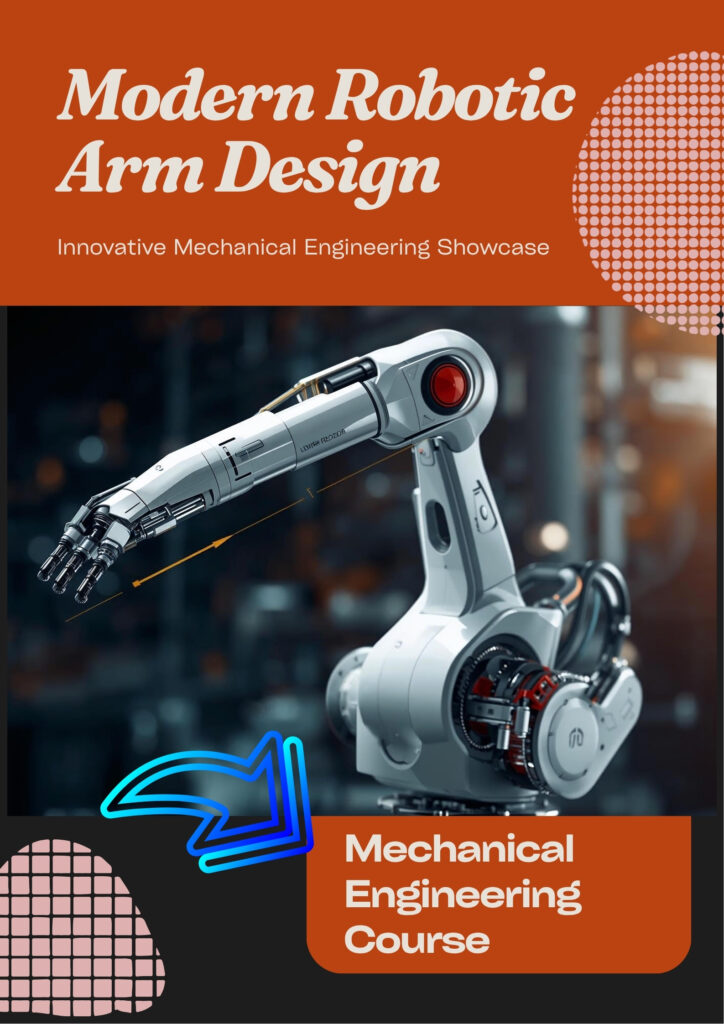
Industrial & Manufacturing Extendable Robotic Arm Applications
The industrial sector is a prime beneficiary of these advanced systems, with industrial extendable robotic arms revolutionizing numerous processes.
Inspection and Maintenance in Hazardous Environments
One of the most critical extendable robotic arm applications is in hazardous environment inspection and maintenance. This includes tasks in nuclear power plants (radiation exposure zones), chemical processing facilities (toxic fumes, extreme temperatures), and large infrastructure like bridges or wind turbines (high-altitude, enclosed spaces). Aerospace also utilizes them for aircraft inspection, such as examining engine internals or fuselage integrity, providing precise robotic arm for inspection capabilities.
Advanced Welding and Fabrication
These arms excel at reaching tight spots in complex assemblies, like automotive chassis or shipbuilding, enabling precision welding or cutting in large, intricate structures. This capability enhances manufacturing extendable robot arm efficiency and quality.
Material Handling and Logistics Robotic Arm Solutions
Extendable arms are vital for retrieving items from high shelves in automated warehouses or distribution centers. They also streamline loading and unloading cargo in challenging, enclosed spaces like shipping containers or aircraft holds, offering significant automation with extendable arms. A key application here is the extendable robotic arm for collaborative work, improving safety and efficiency alongside human operators.

Space, Autonomous Systems, and Drone Applications
Beyond Earth, extendable robotic arms are charting new frontiers, demonstrating advanced robotic arm applications.
Space Exploration Robotic Arm & Satellite Servicing
In space, these arms are fundamental for on-orbit servicing, assembly, and manufacturing (OSAM). This includes refueling and repairing satellites, assembling large structures like space telescopes, and capturing orbital debris. For planetary exploration, they are essential for reaching into caves, craters, or difficult geological formations on other planets, and for collecting samples from inaccessible or unstable terrain.
Extendable Robotic Arm for Autonomous Systems & Drones
The integration of an extendable robotic arm for drone platforms is expanding aerial capabilities, allowing for inspections, sampling, and sensor deployment in hard-to-reach structures like bridges or wind turbines. Ground-based autonomous systems also benefit, utilizing these arms for navigation and manipulation in unstructured environments, and for surveillance and reconnaissance. This remote operation robotic arm capability is transforming how we interact with distant and dangerous locations. For example, a specialized search and rescue robot arm can effectively navigate debris fields to locate survivors.

Medical, Education, and Home Extendable Robot Arm Projects
The versatility of extendable robotic arm technology extends into healthcare, learning, and personal use, showcasing flexible robotic arm use cases.
Medical Extendable Robotic Arm Applications
In healthcare, these arms are crucial for minimally invasive surgery, accessing deep anatomical sites with enhanced precision. They assist in complex procedures requiring precise instrument manipulation in small incisions, such as laparoscopic surgery or neurosurgery. They also aid in remote patient care, facilitating telemedicine applications for diagnosis or minor procedures in remote locations, and automated drug delivery within patient rooms.
Extendable Robot Arm for Education and Research
An extendable robot arm for education provides invaluable hands-on STEM learning opportunities for students, prototyping, and experimental setups. Universities use an extendable robot arm for research in AI, machine learning, and human-robot interaction. The availability of open-source designs encourages numerous extendable robot arm projects for hobbyists, making complex concepts tangible. [[Fundamentals of robotic arm design]] are often explored through such educational kits.
Extendable Robot Arm for Home Automation
For home automation, these arms can assist individuals with mobility challenges by fetching objects or operating switches. They integrate with smart home systems for various tasks, truly making the extendable robot arm for home automation a reality.

Extendable Robotic Arms vs. Other Robotic Solutions
| FeatureExtendable Robotic ArmGantry RobotArticulated Arm | |||
|---|---|---|---|
| Reach/Workspace | Dynamic, adaptable, long reach robotic arm applications | Fixed, large linear, structured | Moderate, spherical |
| Dexterity | High, precise in confined spaces | Low, primarily linear movements | High, human-like motion |
| Complexity | High (telescopic mechanisms, control) | Moderate (linear axes) | Moderate to High (multiple joints) |
| Ideal Use Cases | Inspection, hazardous environments, variable tasks | Large-scale pick-and-place, CNC machining | Assembly, welding, machine tending |
| Understanding the distinct advantages of extendable manipulators applications is crucial when selecting the right tool. While a gantry robot excels in large, structured linear movements, and articulated arms offer human-like dexterity in a spherical workspace, extendable arms provide unparalleled access to confined or distant areas. This comparison highlights why [[choosing the right robot for your project]] requires careful consideration of specific needs. The robotic arm dexterity applications are particularly noteworthy for delicate operations. |
Conclusion
Extendable robotic arms are more than just long-reaching tools; they are enablers of new capabilities, pushing the boundaries of what’s possible across various domains. From ensuring safety in hazardous industrial sites to pioneering breakthroughs in space and healthcare, their versatility is unmatched. As extendable robotic arm technology advances, we can expect to see even more innovative applications for these remarkable robots, continuing to redefine efficiency, precision, and human safety. The future of extendable robotics promises even greater integration into our daily lives and industries. [[Explore our range of robotic components and kits]] to start your next extendable robotic arm project today!
Frequently Asked Questions
How do extendable robotic arms maintain precision over long reaches?
They utilize advanced control algorithms, specialized lightweight yet rigid materials, and integrated feedback sensors (e.g., force-torque, vision systems) to compensate for deflection and vibrations, maintaining accuracy at full extension. This precision is vital for many extendable robotic arm applications.
What are the primary challenges in developing extendable robotic arms for extreme environments?
Key challenges include managing weight while ensuring structural rigidity, developing robust articulation mechanisms resistant to harsh conditions, ensuring reliable power delivery over extended lengths, and maintaining precise control and sensory feedback in challenging terrains or atmospheres for these extendable robotic arm applications.
Can an extendable robotic arm for drone applications perform complex tasks?
Yes, an extendable robotic arm for drone integration can perform complex tasks such as precision inspection, sampling, deploying sensors, and even light material handling, significantly expanding drone utility beyond simple flight or observation, making these critical extendable robotic arm applications.
Are extendable robotic arms beneficial for education and hobbyists?
Absolutely. An extendable robotic arm for education and hobbyists provides invaluable hands-on experience in robotics, programming, and engineering principles, making complex STEM concepts tangible and fostering practical skills for students and enthusiasts alike through diverse extendable robotic arm applications.
