Table of Contents
- Understanding Extendable Robotic Arm Technology and Capabilities
- Extendable Robotic Arm vs. Gantry Robot: Key Distinctions
- Industrial and Commercial Extendable Robotic Arm Applications
- Extendable Robotic Arms in Autonomous Systems and Drone Integration
- Education, Research, and Hobbyist Engagement with Extendable Robotic Arms
- Key Factors to Consider Before Buying
- Where to Buy Extendable Robotic Arms
- Installation, Training, and Support
Introduction

Looking to purchase an extendable robotic arm but unsure where to begin? This comprehensive guide will walk you through everything you need to know, from understanding key features and applications to comparing options and finding the best vendors. Get ready to make an informed decision and invest in the perfect extendable robotic arm for your needs.
Key Takeaways
- Extendable robotic arms offer enhanced reach and flexibility, crucial for confined or hazardous environments, distinguishing them from standard robotic arms.
- Key buying factors include reach, payload capacity, degrees of freedom, precision, end-effector options, control systems, environmental durability, and overall budget.
- Applications span industrial automation (inspection, welding, collaborative work), autonomous systems (drones, mobile robots), and educational/research settings.
- Sources to buy extendable robotic arm solutions include direct manufacturers, authorized distributors, online marketplaces, and the used equipment market.
- Successful implementation requires careful consideration of installation, comprehensive training, and robust post-purchase support and warranties.
Typical Extendable Robotic Arm System Cost Breakdown
1. System Cost Estimator
- End-Effector(s)
- Control System & Software
- Installation & Integration
- First Year Maintenance & Support
2. Payback Period Estimator
Understanding Extendable Robotic Arm Technology and Capabilities
Extendable robotic arms are revolutionizing various industries by offering unprecedented reach and flexibility in constrained or hazardous environments. This section delves into the foundational aspects of these versatile robotic solutions.
Defining Extendable Robotic Arms: Features and Advantages
An extendable robotic arm is a mechanical arm designed with telescopic or multi-jointed extension capabilities, significantly increasing its operational reach beyond that of a standard fixed-length arm. These arms are a specialized type of robotic manipulator, distinguished by their ability to navigate and operate in confined or distant spaces. Key components typically include multiple joints, powerful actuators for movement, versatile grippers or end-effectors, a precise control system, and a stable base.
The primary advantage of a long reach robotic arm or a telescopic robot arm lies in its enhanced accessibility and flexibility. They excel where traditional robots cannot reach, improving safety by keeping human operators out of dangerous zones and boosting efficiency by automating tasks in complex environments.
This formula represents the forward kinematics of an extendable robotic arm, where $\mathbf{P}_{\text{end}}$ is the position of the end-effector, $\mathbf{T}_{i}^{i+1}$ are the homogeneous transformation matrices between consecutive joints, and $\mathbf{P}_{\text{tool}}$ is the tool’s offset. This fundamental principle dictates the arm’s ability to reach and manipulate objects.
Extendable Robotic Arm vs. Gantry Robot: Key Distinctions
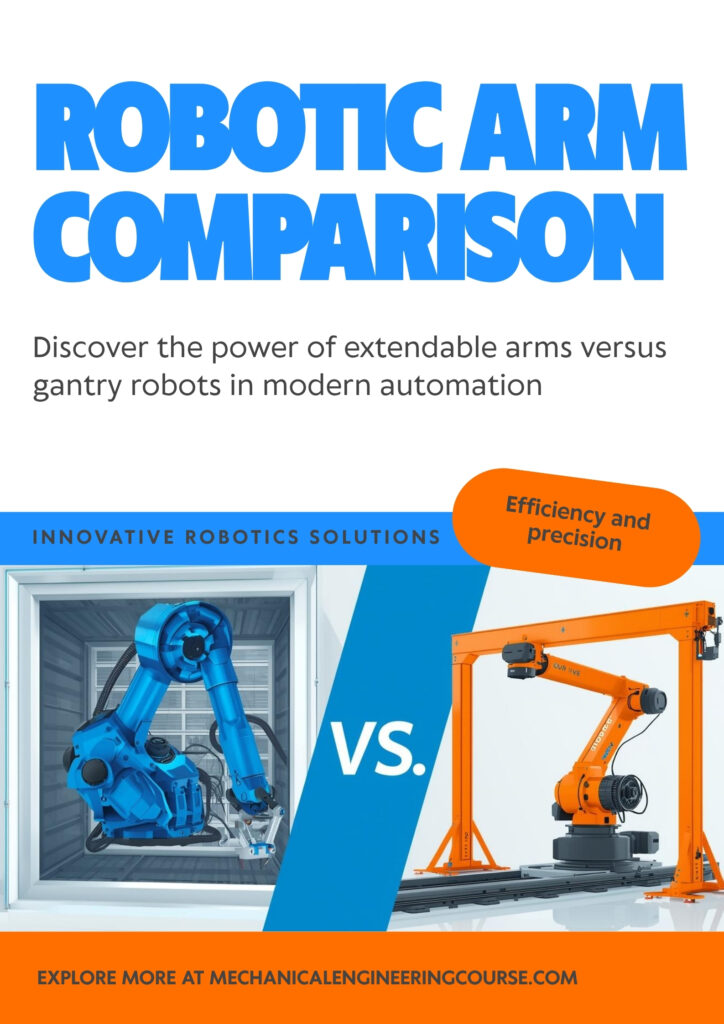
When considering how to buy extendable robotic arm solutions, it’s crucial to understand how they compare to other common industrial systems like gantry robots. While both offer automation, their operational principles and ideal applications differ significantly.
Comparing Operational Envelopes and Flexibility
An extendable robotic arm, often an articulated robotic arm, offers high dexterity and maneuverability within a potentially constrained volume. Its strength lies in reaching around obstacles and into tight spaces. In contrast, a gantry robot typically provides linear motion over a larger, fixed workspace, operating within a defined Cartesian coordinate system. Gantry systems are often ideal for large-scale, repetitive tasks requiring movement across a wide area.
Space Requirements and Installation Considerations
Extendable arms require less floor space at their base but need a clear swing radius for their extended reach. Gantry robots, on the other hand, demand significant overhead or floor space for their linear tracks, though they can often handle larger workpieces. Installation for an industrial robotic arm, regardless of type, requires careful planning and safety compliance.
Precision, Speed, and Load Capacity Differences
While both can be highly precise, gantry robots often excel in applications requiring extreme positional accuracy over long linear distances and can typically handle heavier duty robotic arm payloads due to their rigid structure. Extendable arms offer agility and the ability to perform complex, agile movements, making them suitable for intricate manipulation.
Ideal Use Cases for Each Type of Robot
To help you decide which system to purchase robot arm for, consider the following:
| Feature | Extendable Robotic Arm | Gantry Robot |
|---|---|---|
| Primary Benefit | Extended Reach, Dexterity, Access | Large Workspace, High Payload, Linear Precision |
| Workspace Type | Complex, Obstructed, Confined | Large, Open, Defined Linear Paths |
| Movement | Articulated, Telescopic, Multi-axis | Linear (X, Y, Z axes) |
| Typical Applications | Inspection, Welding in tight spots, Collaborative tasks | Palletizing, Large-scale assembly, Material transfer |
Industrial and Commercial Extendable Robotic Arm Applications
The versatility of extendable robotic arm applications makes them indispensable across numerous industrial and commercial sectors, significantly boosting efficiency and safety. These solutions are key to modern [[industrial automation solutions]].
Advanced Inspection and Maintenance in Difficult-to-Reach Areas
One of the most impactful applications is in inspection and maintenance where human access is challenging or hazardous. For instance, extendable robotic arms with vision systems are deployed for:
- Pipeline Inspection and Repair: Navigating complex pipe networks to detect faults.
- Wind Turbine Blade Examination: Reaching high, expansive surfaces for visual and tactile checks.
- Nuclear Facility Maintenance: Performing crucial tasks in radioactive environments safely.
- Bridge and Infrastructure Assessment: Inspecting structural integrity from a distance.
Extendable Robotic Arm for Collaborative Work and Manufacturing
The rise of collaborative robot arm technology has opened new avenues for human-robot interaction. An extendable robotic arm for collaborative work can assist operators in:
- Assembly Lines: Performing precise tasks like robotic arm for assembly in shared workspaces.
- Ergonomic Support: Lifting heavy components or reaching awkward positions to reduce human strain.
- Automated Welding and Manipulation: Executing high-precision robotic arm for welding tasks in tight spots.
- Material Handling: Efficient robotic arm for pick and place operations within confined manufacturing cells.
Extendable Robotic Arm Case Studies in Industrial Settings
Real-world extendable robotic arm case studies demonstrate significant gains. For example, in automotive manufacturing, these arms facilitate precise spot welding within vehicle chassis, a task previously difficult and time-consuming. In aerospace, they perform intricate assembly and inspection of large components, reducing downtime and improving quality. These deployments consistently show improvements in efficiency, safety, and operational flexibility.
Extendable Robotic Arms in Autonomous Systems and Drone Integration
The integration of extendable robotic arms into autonomous platforms is expanding their utility into dynamic and previously inaccessible environments.
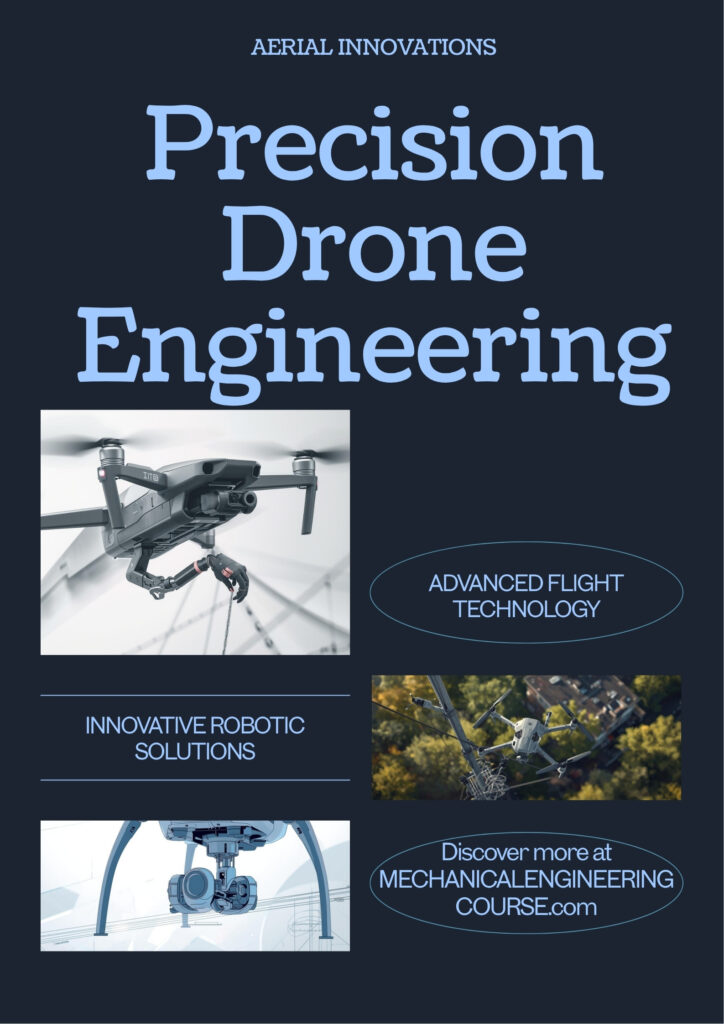
Enhancing Drone Capabilities with Extendable Robotic Arm for Drone
Drones equipped with extendable robotic arms are transforming aerial operations. An extendable robotic arm for drone applications allows for:
- Tactile Inspection: Physically interacting with structures like power lines or bridges for close-up examination and minor repairs.
- Environmental Sampling: Collecting air, water, or soil samples in hazardous or remote locations.
- Payload Deployment and Retrieval: Placing or picking up objects in high-rise constructions or disaster zones.

Mobile Robotics and Autonomous Systems Integration
When combined with wheeled or tracked mobile platforms, an extendable robotic arm for autonomous systems enables robots to perform complex manipulation tasks in unstructured environments. This includes:
- Remote Operations and Exploration: Deploying robots with extendable arms into disaster sites or extraterrestrial landscapes.
- Logistics and Warehouse Automation: Mobile robots with extendable arms can navigate dynamic warehouse floors to manage inventory, reaching items on high shelves.
Education, Research, and Hobbyist Engagement with Extendable Robotic Arms
Extendable robotic arms are not just for industry; they are powerful tools for learning, innovation, and personal projects.
Empowering Learning: Extendable Robotic Arm for Education
An educational robotic arm is a fantastic resource for STEM education. They provide hands-on experience for students to learn about:
- Mechatronics and Mechanical Design: Understanding joint mechanisms, gearing, and structural integrity.
- Programming and AI: Developing control algorithms using languages like Python or ROS.
- Robotics Competitions: Providing platforms for students to design and program their own extendable robot arm projects.
Extendable Robot Arm for Research and Development
Researchers utilize an extendable robot arm for research to push the boundaries of robotics. This includes:
- Prototyping New Functionalities: Testing novel end-effectors, sensors, or control strategies.
- Advanced Control Algorithms: Developing more precise and adaptive motion planning.
- Human-Robot Interaction: Studying how humans and robots can collaborate more intuitively.
Extendable Robotic Arm for Education and Hobbyists: DIY Projects
For enthusiasts and hobbyists, a small robotic arm or a desktop robotic arm kit offers an accessible entry point. Many choose to build custom extendable robot arm projects, often leveraging a DIY robotic arm kit or open-source designs. These projects can range from simple pick-and-place tasks to more complex home automation applications, fostering skill development and innovation. When you decide to purchase robot arm components, consider vendors that support these communities.
Key Factors to Consider Before Buying
Before you buy extendable robotic arm systems, a thorough evaluation of your specific requirements is essential. This section guides you through the critical factors.
Reach and Payload Capacity
Ensure the maximum extension length meets your operational requirements. Consider the weight the arm can lift (payload), distinguishing between static and dynamic capacity. A heavy duty robotic arm will have different specifications than a smaller educational model. Also, confirm the arm’s workspace fits your designated area.
Degrees of Freedom (DoF) and Dexterity
The number of joints, or Degrees of Freedom (DoF), directly impacts flexibility. More DoF generally means greater maneuverability. Evaluate the range of motion for each joint, which is critical for navigating obstacles and precise positioning. An articulated robotic arm with more DoF can perform complex, agile movements.
Precision and Repeatability
Accuracy refers to how close the arm gets to a target point. Repeatability measures how consistently it returns to a previously taught position. High precision and repeatability are paramount for tasks like assembly or welding. When you purchase robot arm, ensure these specifications meet your application’s tolerance.
End-Effector Options (Grippers, Tools)
The versatility of your robotic arm often depends on its end-effector. Consider various types of grippers (pneumatic, electric, vacuum, magnetic, or specialized custom grippers). Ensure compatibility with different tools like drills, cameras, sensors, or welding torches. Ease of changing end-effectors via quick-change mechanisms enhances versatility. Look for a gripper arm robot that supports your specific tooling needs.
Control System and Programming
Evaluate the ease of use of the control system, including intuitive interfaces, teach pendants, and graphical programming options. Check for support for common programming languages like ROS, Python, or proprietary software. Integration with existing systems (PLCs, MES) is also vital for seamless automation. A programmable robot arm offers greater flexibility.
Environment and Durability
The operating conditions dictate the required durability. Consider temperature extremes, dust, moisture, or corrosive agents. Check the IP rating (Ingress Protection) for dust and water resistance. Robust material construction ensures longevity, especially for an industrial robotic arm in demanding environments.
Budget and Return on Investment (ROI)
The robotic arm price involves more than just the initial purchase cost. Factor in the arm, controller, software, and end-effector. Include installation and integration costs, as well as ongoing maintenance and operational expenses. Calculate the expected ROI based on improved efficiency, safety, or production to justify the cost of robotic arm investment.

Where to Buy Extendable Robotic Arms
Once you’ve defined your needs, the next step is to find where to buy robot arm solutions. Options range from direct manufacturers to specialized retailers.
Direct from Manufacturers
Purchasing directly from robotic arm manufacturers like KUKA, FANUC, ABB, or Universal Robots (for collaborative options) offers the full product range, direct technical support, and potential for customization. However, this may require larger budgets and potentially longer lead times. These are often the go-to for high-end industrial robotic arm needs.
Authorized Distributors and Resellers
Authorized robotic arm suppliers provide local support, integration services, bundled solutions, and often competitive pricing with faster delivery. They can be an excellent option for finding a robotic arm for sale, though their brand selection might be more limited. Look for them via manufacturer websites or industry trade shows.
Online Marketplaces & Specialized Retailers
For simpler models, a small robotic arm, or components for an educational robotic arm, online marketplaces like Amazon or specialized robotics e-commerce sites offer a wide variety and quick comparisons. Be mindful of technical support and quality variation for unverified sellers, and customization options are limited.
Used Equipment Market (Considerations)
The used robotic arm market can offer significant cost savings. However, be aware of limited warranties, potential wear and tear, outdated software, and reduced support. This option is best for specific legacy applications, spare parts, or very tight budgets where the cost of robotic arm is a primary concern.
Installation, Training, and Support
Investing in an extendable robotic arm goes beyond the purchase; successful deployment relies on proper installation, adequate training, and reliable post-purchase support.
Professional Installation vs. DIY
The complexity of setup, especially integration with existing systems and safety considerations, often dictates the need for professional installation. Manufacturers typically advise professional setup for industrial arms to ensure safety compliance and optimal performance. For a desktop robotic arm or DIY robotic arm kit, self-installation is more common.
Training and Skill Requirements
Comprehensive training is essential. This includes operator training for basic usage, teaching points, and error handling, as well as maintenance staff training for routine checks, troubleshooting, and preventative maintenance. Many manufacturers and third-party providers offer courses and certifications. An extendable robot arm for education can also serve as a training platform.
Post-Purchase Support and Warranty
Evaluate the warranty period and coverage, technical support availability (phone, email, on-site, remote diagnostics), and spare parts availability for long-term operational continuity. For critical industrial applications, Service Level Agreements (SLAs) are crucial to ensure minimal downtime.
Conclusion
Choosing and buying the right extendable robotic arm requires careful consideration of your specific needs, budget, and application. By evaluating factors like reach, payload, precision, and the available support, you can confidently invest in a solution that enhances efficiency, safety, and capability. Ready to explore specific models or integrate advanced robotics into your operations? Share your project details in the comments below or browse our recommended vendor list!
Frequently Asked Questions
What is the average cost of an extendable robotic arm?
The cost of an extendable robotic arm varies widely based on its size, payload capacity, precision, features, and brand. Prices can range from a few thousand dollars for hobbyist or educational models to hundreds of thousands for high-end industrial systems with advanced capabilities. Factors like customization and integration also influence the final price when you look to buy extendable robotic arm solutions.
Can I customize the end-effector on an extendable robotic arm?
Yes, most industrial and advanced extendable robotic arms are designed with interchangeable end-effectors. This allows for significant customization, adapting the arm for various tasks using different grippers, tools, cameras, or sensors for maximum versatility. This flexibility is a key consideration when you purchase robot arm technology.
How does an extendable robotic arm improve safety in industrial settings?
An extendable robotic arm significantly improves safety by enabling tasks to be performed in hazardous or difficult-to-reach environments without human intervention. This includes operations in extreme temperatures, with dangerous chemicals, or in high-risk areas like nuclear facilities, reducing exposure for human workers. When you buy extendable robotic arm technology, you’re investing in a safer workplace.
Are there extendable robotic arms suitable for educational purposes and hobbyists?
Absolutely. Many manufacturers offer a small robotic arm or desktop robotic arm options specifically designed for educational purposes and hobbyists. These models often come as DIY robotic arm kit packages, allowing students and enthusiasts to learn about robotics, programming, and mechanical design through hands-on extendable robot arm projects. They are an accessible way to purchase robot arm technology for learning.
What are key considerations for the control system when I buy extendable robotic arm?
When you buy extendable robotic arm systems, the control system is paramount. Key considerations include ease of programming (e.g., graphical interfaces, teach pendants), supported languages (ROS, Python), and compatibility with existing industrial automation platforms. A user-friendly and robust control system ensures efficient operation and integration of your programmable robot arm.
