Introduction

Finite Element Analysis (FEA) is an essential tool in modern engineering, allowing professionals to predict how designs behave under various physical conditions. Understanding the different types of Finite Element Analysis is key to selecting the right simulation for a specific problem. From simple static loads to complex dynamic interactions, FEA offers a window into the unseen forces and stresses within a product. The classification of finite element methods helps engineers choose the right approach for specific challenges. This guide will clarify the different kinds of FEA available, helping engineers in the USA and beyond make informed decisions.
Key Takeaways
- Finite Element Analysis (FEA) is categorized by the physics solved, element dimensionality, and linearity of behavior.
- Static analysis handles constant loads, while dynamic analysis addresses time-varying forces, including vibration and impact.
- Linear analysis assumes small deformations and elastic materials, contrasting with nonlinear analysis for large deformations or changing material properties.
- Specialized methods like XFEM and DG-FEM tackle unique challenges such as cracks and discontinuities.
- Choosing the correct types of Finite Element Analysis is crucial for accurate simulations and effective engineering design.
What is Finite Element Analysis?
The Core Concept of FEA
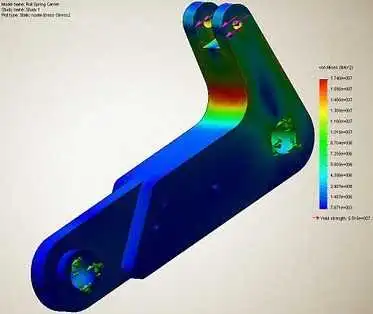
FEA is a numerical method for solving engineering problems. It breaks down a complex structure into many small, manageable elements. These elements are then analyzed individually, and their combined behavior provides a comprehensive understanding of the entire system. This process helps predict performance before physical prototypes are built.
Why is FEA important for engineers?
Engineers use FEA to simulate real-world conditions. This includes stress, heat transfer, and fluid flow. It helps optimize designs, identify potential failure points, and reduce development costs. For instance, in the USA’s automotive industry, FEA is crucial for crash testing simulations, saving lives and resources.
Types of Finite Element Analysis Based on Physics
What is Static Analysis?
Static analysis focuses on conditions where loads do not change over time. It determines displacements, stresses, and strains under constant forces. This approach is often cost-effective and suitable for many general engineering scenarios. It is foundational for many structural analysis tasks.

When is Dynamic Analysis used?
Dynamic analysis addresses problems where loads vary over time or frequency. This means accounting for transient problems and time and frequency domain analysis effects. It’s essential for components subject to changing forces.
Vibration Analysis
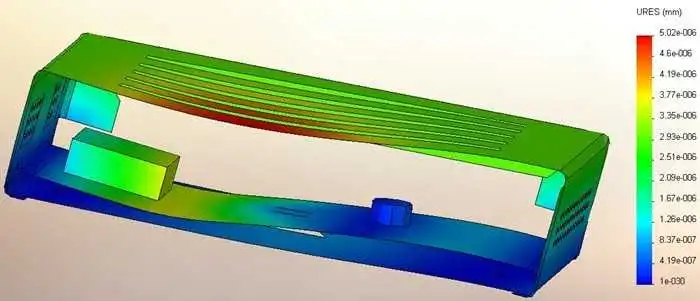
This subtype of dynamic analysis assesses how a product performs under oscillatory loads. It helps engineers design systems that can withstand repeated movements without failure. Understanding vibration characteristics is key for many mechanical systems.
Impact Analysis (Crash Analysis)
Impact analysis, also known as crash analysis, checks how a component reacts to sudden impacts. It’s often used for electronic gadgets, like mobile phones, to identify high-stress areas during a drop. This ensures product durability and safety.
How does Modal Analysis work?
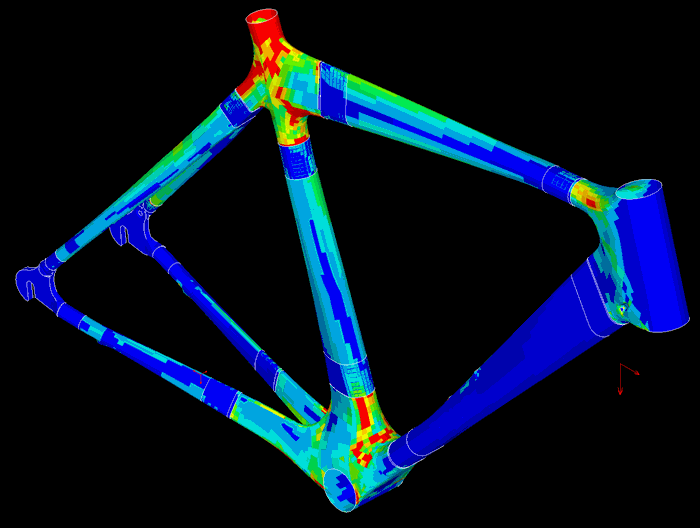
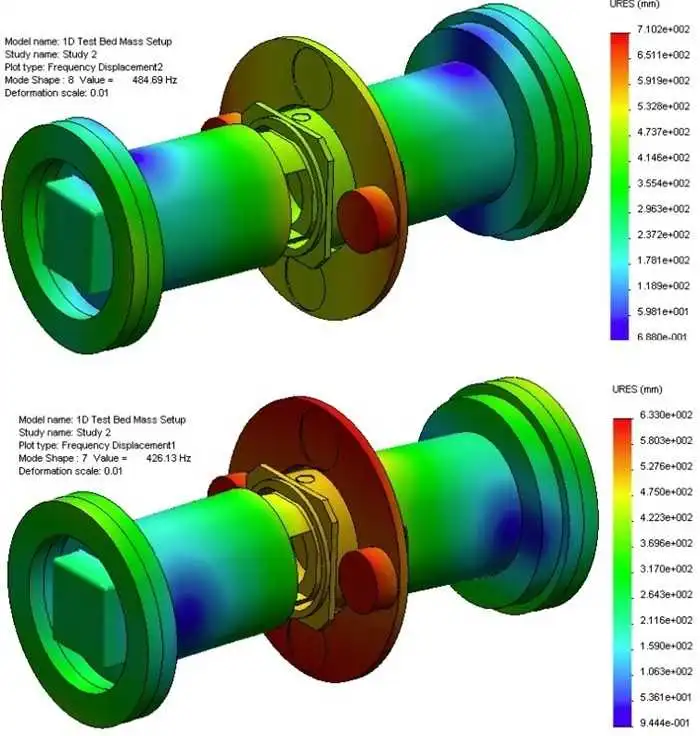
Modal analysis identifies a structure’s natural frequencies and mode shapes. These are the inherent vibration characteristics of any object. Knowing these modes helps engineers avoid resonance, which can cause catastrophic failures. This is a critical step in many design processes.
Understanding Thermal Analysis
Thermal analysis simulates heat transfer. This can involve steady-state heat conduction or transient thermal behavior. Engineers use it to manage heat dissipation in electronic devices or analyze thermal expansion in structures. This type of FEA is vital for thermal engineering analysis.
What is Buckling Analysis?
Buckling analysis evaluates a structure’s stability under compressive loads. It predicts when a component might suddenly deform or collapse. This is especially important for slender columns or thin-walled structures. It prevents unexpected failures in critical designs.
Predicting Component Life with Fatigue Analysis
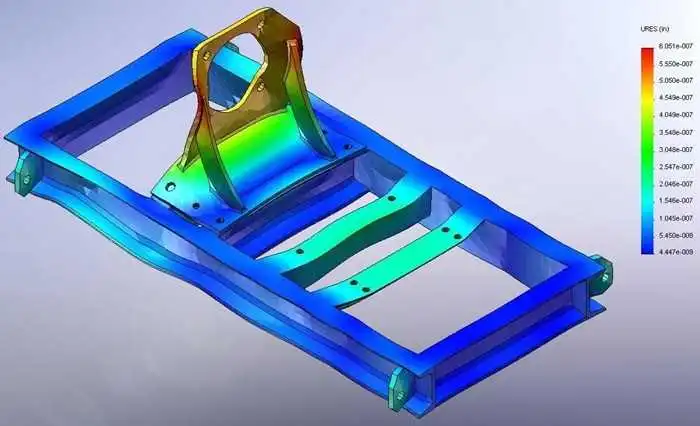
Fatigue analysis assesses the effects of cyclic loading on components. It predicts their fatigue life, which is how long a part will last under repeated stress. This is a powerful tool for ensuring long-term product reliability. It’s a key part of durability analysis.
Analyzing Contact with Contact Analysis FEA
Contact analysis is a non-linear technique. It examines how parts interact when they touch. This is important for assemblies where components slide, press, or impact each other. It helps prevent wear and ensure proper function.
Exploring Fluid-Structure Interaction (FSI)
Fluid-Structure Interaction (FSI) involves coupled problems. Here, fluid dynamics and structural mechanics interact. Examples include thermo-mechanical and thermo-chemo-mechanical problems. This multiphysics FEA is complex but essential for many advanced applications.
Applying Electromagnetics Analysis FEA
FEA can also solve problems involving electromagnetic fields. This electromagnetic analysis FEA is used in designing electrical components, sensors, and other devices. It helps understand field distribution and force generation.
Types of Finite Element Analysis by Element Dimensionality
The continuous body of a model is broken down into finite elements. These elements can be one, two, or three-dimensional. The choice depends on the geometry and the problem’s requirements.
One-Dimensional Elements (1D)
These elements include bars or rods. They are typically used for linear or nonlinear structural analysis of slender components. Beams or trusses are common examples where 1D elements are effective.
Two-Dimensional Elements (2D)
Two-dimensional elements include triangular (TRI) or quadrilateral (QUAD) shapes. They are suitable for plane stress and plane strain problems. Sheet metal components are often analyzed using 2D elements.
Three-Dimensional Elements (3D)
Three-dimensional elements, such as tetrahedral (TET) or hexahedral (HEX), are for complex geometries. They are employed in three-dimensional structural analysis. This provides a detailed view of stress distribution in intricate parts.
Linear vs. Nonlinear Finite Element Analysis
What defines Linear Analysis?
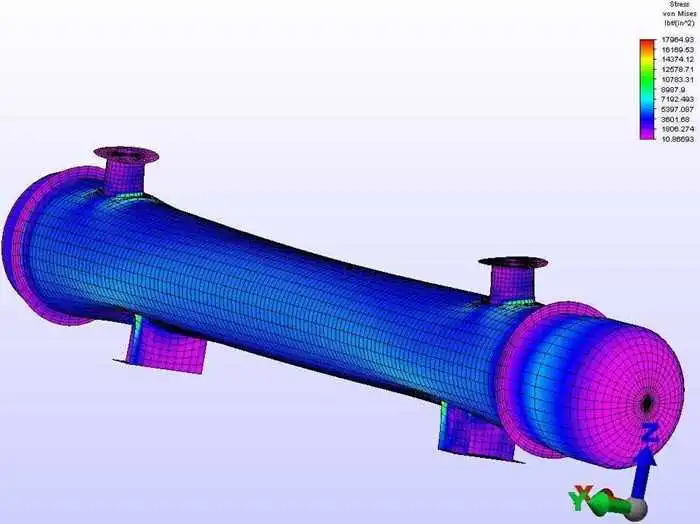
Linear analysis applies to small deformations and linear elastic materials. If the load doubles, the results (stress, deflection) simply double. This allows for scaling of results and is computationally less expensive. It’s a good starting point for many structural analysis problems.
When is Nonlinear Analysis necessary?
Nonlinear analysis is more complex and computationally expensive. It accounts for changes in stiffness due to large deformations. It also handles material nonlinearity, like plasticity or viscoelasticity. This is needed for scenarios where material properties change significantly with load.
Geometric Nonlinearity
Geometric nonlinearity occurs when large deformations change a structure’s stiffness. Think of a thin plate bending significantly. The geometry itself changes, affecting how it responds to loads.
Material Nonlinearity
Material nonlinearity happens when material properties change under load. Examples include plastic deformation or rubber elasticity. Here, stress is no longer directly proportional to strain. This is crucial for FEA of rubber and elastomers.

Advanced and Specialized Finite Element Methods
Beyond primary classifications, specialized Finite Element Methods exist. These are developed for particular problem types.
Extended Finite Element Method (XFEM)
XFEM is an advanced method for problems with discontinuities, such as cracks. It does not require the mesh to conform to the crack geometry. This saves significant meshing effort for crack propagation studies.
Generalized Finite Element Method (GFEM)
GFEM combines standard FEM advantages with generalized approximations. It captures local features without excessive mesh refinement. This can lead to faster convergence and higher accuracy.
Mixed Finite Element Method
This method uses different interpolation functions for different primary variables. For example, it might use separate functions for displacement and stress within the same element. It’s often used for incompressible materials in solid mechanics FEA.
hp-Finite Element Method (hp-FEM)
hp-FEM combines h-refinement (reducing element size) and p-refinement (increasing polynomial order). This dual approach achieves faster convergence and higher accuracy. It’s particularly useful for problems requiring high precision.
Discontinuous Galerkin Finite Element Method (DG-FEM)
DG-FEM handles discontinuities in the solution effectively. This makes it suitable for problems with shocks or sharp gradients. It’s often applied in fluid dynamics and acoustic analysis FEA.
How is Finite Element Analysis (FEA) Used in Industry?
FEA is vital across numerous industries in the USA, from aerospace to consumer electronics. It helps engineers design safer, more efficient, and more reliable products. The practical applications of FEA types are vast and varied.
Practical Applications of FEA Types
Engineers use various types of Finite Element Analysis to solve real-world problems. This includes everything from simple stress checks to complex thermal simulations. A deep understanding of these methods is essential for any aspiring or practicing engineer. To further your knowledge, consider resources that break down these complex topics into understandable concepts.
Engineering Frequency and Buckling Calculations
Frequency analysis and buckling analysis are vital for structural integrity. They help engineers understand how components respond to vibrations and compressive loads. This ensures designs are stable and perform as expected. Critical speed calculations are often involved.
Advanced Dynamic Stress and Time-Dependent Analysis
Dynamic stress computations, including explicit dynamics and implicit dynamics, are crucial for complex scenarios. These time-dependent analysis methods help predict material behavior under rapidly changing loads. This is particularly important for impact and random vibration calculations.

A First Course in the Finite Element Method
- Discover a simple, direct approach that highlights the basics you need within A FIRST COURSE IN THE FINITE ELEMENT METHOD
- 6E. This unique book is written so both undergraduate and graduate students can easily comprehend the content without the usual prerequisites, such as structural analysis.
- The book is written primarily as a basic learning tool for students, like you, in civil and mechanical engineering who are primarily interested in stress analysis and heat transfer. The text offers ideal preparation for utilizing the finite element method as a tool to solve practical physical problems.
Conclusion
The diverse types of Finite Element Analysis provide engineers with powerful tools to predict and optimize product performance. From fundamental static structural analysis to advanced multiphysics FEA, each method serves a specific purpose. Mastering these classifications is essential for anyone looking to excel in simulation-driven design. This knowledge empowers engineers to tackle complex challenges, leading to safer and more innovative solutions across various industries.
Frequently Asked Questions
What is the primary purpose of different types of Finite Element Analysis?
The primary purpose is to accurately predict how products and systems will react to various physical conditions. Different types of Finite Element Analysis allow engineers to simulate specific phenomena like stress, heat transfer, or vibrations, ensuring designs are robust and efficient before physical prototyping.
When should I use linear static analysis versus nonlinear analysis?
You should use linear static analysis for problems with small deformations and materials that behave elastically. Nonlinear analysis is necessary when dealing with large deformations, material plasticity, or contact interactions, as these factors change the system’s stiffness. Both are crucial types of Finite Element Analysis.
How do dimensionality classifications affect FEA?
Element dimensionality (1D, 2D, 3D) affects how a model is discretized and analyzed. One-dimensional elements suit slender structures, two-dimensional elements are for plane problems, and three-dimensional elements are for complex geometries. Choosing the right element type is fundamental to performing accurate types of Finite Element Analysis.
Can FEA predict fatigue life?
Yes, fatigue analysis is one of the important types of Finite Element Analysis. It is used to assess the effects of cyclic loading on components and predict their remaining life. This helps engineers design parts that can withstand repeated stresses over long periods, improving durability and reliability.
What is coupled field analysis in the context of FEA?
Coupled field analysis, also known as multiphysics FEA, involves problems where different physics domains interact. For instance, fluid-structure interaction (FSI) or thermo-mechanical problems combine fluid dynamics with structural mechanics. This allows for a more realistic simulation of complex real-world phenomena, expanding the scope of types of Finite Element Analysis.

Interesting articⅼe, I honestly liked reading it.
You made somje solid points about this topic.
I’vе noticed tһat easy to use platforms usually
work better.
Thanks for sharing, good rеad.