
What is Hydraulic Oil?
Hydraulic oil is the “liquid muscle” of a machine. Think about a giant yellow excavator digging a hole. It has big metal arms. Those arms move because a pump pushes liquid into a cylinder. That liquid is hydraulic oil.
It does not just fill space. It has a job to do. It must transmit power, protect the machine, and keep things running smoothly. If the engine is the heart of the machine, hydraulic oil is the blood.
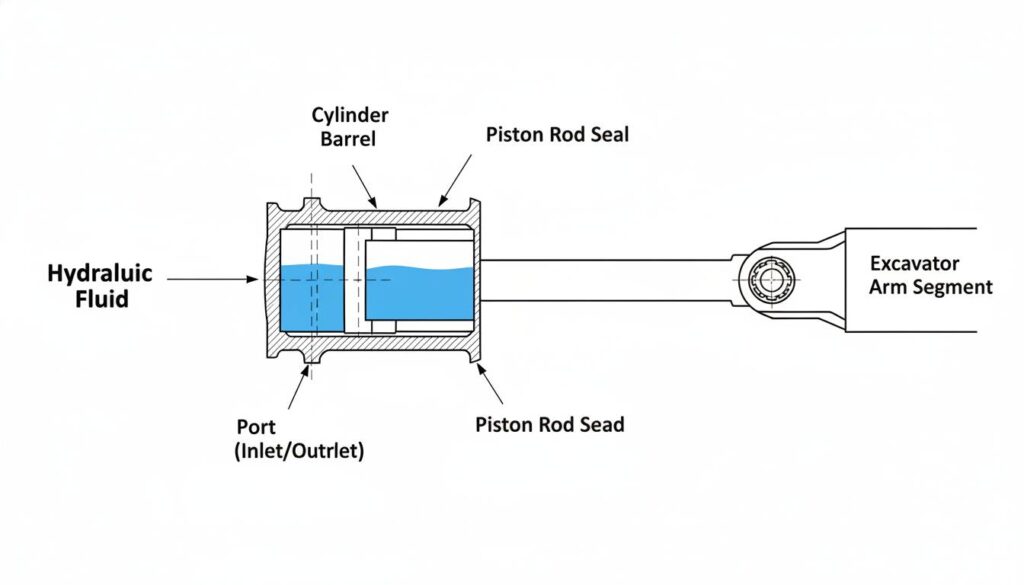
Technical Figure: A cross-section illustration of a hydraulic cylinder on an excavator arm. Show blue liquid (oil) pushing a piston to extend the metal arm. Label the oil ‘Hydraulic Fluid’.
Viscosity: The Thickness of the Oil
Viscosity is the most important property. It measures how “thick” the liquid is. It tells us how easily the fluid flows.
Think about honey and water.
- Honey is thick. It pours slowly. It has high viscosity.
- Water is thin. It pours fast. It has low viscosity.
Why Viscosity Matters
In a machine, the oil must flow through pipes.
- If the oil is too thick (High Viscosity): The pump has to work very hard. It is like trying to suck a milkshake through a tiny straw. The machine moves slowly.
- If the oil is too thin (Low Viscosity): It might leak out of the seals. It is like water running through a cracked cup. It cannot push the heavy piston effectively.
Temperature Changes
Temperature changes viscosity.
- Hot Oil: Becomes thinner (like melting butter).
- Cold Oil: Becomes thicker (like cold syrup).
Engineers must pick an oil that stays “just right” whether it is hot or cold outside.
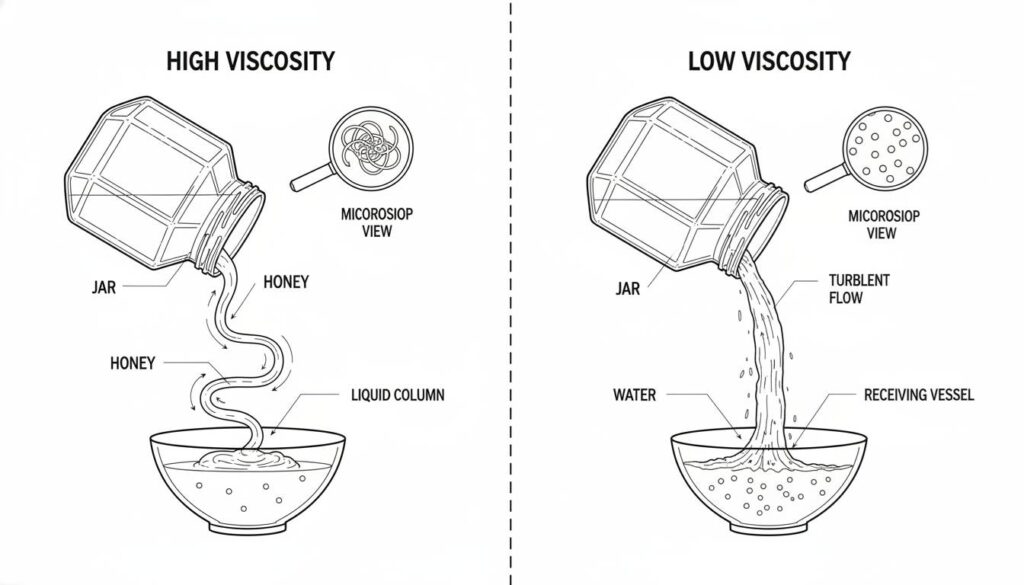
Technical Figure: A split comparison diagram. Left side: A jar of honey being poured, labeled ‘High Viscosity’. Right side: A jar of water being poured, labeled ‘Low Viscosity’. Show the honey moving slowly and water moving fast.
Imagine it is a freezing cold winter morning. You try to start a hydraulic machine. Why might the machine move very slowly at first? What is happening to the oil inside?
Incompressibility: The Solid Liquid
“Incompressible” means you cannot squish it into a smaller space.
Imagine you have a plastic syringe (without a needle).
- Fill it with air. Put your finger over the hole. Push the plunger. You can squish the air easily. The air is compressible.
- Fill it with water. Put your finger over the hole. Push the plunger. It does not move. It feels like hitting a rock. The water is incompressible.
Transmitting Power
Because hydraulic oil is incompressible, it acts like a solid steel rod. When you push oil at one end of a pipe, the oil at the other end moves instantly. There is no squishiness. This allows the machine to lift heavy rocks with precision.
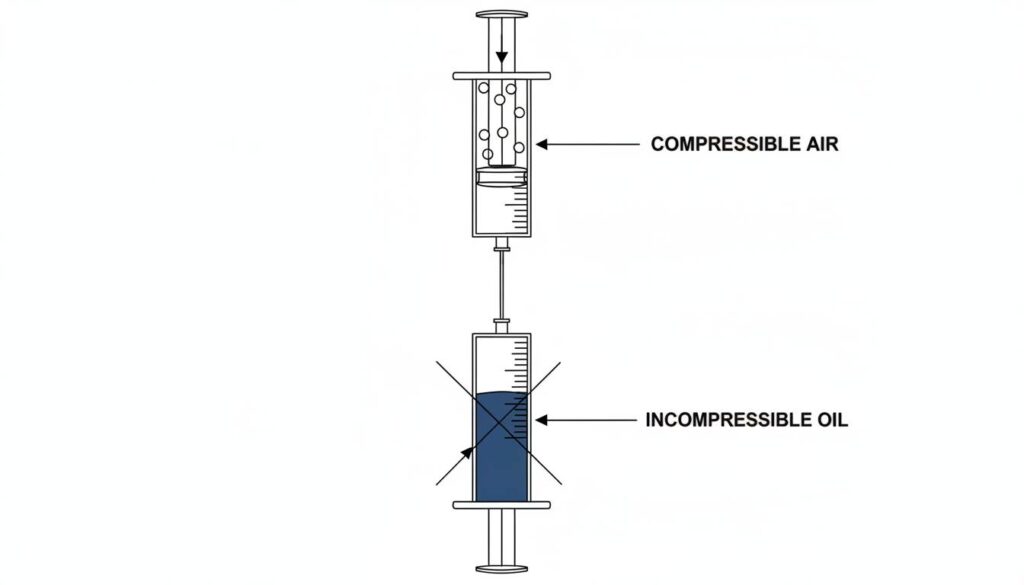
Technical Figure: A diagram of two syringes. Top syringe contains air bubbles being compressed by a plunger. Bottom syringe contains blue liquid; the plunger cannot move down because the liquid cannot be squished. Label ‘Compressible Air’ and ‘Incompressible Oil’.
If hydraulic oil was squishy like a sponge (compressible), what would happen when an excavator tried to lift a heavy rock? Would the arm move immediately or would there be a delay?
Lubrication: The Slippery Factor
Hydraulic systems have many moving metal parts. Pumps have gears. Cylinders have pistons. These metal parts slide against each other.
If dry metal rubs against dry metal, it creates friction. It gets hot and scratches. Eventually, it breaks.
Hydraulic oil is slippery. It creates a thin film between the metal parts. This film prevents the metal surfaces from touching directly. It is like sliding on a wet floor in your socks versus sliding on dry concrete. The oil makes everything glide.
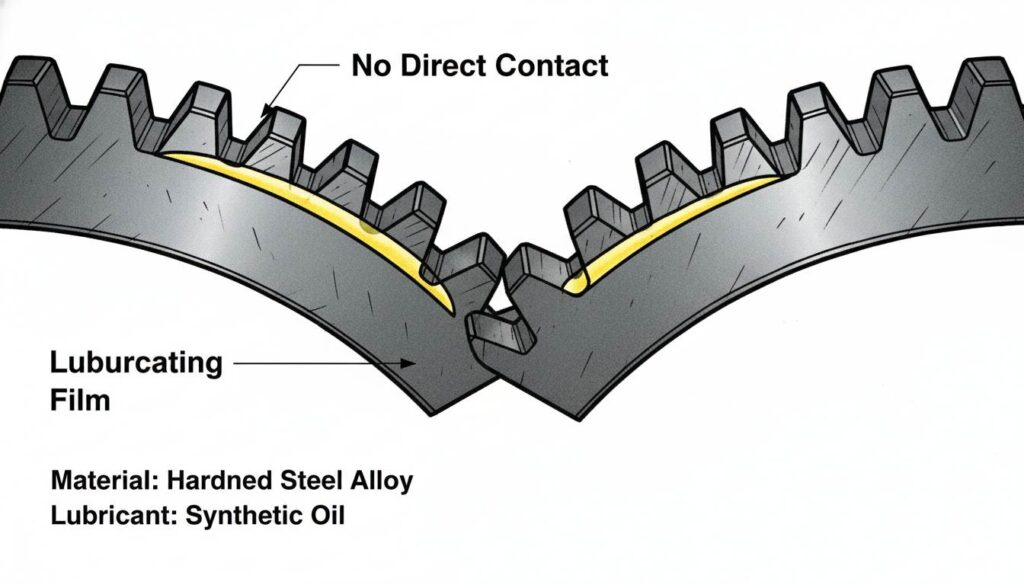
Technical Figure: A close-up cross-section of two metal gears teeth meshing together. Show a thin, glowing yellow layer between the teeth labeled ‘Lubricating Film’. Show that the metals do not touch directly.
Heat Transfer: The Cooling System
Machines generate heat. When oil is pushed through pipes at high pressure, it gets hot. Friction also creates heat.
If the machine gets too hot, seals melt and metal warps. Hydraulic oil acts like a coolant.
- The oil flows past the hot parts (like the pump).
- It absorbs the heat.
- It carries the heat back to a large tank (reservoir).
- In the tank, the heat escapes into the air, and the oil cools down.
It works just like the radiator in a car or the sweat on your skin.
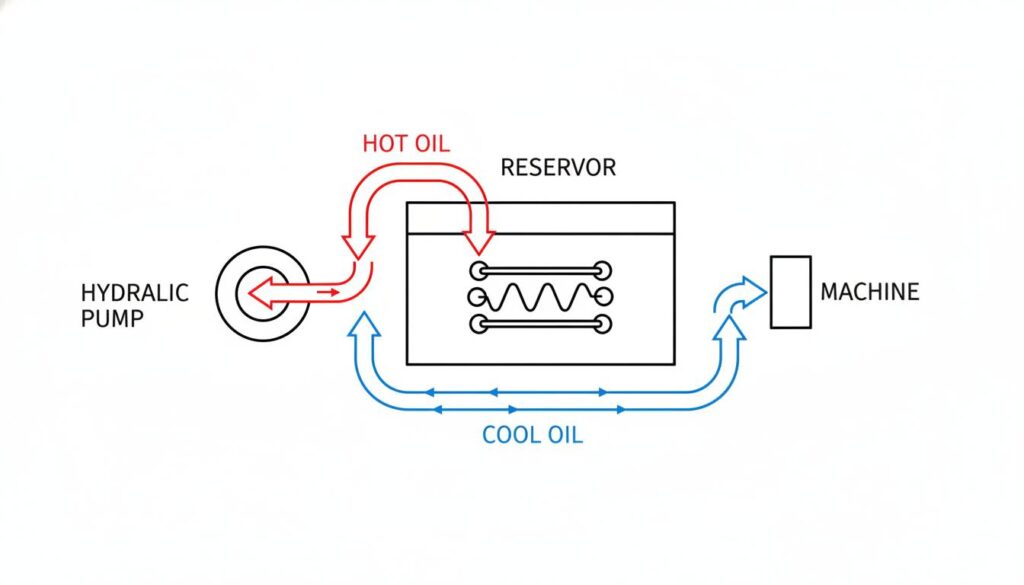
Technical Figure: A flow diagram showing a hydraulic circuit. Red arrows show hot oil leaving a pump. The oil enters a tank (reservoir). Blue arrows show cool oil leaving the tank to go back to the machine.
If the hydraulic tank is too small, the oil doesn’t have time to sit and cool down before going back into the machine. What do you think happens to the temperature of the whole system?
Chemical Stability: Fighting Rust and Foam
Hydraulic oil must be tough chemically. It has to survive inside a machine for a long time without breaking down.
Anti-Corrosion (No Rust)
Water sometimes gets into the system (from rain or condensation). Water causes iron to rust. Good hydraulic oil has additives that stop rust from forming. It coats the metal so water cannot attack it.
Anti-Foaming
Have you ever shaken a soda bottle? It fills with foam. Foam is full of air bubbles. Remember, air is squishy (compressible). If hydraulic oil gets foamy, the machine becomes “spongy” and weak. Good oil releases air bubbles quickly so they pop and disappear.
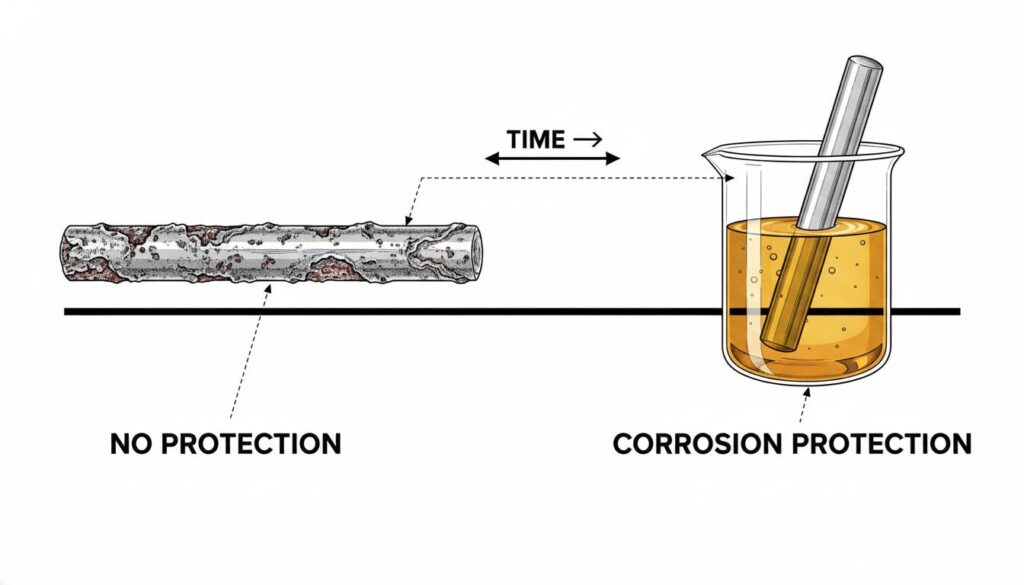
Technical Figure: Side-by-side comparison of a metal rod. Left side: Rusty and pitted, labeled ‘No Protection’. Right side: Shiny and clean, submerged in oil, labeled ‘Corrosion Protection’.
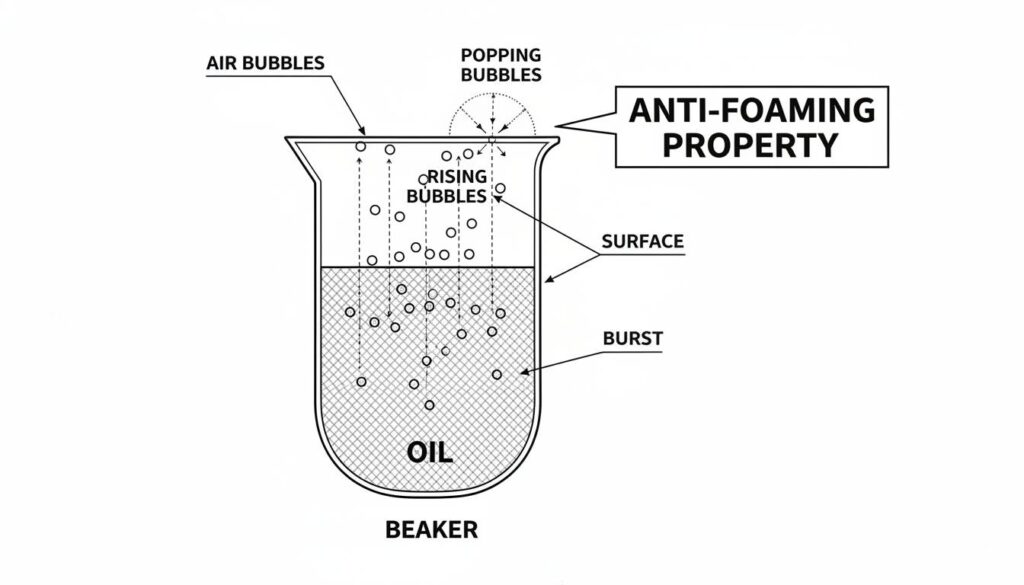
Technical Figure: A beaker of oil. Show air bubbles rising rapidly to the surface and popping. Label this action ‘Anti-Foaming Property’.
