
What Are Hydraulic Additives?
Hydraulic fluid is the “blood” of a machine. It pushes pistons and turns motors. Most hydraulic fluid starts as base oil. This is usually mineral oil from the ground.
But base oil is not perfect. It cannot handle high heat, heavy loads, or water on its own. It needs help.
Additives are chemical helpers mixed into the base oil. Think of them like vitamins for the machine. Or think of cooking. The base oil is the plain pasta. The additives are the sauce, salt, and spices that make it a complete meal.
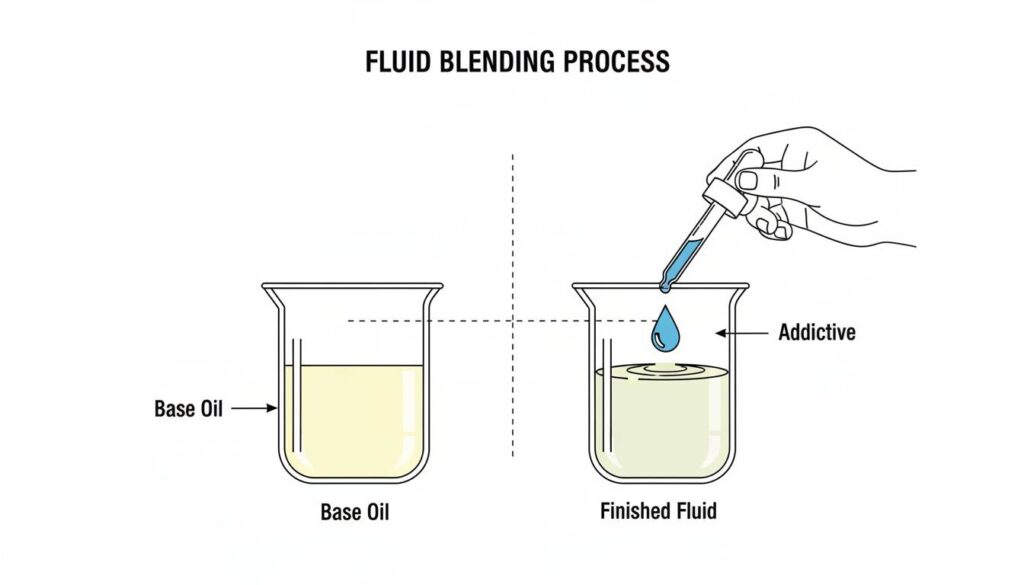
Technical Figure: A split-screen illustration. On the left, a beaker labeled ‘Base Oil’ containing a clear yellow liquid. On the right, a hand using a dropper to add a blue chemical drop labeled ‘Additive’ into the beaker, creating a ‘Finished Fluid’.
Without additives, the oil would fail. If the oil fails, the machine stops working.
Why Do We Need Additives?
Machines are tough environments. Inside a hydraulic system, three bad things happen:
- Heat: Friction makes things hot. Hot oil gets thin like water.
- Pressure: Heavy loads try to squeeze the oil out from between metal parts.
- Contamination: Dirt, water, and air try to get inside.
Additives fight these problems. They make the oil stronger, cleaner, and longer-lasting.
Imagine you are sliding down a slide. If the slide is dry, your skin burns. If you add water, you slide fast. What happens if the water dries up halfway down? How does this relate to oil in a machine?
Common Types of Additives
Engineers use a “package” of different additives. Here are the five most important ones.
Anti-Wear Agents (The Bodyguards)
Metal parts in a machine move very close to each other. Sometimes, the oil film gets squeezed out. If metal touches metal, it scrapes and breaks.
Anti-wear agents are chemicals that stick to the metal surface. They form a microscopic protective layer.
Think of it like a floor wax. When you walk on the floor, you are walking on the wax, not the wood. The wax takes the damage, so the wood stays safe. In a machine, the additive takes the wear, so the steel gear stays safe.
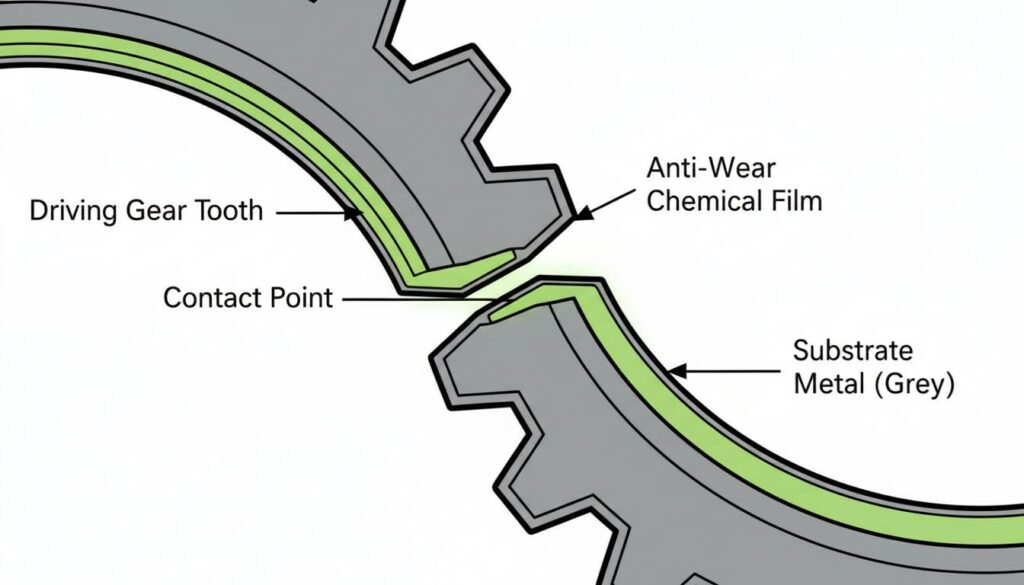
Technical Figure: A close-up cross-section diagram of two metal gears teeth touching. A bright green layer highlights the surface of the teeth, labeled ‘Anti-Wear Chemical Film’, preventing the grey metal from touching directly.
Anti-Foam Agents (The Bubble Poppers)
Hydraulic systems need solid liquid to push things. You cannot push a heavy rock with a sponge.
Sometimes, air gets trapped in the oil. This creates foam. Foam is squishy (like a sponge). If the oil is foamy, the machine feels “spongy” and weak.
Anti-foam agents weaken the skin of air bubbles. This makes the bubbles pop quickly. This keeps the oil solid and strong.
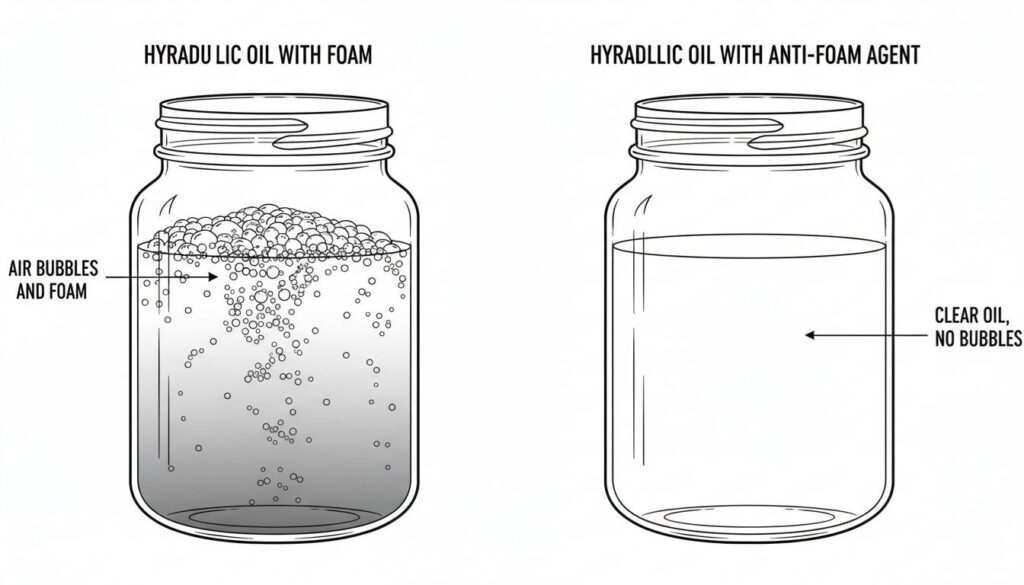
Technical Figure: A comparison illustration. The left jar shows hydraulic oil full of bubbles and foam at the top. The right jar shows clear oil with no bubbles, labeled ‘With Anti-Foam Agent’.
Anti-Oxidants (The Preservatives)
Oxygen is everywhere. When oxygen mixes with oil, especially hot oil, a chemical reaction happens. This is called oxidation.
Oxidation turns smooth oil into sticky sludge. It looks like tar. This sludge clogs up filters and pipes.
Anti-oxidants are like lemon juice on a sliced apple. The lemon juice stops the apple from turning brown. These additives stop the oxygen from attacking the oil. This helps the oil last for years instead of months.
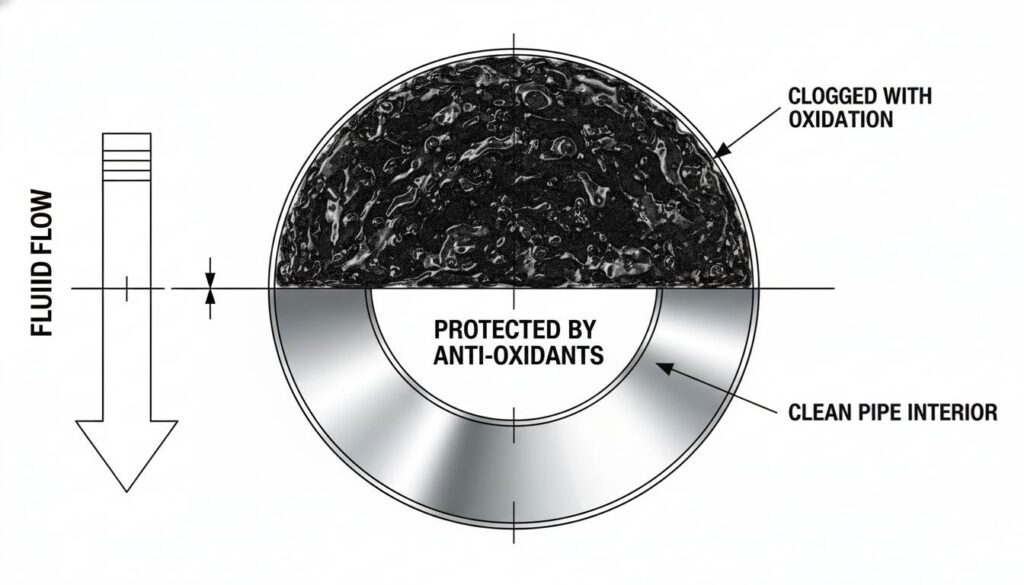
Technical Figure: A photo-realistic drawing of a hydraulic pipe cut open. The top half shows a pipe clogged with black, sticky sludge. The bottom half shows a clean, shiny pipe interior, labeled ‘Protected by Anti-Oxidants’.
If you leave a bicycle chain out in the rain without oil, it rusts and gets stiff. Why do you think “sludge” inside a hydraulic pipe is dangerous for the pump trying to push the fluid?
Rust and Corrosion Inhibitors (The Shield)
Water is the enemy of hydraulic systems. It gets in through condensation (like water on a cold soda can). Water causes iron to rust.
Rust inhibitors coat the metal surfaces. They create a waterproof barrier. It is like painting a fence to stop the rain from rotting the wood. These additives repel water so it cannot touch the metal.
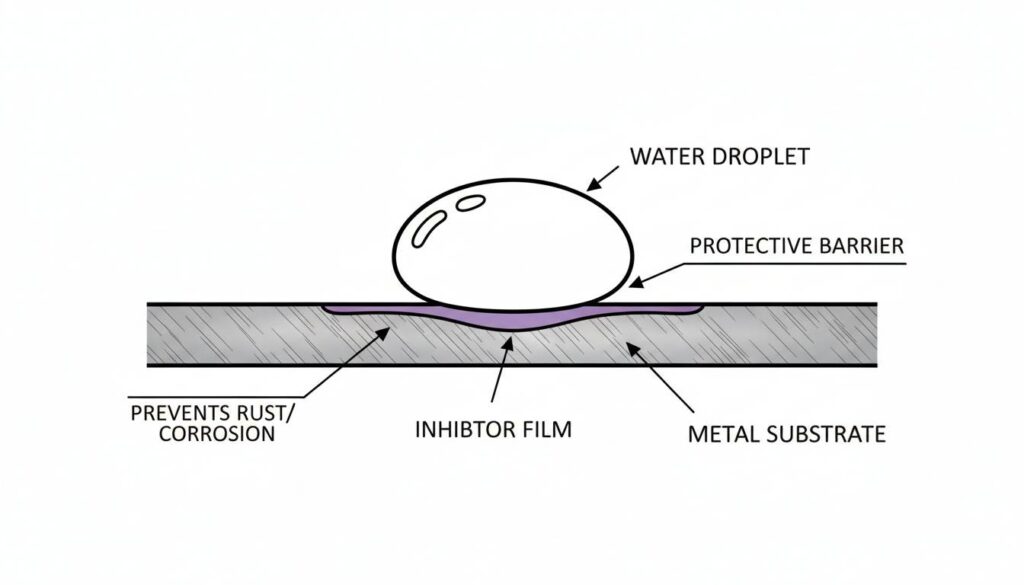
Technical Figure: A diagram showing a water droplet sitting on a metal surface. Under the droplet, a thin purple layer labeled ‘Inhibitor Film’ separates the water from the grey metal surface, preventing rust.
Viscosity Index Improvers (The Thickeners)
Viscosity is how thick a fluid is. Honey has high viscosity. Water has low viscosity.
- Cold Oil: Thick and slow (hard to start the machine).
- Hot Oil: Thin and runny (leaks past seals).
We want oil that stays the same thickness, no matter the temperature. Viscosity Index (VI) Improvers are long polymer chains.
- When it is cold, these chains curl up into balls. They don’t affect the flow.
- When it is hot, these chains uncoil and stretch out. This makes the oil “tangle” and stay thick.
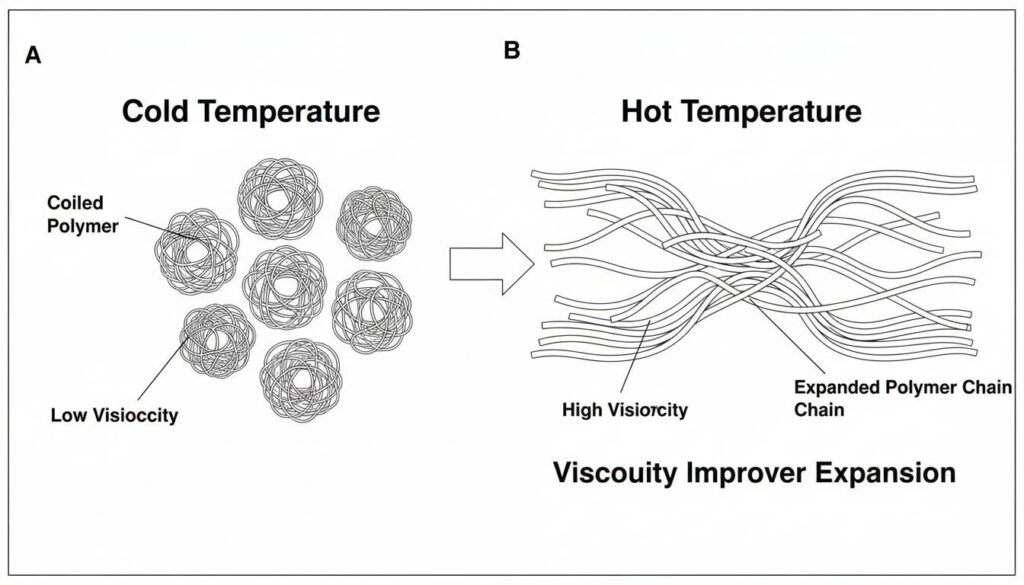
Technical Figure: A scientific illustration of polymer molecules. Panel A shows ‘Cold Temperature’ with molecules curled into tight balls. Panel B shows ‘Hot Temperature’ with the same molecules stretched out like long spaghetti strands, labeled ‘Viscosity Improver Expansion’.
The Danger of Mixing Additives
You might think, “I will mix Brand A oil with Brand B oil to get the best of both.” Do not do this.
Different companies use different chemical recipes. Sometimes, the chemicals in Brand A fight the chemicals in Brand B. This can cause the additives to turn into solid powder or slime. This ruins the machine. Always stick to one type of fluid.
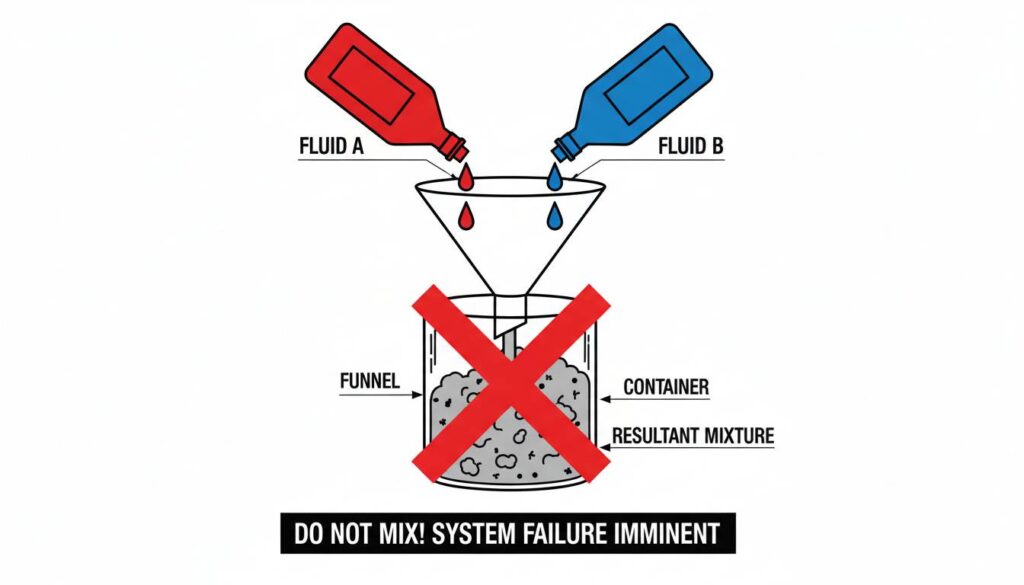
Technical Figure: A warning graphic showing two oil bottles, one red and one blue, being poured into a funnel. The resulting mixture in the container below is a grey, clumpy solid, with a large red ‘X’ over it.
Summary
Hydraulic fluid is more than just oil. It is a carefully designed chemical tool.
- Base Oil: The main liquid carrier.
- Anti-Wear: Protects metal surfaces.
- Anti-Foam: Pops bubbles to keep power strong.
- Anti-Oxidants: Stops sludge and aging.
- Rust Inhibitors: Stops water damage.
- VI Improvers: Keeps oil thickness steady in heat.
Think about a car engine. It uses oil too. Do you think a car engine needs the same additives as a hydraulic dump truck? Why might they need different “vitamins”?
