
Introduction
Alkaline fuel cells (AFCs) are one of the oldest and most efficient fuel cell technologies ever developed. Known for their role in space missions, these cells convert chemical energy directly into electricity with water as the only byproduct.
In this guide, you’ll learn:
• What alkaline fuel cells are
• How alkaline fuel cells work step by step
• Their key components and chemical reactions
• Advantages, limitations, and real-world applications
These are famous because NASA used them. They powered the Apollo missions to the Moon. They also powered the Space Shuttle.
What Are Alkaline Fuel Cells?
An alkaline fuel cell is an electrochemical energy conversion device that generates electricity by reacting hydrogen and oxygen in the presence of an alkaline electrolyte.
Instead of burning fuel, AFCs:
• Use controlled chemical reactions
• Convert energy directly into electricity
• Operate quietly and efficiently
Because of their reliability and efficiency, alkaline fuel cells were among the first fuel cells used in space exploration.
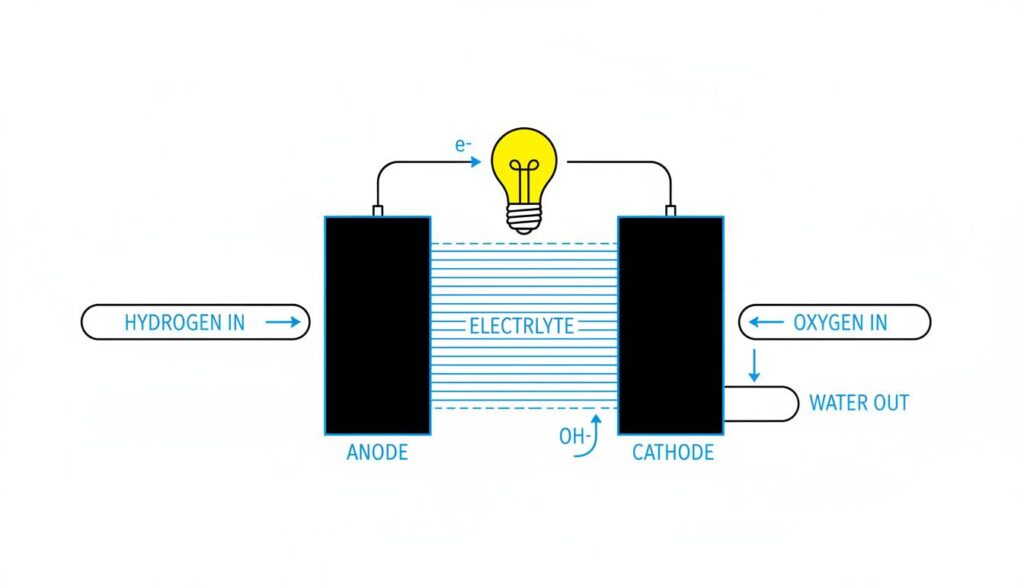
A simple 2D schematic diagram of an alkaline fuel cell. On the left, a tube labeled ‘Hydrogen In’. On the right, a tube labeled ‘Oxygen In’. In the center, two vertical plates (electrodes) with a liquid labeled ‘Electrolyte’ between them. An arrow shows ‘Water Out’ at the bottom right. A lightbulb is connected by a wire between the two plates, glowing yellow.
Basic Definition and Structure of Alkaline Fuel Cells
Alkaline fuel cells are defined by their use of an alkaline electrolyte, most commonly potassium hydroxide (KOH).
Core Components of an Alkaline Fuel Cell
• Anode – where hydrogen oxidation occurs
• Cathode – where oxygen reduction occurs
• Electrolyte – conducts hydroxide ions
• Fuel supply – hydrogen gas
• Oxidant supply – oxygen or purified air
Each component plays a critical role in maintaining efficient and continuous power generation.
Alkaline Fuel Cell Diagram and Components Explained
Anode (Negative Electrode)
• Hydrogen gas is supplied to the anode
• Hydrogen reacts with hydroxide ions
• Electrons are released and sent through an external circuit
This electron flow is what produces usable electrical power.
Cathode (Positive Electrode)
• Oxygen gas enters the cathode
• Oxygen reacts with water and electrons
• Hydroxide ions are formed
These hydroxide ions travel back toward the anode through the electrolyte.
Alkaline Electrolyte
The electrolyte:
• Is typically a potassium hydroxide (KOH) solution
• Conducts hydroxide ions (OH⁻)
• Prevents direct mixing of hydrogen and oxygen
This controlled ion movement is what enables stable electricity generation.
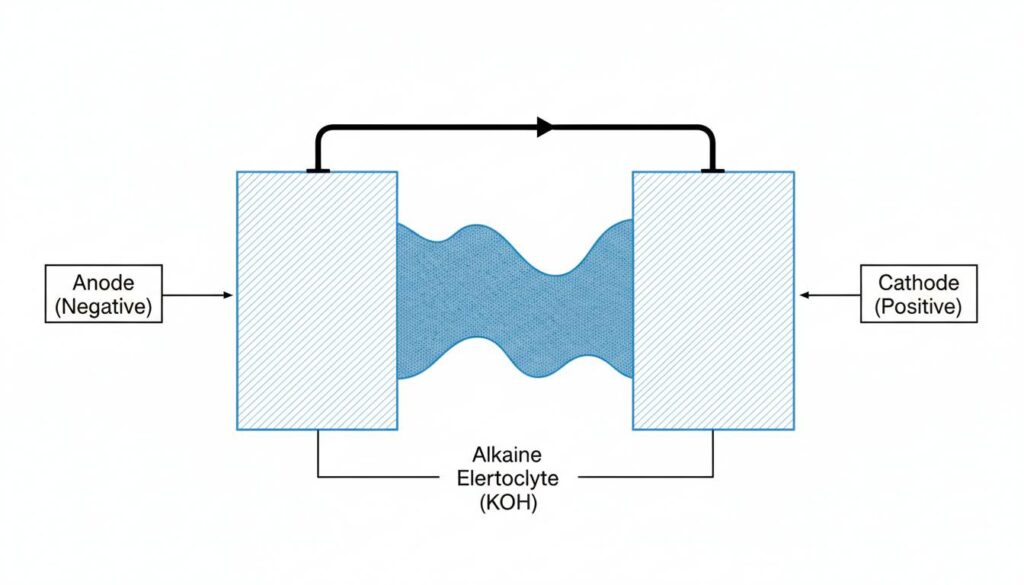
A cross-section technical illustration of the layers in a fuel cell. Label the left layer ‘Anode (Negative)’, the right layer ‘Cathode (Positive)’, and the center liquid ‘Alkaline Electrolyte (KOH)’. Show a wire connecting the top of the Anode to the top of the Cathode.
How Do Alkaline Fuel Cells Work?
The alkaline fuel cell working principle relies on electrochemical reactions occurring at two separate electrodes.
Here’s the simplified process:
• Hydrogen is fed to the anode
• Oxygen is fed to the cathode
• Electrons flow through an external circuit
• Hydroxide ions move internally through the electrolyte
• Electricity and water are produced
No combustion occurs at any stage.
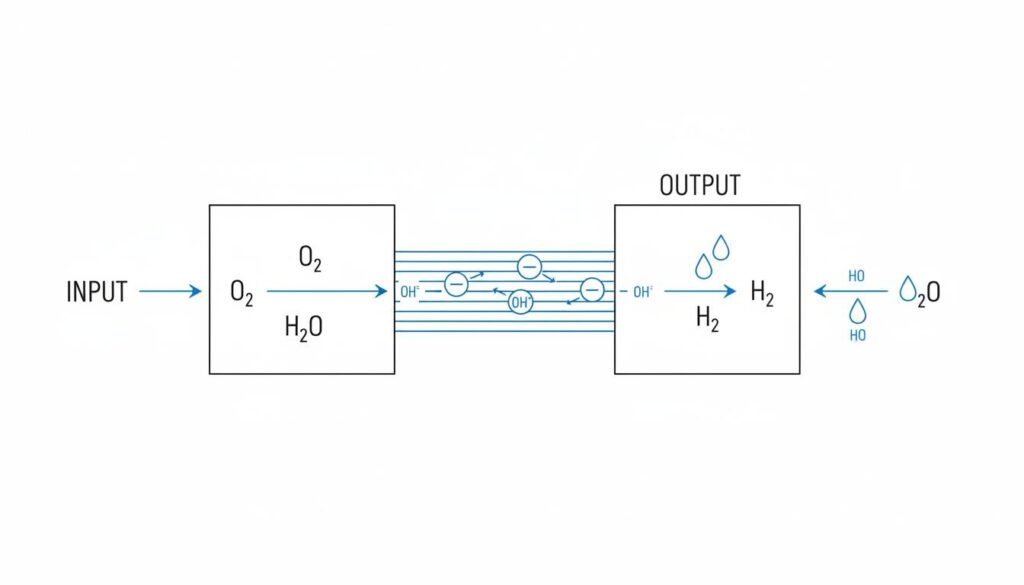
A diagram showing the chemical reaction. On one side, show Oxygen (O2) and Water (H2O) entering. Show Hydroxide ions (OH–) swimming across a liquid gap. On the other side, show them meeting Hydrogen (H2) to create new Water droplets.
Chemical Reactions in an Alkaline Fuel Cell
Anode Reaction (Hydrogen Oxidation)
At the anode:
• Hydrogen reacts with hydroxide ions
• Water and electrons are produced
Hydrogen + Hydroxide Ions  Water + Electrons
(The electrons leave to do work).
The released electrons travel through a wire, generating electrical current.
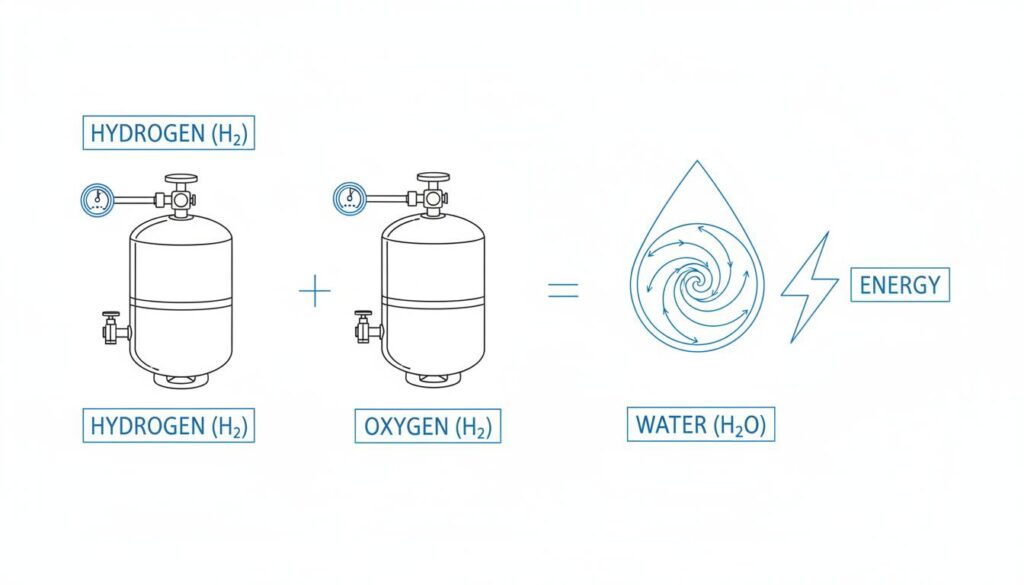
A simple equation graphic. A picture of a Hydrogen tank plus a picture of an Oxygen tank equals a picture of a water droplet and a lightning bolt symbol.
Cathode Reaction (Oxygen Reduction)
At the cathode:
• Oxygen reacts with water and incoming electrons
• Hydroxide ions are produced
Oxygen + Water + Electrons Hydroxide Ions
(The electrons come back home).
These hydroxide ions migrate back to the anode, completing the cycle.
Overall Alkaline Fuel Cell Reaction
When both reactions are combined:
• Hydrogen + Oxygen Water + Electricity
• Electrical energy is continuously generated
This closed-loop process allows alkaline fuel cells to operate as long as fuel is supplied.
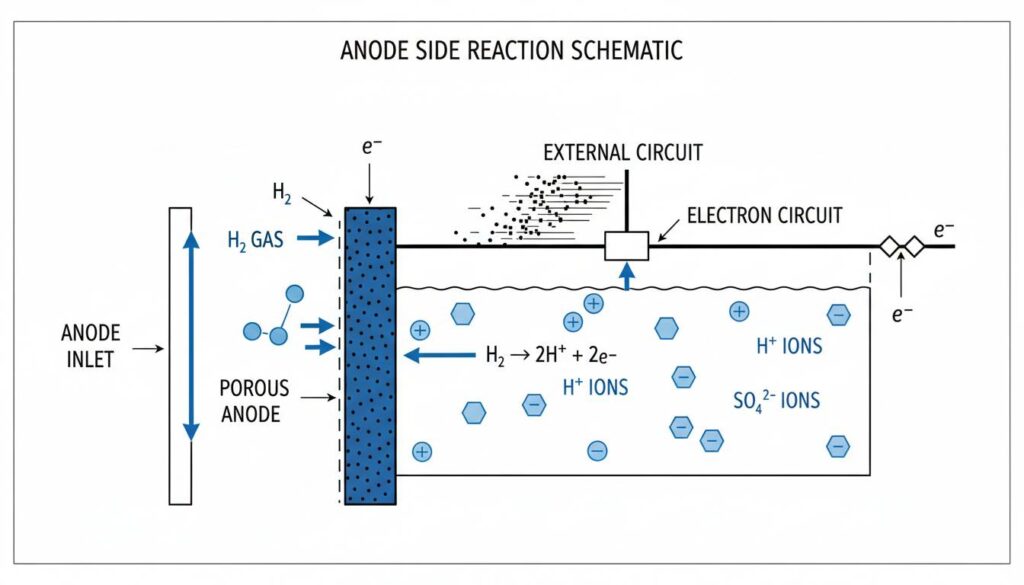
A close-up diagram focusing on the Anode side. Show Hydrogen gas molecules (H2) hitting the wall. Show small dots representing electrons (e–) zooming up a wire, while other particles stay in the liquid.
Role of the Alkaline Electrolyte in AFCs
The alkaline electrolyte is essential because it:
• Enables fast ion conduction
• Improves reaction efficiency
• Allows operation at relatively low temperatures
Potassium hydroxide is widely used due to its high ionic conductivity.
Fuel and Oxidant Delivery System
Efficient fuel delivery is critical for AFC performance.
• Hydrogen is supplied evenly across the anode
• Oxygen is distributed at the cathode
• Gas diffusion layers regulate flow and reaction rates
This design ensures stable output and prevents fuel starvation.
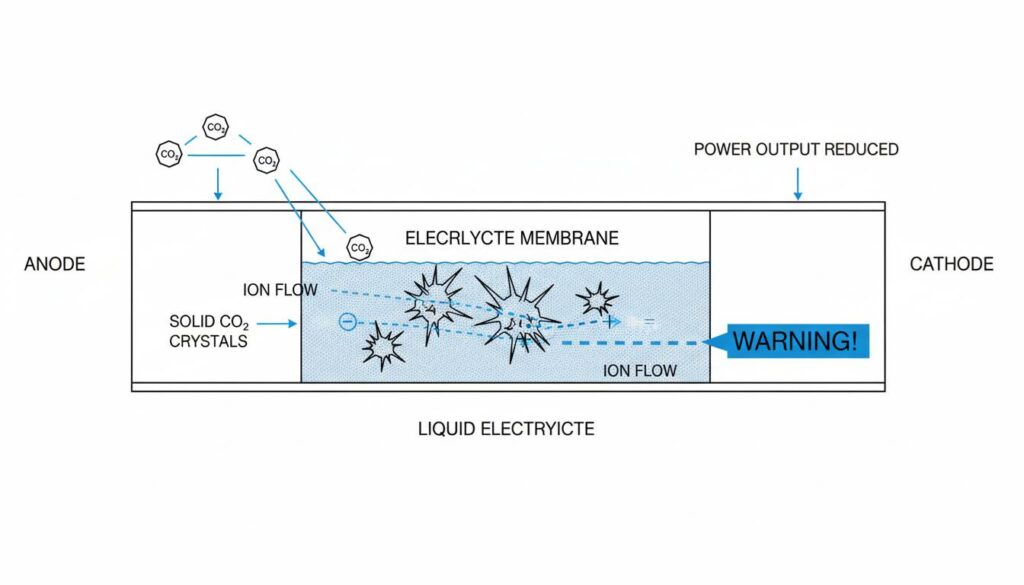
A schematic showing a ‘Warning’ scenario. Show CO2 molecules entering the fuel cell and turning into solid crystals (clumps) inside the liquid electrolyte, blocking the flow of ions.
Advantages of Alkaline Fuel Cells
High Electrical Efficiency
Alkaline fuel cells offer:
• Higher efficiency than many other fuel cell types
• Fast reaction kinetics
• Low internal resistance
They can convert a large percentage of fuel energy directly into electricity.
Lower Catalyst Cost Potential
Unlike some fuel cells:
• AFCs can use non-precious metal catalysts
• Reduced dependence on platinum
• Potentially lower manufacturing costs
1. They Are Very Efficient
Regular car engines waste a lot of energy as heat. AFCs are cooler. They turn more of the fuel directly into power. They are one of the most efficient types of fuel cells.
2. Cheaper Materials
Some fuel cells need expensive metals like Platinum. AFCs can use cheaper metals like Nickel or Silver. This makes them cheaper to build.
3. Fast Start
They start working instantly. You don’t need to wait for them to warm up like a diesel engine.
Challenges and Limitations of Alkaline Fuel Cells
If AFCs are so great, why don’t we have them in every car?
Sensitivity to Carbon Dioxide
One major drawback is CO₂ sensitivity.
 is in the air all around us.
- • CO₂ reacts with the alkaline electrolyte
• Ifgets into the cell, it turns the liquid into a solid salt (Carbonate).
• Reduces conductivity and efficiency - This “clogs” the cell. It stops working.
- The liquid electrolyte (Potassium Hydroxide) hates Carbon Dioxide (
 ).
).
This is why AFCs often require:
• CO₂-free oxygen
• Air purification or scrubbing systems
Durability and Maintenance Issues
• Electrolyte degradation over time
• Component stability concerns
• Higher maintenance compared to some modern fuel cells
These factors limit widespread commercial use. Because of this, AFCs need pure oxygen. You cannot just use regular dirty air unless you clean it perfectly first.
Applications of Alkaline Fuel Cells
Space Applications
Alkaline fuel cells were famously used in:
• NASA Apollo program
• Space Shuttle program
They were selected because they:
• Delivered extremely reliable power
• Produced clean drinking water
• Operated efficiently in controlled environments
Submarines
Like space, submarines are closed environments. AFCs run quietly (no engine noise) and produce water for the crew.
Future and Niche Applications
Current research explores AFCs for:
• Stationary backup power systems
• Specialized transportation systems
• Controlled industrial environments
Their future depends on advances in CO₂ management.
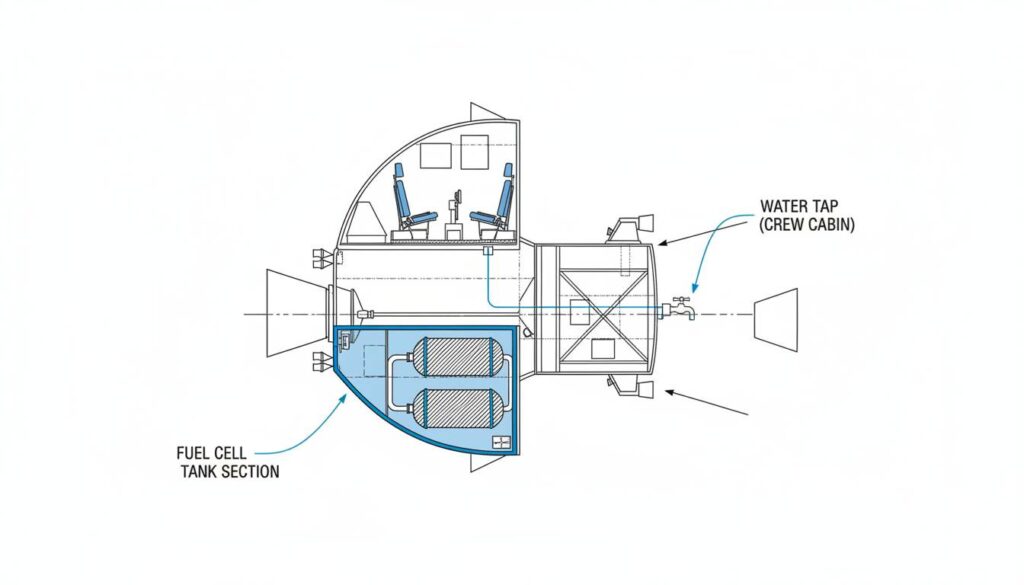
A technical drawing of the Apollo Service Module. Highlight the section where the fuel cell tanks were stored. Show a line connecting the fuel cell to a water tap inside the capsule.
Frequently Asked Questions About Alkaline Fuel Cells
What is the main byproduct of alkaline fuel cells?
The main byproduct is pure water, making AFCs environmentally friendly.
Are alkaline fuel cells expensive?
They can be cost-effective because they:
• Do not always require precious metals
• Operate efficiently at lower temperatures
Why is carbon dioxide harmful to AFCs?
CO₂ reacts with the alkaline electrolyte, forming carbonates that:
• Block ion flow
• Reduce efficiency
• Shorten cell lifespan
Conclusion
Alkaline fuel cells represent a powerful and efficient clean energy technology with a proven track record in space exploration. While their sensitivity to carbon dioxide limits mass adoption, they remain highly valuable in controlled and specialized applications.
Understanding how alkaline fuel cells work provides insight into the future of sustainable and efficient energy systems.
