Table of Contents
- What is an Extendable Robotic Arm and Why Invest?
- Core Factors Influencing Extendable Robotic Arm Prices
- Understanding Price Ranges: What to Expect
- Beyond the Base Price: Additional Costs to Consider
- How to Get an Accurate Quote and Maximize Your Investment
- Calculating Return on Investment (ROI) for Extendable Robotic Arms
Introduction

Understanding the true extendable robotic arm price is crucial for any business considering automation. The initial sticker price often represents only a fraction of the total investment. This comprehensive guide will break down the various factors that influence the cost of these versatile systems, from initial purchase to ongoing operational expenses, helping you budget effectively and make an informed investment decision. We’ll delve into the core specifications, market ranges, and hidden costs to ensure you gain clarity on your potential robotic arm total cost of ownership.
Key Takeaways
- The extendable robotic arm price is influenced by numerous factors, including reach, payload, degrees of freedom, precision, speed, and brand.
- Initial purchase costs range from $25,000 for entry-level collaborative robots to over $500,000 for high-end, specialized industrial arms.
- Beyond the base price, consider additional expenses like end-of-arm tooling, software, integration, installation, training, maintenance, and safety systems.
- A thorough understanding of the robot arm total cost of ownership (TCO) is essential for accurate budgeting and maximizing your investment.
- Strategic purchasing involves clearly defining needs, researching multiple vendors, and calculating the robotic arm ROI based on quantifiable and qualitative benefits.
What is an Extendable Robotic Arm and Why Invest?
Investing in automation requires a clear understanding of the technology and its benefits. Extendable robotic arms represent a significant leap in operational capability for many industries.These advanced robotic arms are specifically designed with articulated joints or telescoping segments, allowing them to achieve a significantly greater reach than standard industrial robots. This extended capability makes them ideal for tasks demanding long-distance manipulation, detailed inspection in confined spaces, or efficient material handling across expansive work areas. You’ll commonly find them deployed in sectors such as manufacturing, logistics, defense, and hazardous environments where human access is limited or unsafe.
The strategic benefits for businesses adopting these systems are substantial. They lead to increased operational efficiency and throughput, allowing for higher production volumes and faster processing. Safety is significantly improved by entrusting dangerous, repetitive, or ergonomically challenging tasks to robots, reducing human exposure to risk. Furthermore, extendable robotic arms offer enhanced precision and consistency in operations, leading to higher quality outputs and reduced waste. Perhaps most importantly, their ability to access hard-to-reach areas expands a business’s operational capabilities, enabling new processes and applications previously deemed impossible or too costly.
Typical Extendable Robotic Arm Cost Breakdown
Visualize how various factors contribute to the total extendable robotic arm price.
Initial Purchase (40%)
The upfront cost of the robotic arm hardware itself. This is the largest single expense but only one part of the total investment.
End-of-Arm Tooling (15%)
The cost of grippers, sensors, or tools attached to the robot’s wrist. This is critical for the robot to perform its specific task.
Software & Integration (15%)
Includes the cost of software licenses and the engineering work required to integrate the robot into your existing production line.
Installation & Training (10%)
The cost of physically installing the robot and training your team to operate and program it effectively.
Maintenance & Safety (20%)
Ongoing costs for regular maintenance, spare parts, and essential safety components like cages or light curtains to ensure a safe work environment.
Core Factors Influencing Extendable Robotic Arm Prices
The extendable robotic arm price is not a static figure; it fluctuates based on several critical engineering and design specifications. Understanding these robot arm pricing factors is key to predicting your investment.
Reach and Payload Capacity
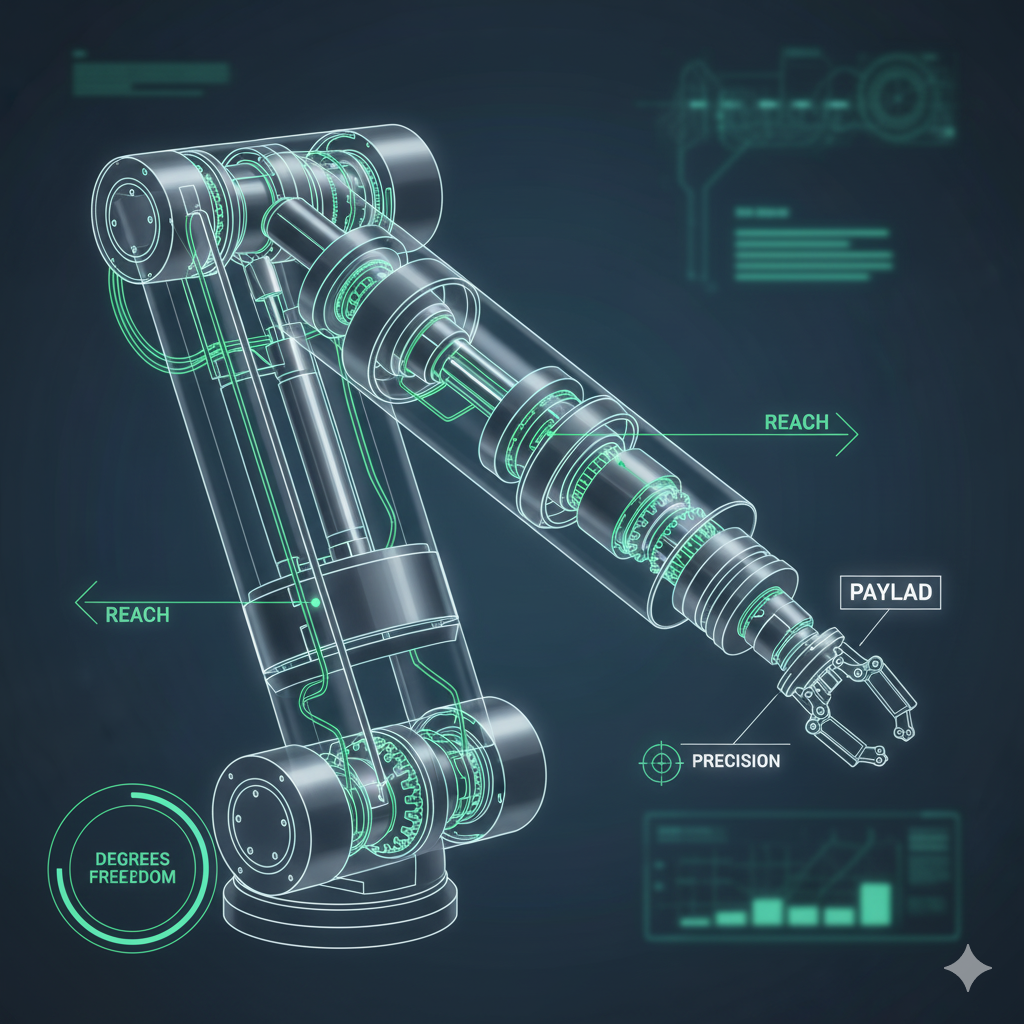
Two of the most significant determinants of an extendable robotic arm cost are its reach and payload capacity. Longer reach generally correlates with a higher cost due to the increased engineering complexity required to maintain rigidity and control over greater distances, as well as the use of stronger, lighter materials. Similarly, higher payload requirements necessitate more robust motors, gears, and structural components capable of handling heavier loads without compromising performance, directly increasing the industrial robot arm cost.
Degrees of Freedom (DOF)
The number of independent movements an arm can make, known as Degrees of Freedom (DOF), directly impacts its versatility and, consequently, its price. Robotic arms with more DOF (e.g., 6-axis or 7-axis robotic arm price) allow for greater dexterity and the execution of complex, intricate movements. This added flexibility is essential for sophisticated tasks but naturally drives up the extendable robotic arm price due to more complex mechanical designs and control systems.
Precision and Repeatability
For applications demanding extreme accuracy, such as precision assembly or welding, the robotic arm system cost will be higher. Arms designed for high-precision tasks require superior encoders, advanced feedback systems, and tighter manufacturing tolerances, all contributing to a higher price point. Repeatability, which specifies how accurately the arm can return to a programmed position, is a critical metric for quality control and also influences the overall cost of a robotic manipulator.
Speed and Cycle Time
Robots engineered for high-speed operation and rapid cycle times often require more powerful motors, advanced control systems, and specialized materials to withstand dynamic forces. These performance demands directly increase the extendable robotic arm price, as they represent significant investments in research, development, and high-performance components.
Brand and Technology
The manufacturer’s brand and the proprietary technologies they employ significantly influence the extendable robotic arm pricing models. Established manufacturers like KUKA (KUKA robotic arm price), FANUC (FANUC robot arm cost), ABB, and Universal Robots (Universal Robots price) often command higher prices due to their extensive R&D, proven reliability, global support networks, and advanced features. Proprietary technologies, specialized algorithms, or unique mechanical designs can also increase the base price.
Environmental Resistance and Certifications
If an extendable robotic arm is destined for harsh environments—such as those with dust, water, extreme temperatures, or cleanroom conditions—it will require special enclosures, corrosion-resistant materials, and robust sealing, all of which increase the manufacturing complexity and, thus, the cost. Additionally, specific industry certifications (e.g., ISO, CE) for safety or performance may also influence the final industrial automation robot price.
Understanding Price Ranges: What to Expect
To provide a clearer picture of the extendable robotic arm price, it’s helpful to categorize them into general price ranges based on their capabilities and target applications.
Entry-Level & Collaborative Extendable Arms (Approx. $25,000 – $60,000)
These models often feature a smaller reach and payload capacity, making them suitable for lighter tasks. This category frequently includes collaborative robots (cobots), such as the collaborative robot arm price models, designed for safer human interaction without extensive safety caging. They excel in applications like pick-and-place, inspection, or basic material handling in controlled environments, offering an affordable robotic arm solution for businesses new to automation. The Dobot robotic arm price often falls into this entry-level segment, making them accessible for educational robotic arm cost considerations as well.
Mid-Range Industrial Extendable Arms (Approx. $60,000 – $150,000)
Moving up, mid-range industrial extendable arms offer increased reach, payload, and speed capabilities. They typically feature more degrees of freedom and higher precision, making them versatile for a broader array of tasks. These are commonly used in general manufacturing, machine tending, and more robust assembly operations where enhanced performance is required but extreme specialization is not. This category represents a significant portion of the industrial robotic arm price market.
High-End & Specialized Extendable Arms (Approx. $150,000 – $500,000+)
At the top end, high-end and specialized extendable arms are engineered for very long reach, heavy payload capacity, and extreme precision. These are often custom-built for specific, demanding applications in industries like aerospace, large-scale construction, or hazardous material handling, where a robotic arm with long reach price justifies the investment. They are frequently integrated with advanced vision systems or specialized end-effectors, pushing the advanced robotic arm price significantly higher due to their bespoke nature and advanced capabilities.
Beyond the Base Price: Additional Costs to Consider
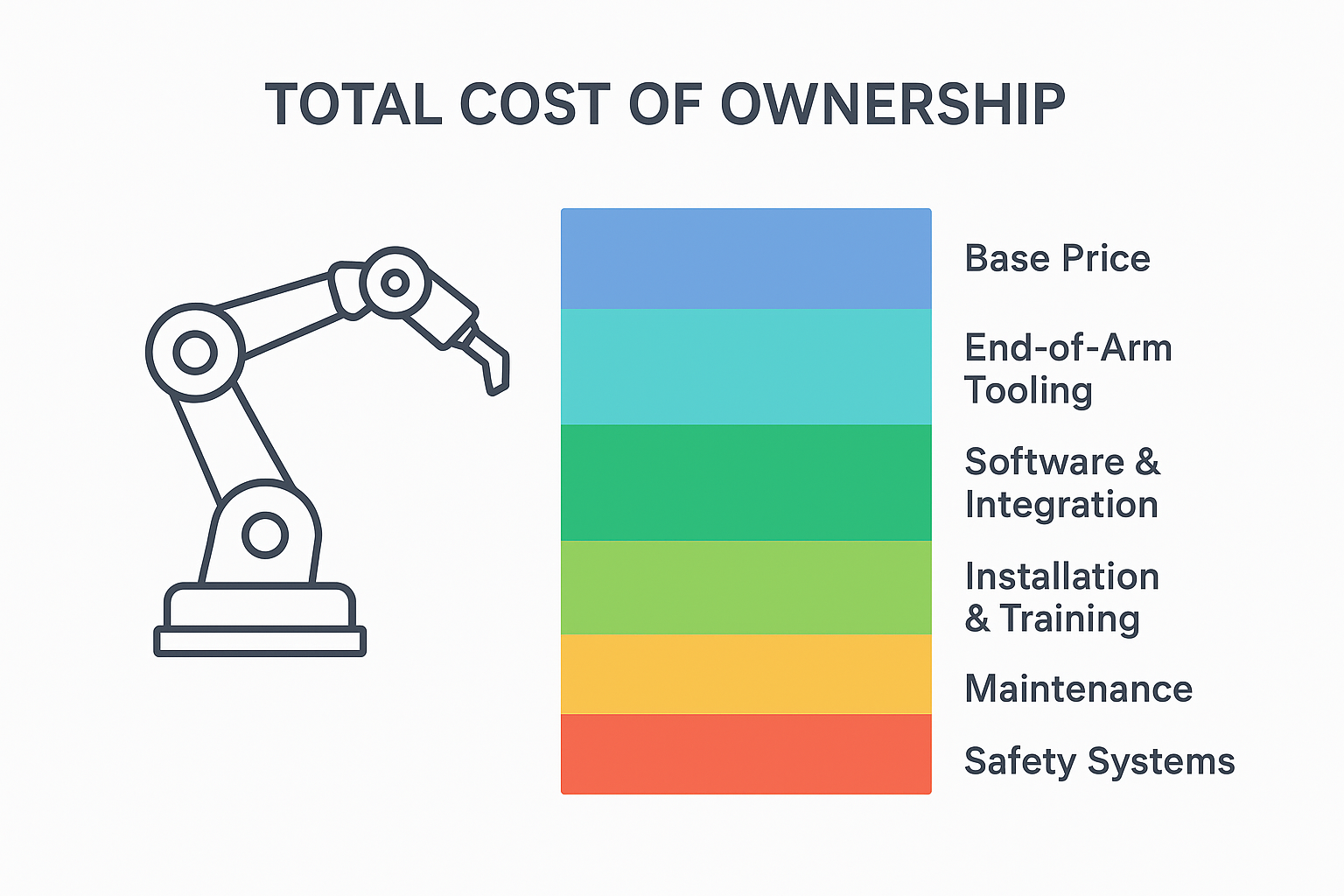
The initial extendable robotic arm price is merely the starting point. A true automation cost analysis requires factoring in several additional, and often substantial, expenses to determine the robot arm total cost of ownership.
End-of-Arm Tooling (EOAT) / Grippers
The robot arm itself is only one component. Specialized end-of-arm tooling (EOAT), such as custom grippers, vacuum tools, welding torches, or other application-specific tools, are almost always additional costs. These can range from a few thousand to tens of thousands depending on their complexity and customization needs, significantly impacting the overall robotic arm system cost.
Software and Integration
Effective automation requires more than just hardware. Programming software, simulation tools, and seamless integration with existing factory systems (e.g., PLCs, MES) incur costs. Expert integration services may be required to ensure the robotic arm communicates effectively with your current infrastructure, adding to the overall project expense. This is a critical aspect of understanding the full extendable robotic arm cost.
Installation, Training, and Maintenance
Professional installation and calibration are essential for proper setup and optimal performance of your new robotic arm. Furthermore, training for operators and maintenance staff is non-negotiable for safe operation, troubleshooting, and longevity. Ongoing maintenance contracts, spare parts, and servicing are recurring robotic arm maintenance cost components that must be budgeted for. According to a study by ABI Research, maintenance can account for 10-20% of the total operating cost over a robot’s lifespan, highlighting the importance of considering [[robot arm lifecycle costs]].
Safety Systems and Peripherals
Safety is paramount in any industrial setting. Safety fencing, light curtains, vision systems, emergency stops, and other safety measures are often legally required and add to the system cost, especially for non-collaborative industrial robots. These peripherals are a necessary part of the industrial automation robot price, ensuring compliance and worker protection.
How to Get an Accurate Quote and Maximize Your Investment
Securing a precise extendable robotic arm price and ensuring a strong robotic arm ROI involves a strategic approach. Here’s how to navigate the purchasing process:
- Clearly Define Your Application and Requirements: Before contacting vendors, meticulously specify the desired reach, payload, speed, precision, and environmental conditions (e.g., cleanroom, washdown). Detail every task the arm will perform, including part dimensions, cycle times, and integration points with existing equipment. This clarity is fundamental to getting an accurate custom robotic arm price.
- Research and Contact Multiple Vendors: Obtain detailed quotes from several reputable manufacturers and integrators. Don’t just compare the initial extendable robotic arm price; evaluate features, the quality of support, warranty terms, and their track record. Look for vendors who offer flexible extendable robotic arm pricing models, including potential robot arm rental cost or robotics as a service pricing options.
- Consider Total Cost of Ownership (TCO): Always look beyond the initial purchase price. Factor in installation, training, maintenance, energy consumption, and potential downtime. A comprehensive TCO analysis will reveal the true extendable robotic arm cost over its lifespan. Factor in the potential ROI from increased productivity, reduced labor costs, and improved safety. For example, a robotic arm that reduces waste by 15% and improves throughput by 20% can justify a higher upfront cost over its operational life.
- Look for Scalability and Future-Proofing: Consider if the chosen system can adapt to future production changes or increased demands. Investing in a system with some degree of expandability or compatibility with future technologies can prevent costly overhauls down the line.
- Emphasize Vendor Support and Service Agreements: A robust support system and comprehensive service agreements are invaluable. They minimize downtime and ensure your investment continues to operate efficiently. Don’t underestimate the long-term value of reliable post-sales support when evaluating the cost of extendable robotic arm solutions. For more insights on selecting the right partner, consider this [[guide on industrial robotics integration]] from a reputable industry source.
Calculating Return on Investment (ROI) for Extendable Robotic Arms
Understanding the extendable robotic arm price is only half the battle; the other half is quantifying the robotic arm ROI. This crucial calculation helps justify the investment and demonstrates long-term value.Methods for calculating ROI typically involve comparing the total cost of ownership against the quantifiable benefits. These benefits include increased efficiency, reduced labor costs (through automation of repetitive tasks), improved safety (by removing human workers from hazardous environments), and higher product quality due to enhanced precision and consistency. Qualitative benefits, while harder to measure financially, also contribute to the overall value proposition, such as competitive advantage, improved employee satisfaction, and a modern brand image.
The investment is justified when the cumulative savings and benefits outweigh the total cost of ownership within an acceptable payback period. This often requires a detailed automation cost analysis, considering factors like increased throughput, reduced material waste, lower insurance premiums due to improved safety, and the ability to operate 24/7. Many businesses find that an extendable robotic arm, despite its initial price, delivers significant long-term value by transforming their operational capabilities and competitive standing.
Conclusion
The extendable robotic arm price is a multifaceted figure, influenced by technical specifications, brand reputation, and a range of additional integration and operational costs. By thoroughly understanding these factors and clearly defining your business’s unique needs, you can secure an accurate quote and make a strategic investment that delivers significant long-term value for your operations. For further insights into robotic automation and to explore specific solutions, [[contact our robotics experts today]] for a personalized consultation tailored to your specific requirements.
Frequently Asked Questions
How much does a small extendable robotic arm cost for a beginner or educational use?
A small extendable robotic arm, often suitable for educational purposes or light-duty tasks, typically has an extendable robotic arm price ranging from $25,000 to $40,000. These are usually collaborative robots (cobots) with limited reach and payload, providing an accessible entry point to robotics without the advanced features of industrial models. Brands like Dobot offer more affordable robotic arm solutions for these applications.
What is the average industrial extendable robotic arm price for manufacturing?
The average industrial extendable robotic arm price for manufacturing applications can vary significantly, generally falling between $60,000 and $150,000. This range typically covers mid-range arms with increased reach, payload, and precision suitable for tasks like machine tending, welding, or assembly. The specific industrial robotic arm price depends heavily on the required specifications and the manufacturer.
What factors contribute most to the total cost of ownership for an extendable robotic arm?
Beyond the initial extendable robotic arm price, the total cost of ownership is heavily influenced by installation and integration services, specialized end-of-arm tooling, software licenses, ongoing maintenance contracts, spare parts, and operator training. Safety systems and energy consumption are also significant factors. These additional robotic arm pricing factors can collectively add 50-100% or more to the initial purchase price over the arm’s lifespan.
Can I get a custom extendable robotic arm price for a specialized application?
Yes, for highly specialized applications requiring unique reach, payload, or environmental resistances, you can absolutely get a custom extendable robotic arm price. Manufacturers often design bespoke solutions, integrating advanced features like vision systems or custom end-effectors. These custom robot arm prices tend to be at the higher end of the spectrum, typically ranging from $150,000 to over $500,000, reflecting the significant engineering and customization involved.
