Introduction

Mechanical engineering shapes our world, from the smallest medical devices to the largest aircraft. At the heart of this innovation sits Computer-Aided Design, or CAD. For decades, CAD has transformed how engineers bring ideas to life, moving from paper drawings to intricate 3D modeling. But what does the future hold for CAD in Mechanical Engineering? The landscape is changing rapidly, driven by powerful technological advancements that promise to redefine design, analysis, and manufacturing. This guide explores the exciting shifts and innovations that are making CAD tools more intelligent, collaborative, and capable than ever before. Prepare to understand how these trends will shape your career and the projects you work on.
Key Takeaways
- AI and Machine Learning will automate tasks and offer intelligent design suggestions, greatly improving engineering productivity in CAD in Mechanical Engineering.
- Generative design, powered by algorithms, will produce optimized, complex geometries that human designers might miss, driving new product forms.
- Cloud-based CAD platforms will enable global, real-time collaboration and reduce hardware dependencies, making CAD in Mechanical Engineering more accessible.
- Immersive AR/VR technologies will allow engineers to visualize and interact with designs in new, intuitive ways, enhancing design visualization.
- Digital twins will offer continuous, real-time insights into product performance, linking CAD in Mechanical Engineering design to operational data for optimization.
What Role Will AI and Machine Learning Play in CAD for Mechanical Engineering?
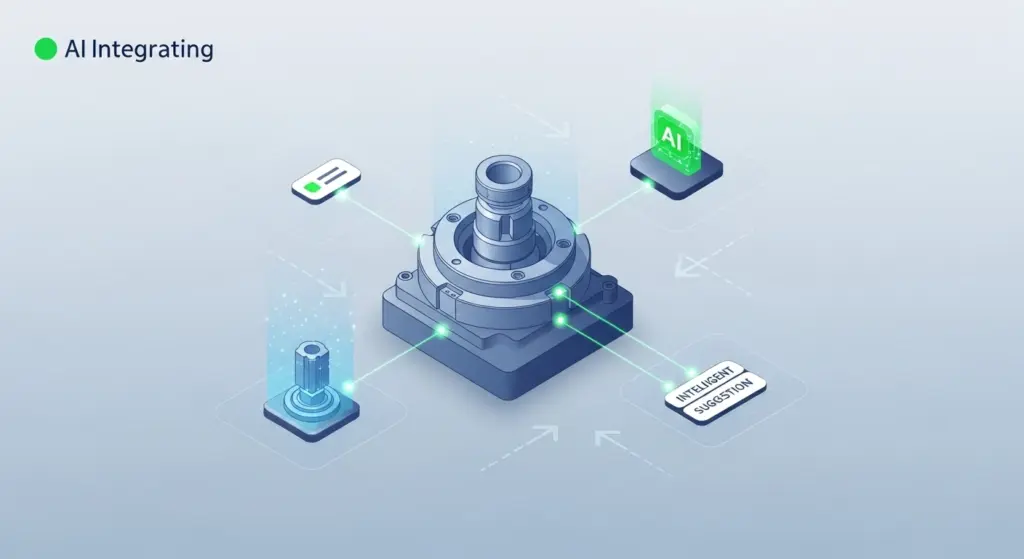
AI and Machine Learning are set to revolutionize CAD in Mechanical Engineering by automating tasks, optimizing designs, and providing intelligent recommendations. This integration significantly boosts engineering productivity by analyzing data and suggesting improvements.
How Do AI-Powered Design Assistants Help Engineers?
AI-powered design assistants offer contextual suggestions, execute commands, and learn from user habits. They facilitate generative assembly suggestions, feature recognition (converting images to 3D models), and automate constraint creation.
Can AI Support Predictive Maintenance with CAD Data?
Yes, AI aids in predictive maintenance by analyzing CAD models and simulations to forecast potential failures. This helps identify at-risk parts proactively, reducing downtime and extending equipment lifespan.
How Does AI Use CAD Models for Maintenance?
AI uses CAD models and simulation data to represent component wear. Comparing this with real-time sensor data predicts maintenance needs, preventing unexpected breakdowns. This is a critical role of CAD in manufacturing.
What is Generative Design and How Does It Benefit Mechanical Engineers?
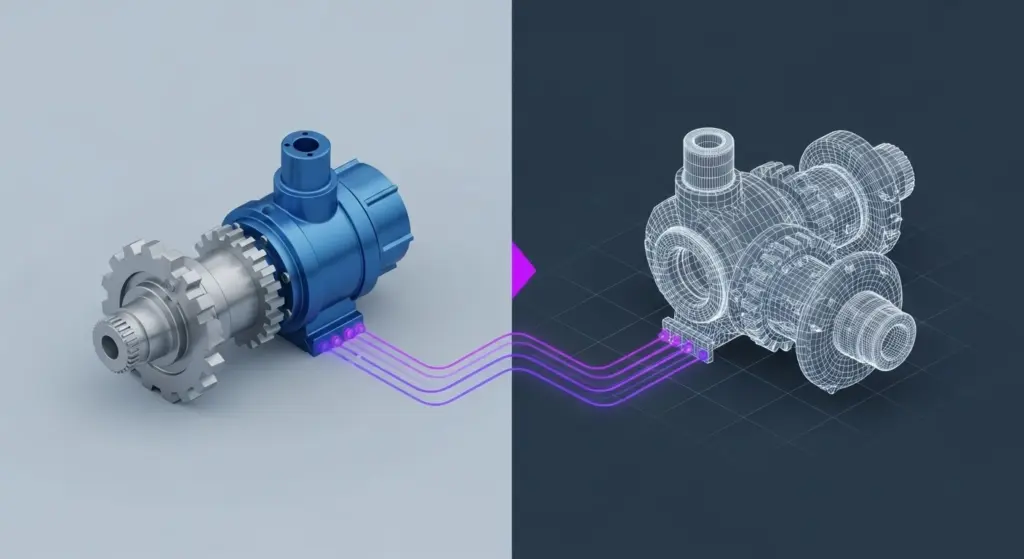
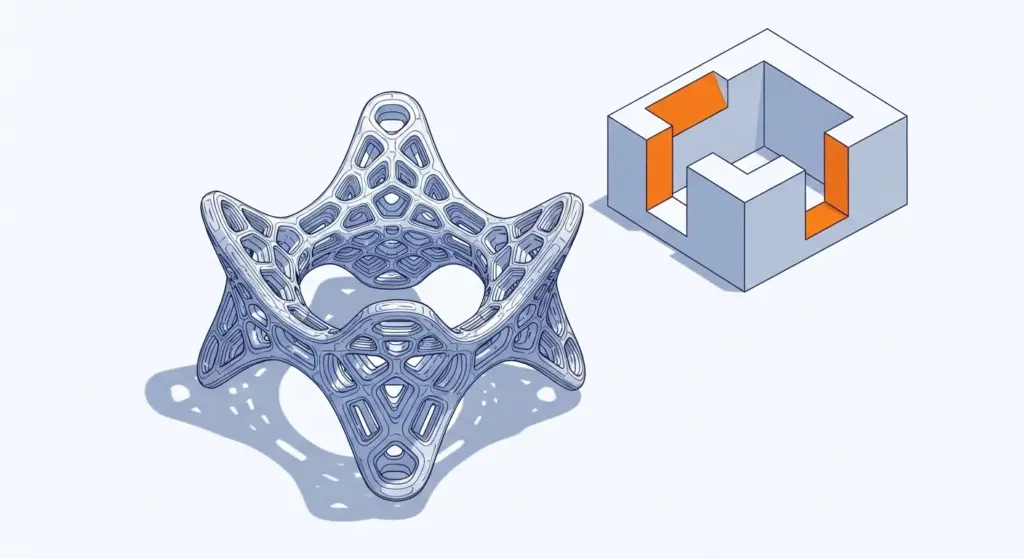
Generative design, powered by AI and machine learning, allows engineers to define design goals and constraints, then automatically generate optimized design options. This process creates lighter, stronger, and more efficient structures difficult for humans to create manually.
How Does Generative Design Create Optimized Structures?
Generative design leverages mathematical optimization and Finite Element Analysis CAD (FEA) to create intricate geometries. It iteratively refines designs, often resulting in organic, lattice-like forms efficient in material use and structural integrity.
What Algorithms Drive Generative Design Optimization?
Optimization is driven by advanced algorithms that explore vast solution spaces. They consider material properties, loads, and manufacturing constraints, iteratively adding or removing material until optimal forms are achieved.
What are the Practical Applications of Generative Design?
Practical applications span industries like aerospace and automotive design, creating lighter aircraft components and stronger chassis parts. This advanced CAD technique enables rapid digital prototyping mechanical components with precision.
Which Industries Benefit Most from Generative Design?
Industries benefiting most include aerospace for lightweighting, automotive for structural optimization, and medical for custom implants. These sectors require complex, performance-driven designs that generative design excels at producing.
Why Are Cloud-Based CAD Solutions Important for Modern Engineering?
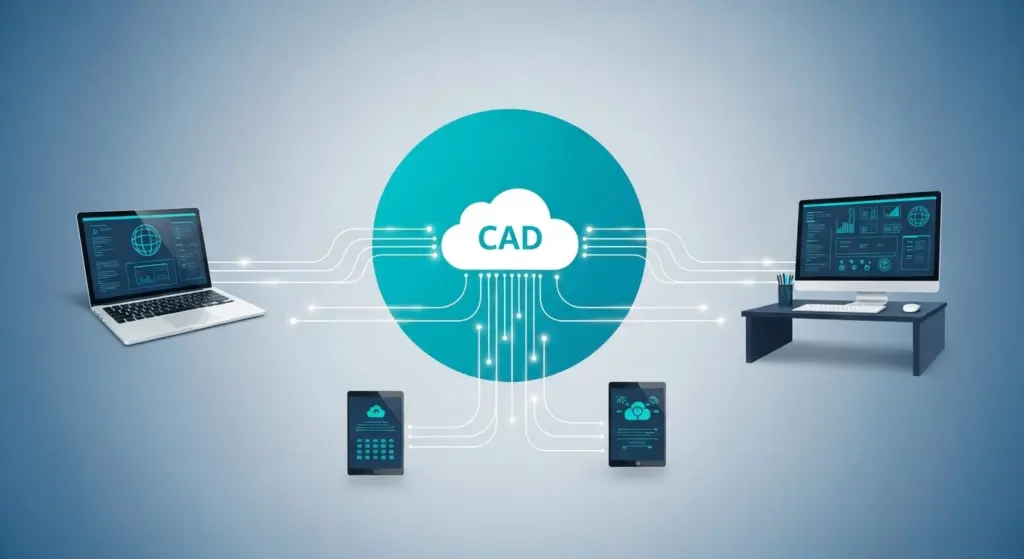
Cloud-based CAD solutions are gaining prominence due to their flexibility, scalability, and enhanced accessibility. These platforms enable real-time collaboration and data sharing among global teams, eliminating the need for expensive local hardware.
What are the Core Advantages of Cloud CAD Platforms?
Cloud platforms offer several core advantages that streamline engineering workflows and reduce data management issues, including centralized data management, automatic updates, and version control.
Why Are These Advantages Important for Engineers?
These advantages are important for engineers because they simplify data handling and ensure access to the latest software. Cloud platforms reduce reliance on local hardware and complex installations, making 3D CAD for engineering more efficient.
What Specific Benefits Do Cloud Platforms Provide?Cloud platforms provide specific benefits that enhance productivity and collaboration:
- Centralized Data Management: All project data is stored in one location, ensuring consistency.
- Automatic Software Updates: Users always have the newest features without manual effort.
- Built-in Version Control: Easily track design iterations and revert to previous versions.
- Reduced Hardware Costs: Eliminates the need for expensive local workstations.
- Global Accessibility: Work from anywhere with an internet connection.
Examples such as Onshape and Autodesk Fusion 360 for mechanical engineers facilitate simultaneous editing and integrated product data management (PDM).
How Do Cloud-Based Systems Enhance Collaboration?
Cloud-based systems significantly enhance collaboration by allowing multiple stakeholders to work simultaneously on the same project in a shared digital space. This fosters immediate communication and streamlines feedback.
What is Real-Time Collaboration in Cloud CAD?
Real-time collaboration means multiple engineers can edit the same CAD model concurrently, seeing changes instantly. This accelerates design cycles and improves coordination across distributed teams.
How Are Advanced Simulation and Analysis Techniques Evolving in CAD?
The future of CAD involves more sophisticated simulation capabilities, including multi-physics simulations that integrate thermal, structural, and fluid dynamics into a single analysis. This provides a comprehensive understanding of product performance.
What is Real-Time Simulation and Its Impact?
Real-time simulation is advancing, allowing engineers to interactively test designs and receive immediate feedback as changes are made. This accelerates decision-making and iterative design processes.
Why is Instant Feedback Important in Design?
Instant feedback helps engineers refine designs faster than traditional batch simulations, providing significant benefits of CAD for engineers needing rapid validation. It reduces time spent on design iterations.
How Does Rapid Validation Impact Project Timelines?
Rapid validation shortens development cycles by enabling earlier, informed decisions. It reduces the need for costly physical prototypes and extensive rework, accelerating product launch.
How Does AI Improve Simulation and Analysis?
AI-assisted tools enhance simulation by running parametric studies faster and streamlining meshing, a time-consuming part of CAE mechanical engineering. AI suggests optimal mesh densities and generates efficient setups.
How Does AI Streamline Meshing?
AI speeds up meshing by automatically generating efficient and appropriate mesh topologies. This significantly reduces manual effort, ensuring higher quality meshes are produced faster.
How Does AI Accelerate Parametric Studies?
For parametric studies, AI quickly explores design possibilities by intelligently varying parameters and predicting outcomes. This allows engineers to perform more iterations with greater efficiency and precision engineering CAD techniques.
What is the Advantage of AI-Driven Parametric Exploration?
AI-driven exploration uncovers non-obvious optimal designs by testing thousands of variations impractical manually. This leads to better performing and more innovative products.
How Are AR and VR Technologies Changing Design Visualization?
Augmented Reality (AR) and Virtual Reality (VR) technologies are transforming how engineers visualize and interact with their designs, offering immersive experiences beyond traditional screen-based viewing. These tools provide new perspectives for understanding 3D CAD for engineering models.
What are the Benefits of VR for Design Review?
VR immerses users in a digital environment, allowing them to virtually walk through and manipulate 3D models at full scale. This helps identify potential issues early in the design cycle.
How Does Full-Scale VR Interaction Aid Engineers?
Full-scale VR interaction allows engineers to experience designs as if physically present, assessing ergonomics and clearances. This deep understanding helps catch design flaws missed on a 2D screen.
What Types of Issues Can VR Identify Early?
VR can identify issues like poor accessibility, uncomfortable user interfaces, or spatial conflicts. This early detection saves time and resources by preventing costly physical prototype modifications.
How Does AR Assist in Real-World Design Assessment?
AR overlays digital models onto real-world environments, helping engineers assess spatial relationships and interactions in real-time. An engineer could project a new machine design onto a factory floor.
What are the Benefits of AR for Spatial Planning?
AR offers immediate visual context for spatial planning, verifying fit and function within existing physical spaces without moving heavy machinery. This capability is invaluable for plant layouts.
How Does AR Reduce Physical Mock-ups?
AR reduces the need for physical mock-ups by providing a dynamic virtual overlay instantly adjustable and reviewable in situ. This saves significant material, labor, and time.
What is Model-Based Definition (MBD) and Its Role in the Enterprise?
Model-Based Definition (MBD) signifies a shift where the 3D CAD model becomes the single, authoritative source for all product manufacturing information (PMI). This embeds dimensions, tolerances, and annotations directly within the 3D model, reducing reliance on 2D drawings.
How Does MBD Streamline Manufacturing Workflows?
MBD streamlines workflows across design, manufacturing, and inspection by providing a complete digital definition. Machinists and quality control access information directly from the 3D model, eliminating misinterpretations.
How Does MBD Reduce Errors in Manufacturing?
MBD reduces errors by ensuring a single source of truth for all PMI, preventing discrepancies between 2D drawings and 3D models. This leads to greater accuracy on the shop floor.
What is the Concept of a Model-Based Enterprise (MBE)? A Model-Based Enterprise (MBE) is a broader strategy where the annotated 3D model serves as a central hub for all product lifecycle data. This integrates processes from design to production.
Why is MBD Crucial for Product Lifecycle Management?
MBD is crucial for Product Lifecycle Management CAD because it ensures data consistency and integrity throughout a product’s journey. Centralizing information within the 3D model supports efficient data exchange.
How Does MBD Enhance Data Consistency?
MBD enhances data consistency by embedding all necessary product information directly within the 3D model. This prevents data silos and ensures everyone works with the most current and accurate data.
What are the Benefits for Design Automation?
MBD significantly benefits design automation engineering by providing structured, machine-readable data. This directly supports automated processes like CAM programming or quality inspection, reducing manual input.
How Does Digital Twin Technology Integrate with CAD?
Digital twin technology involves creating virtual representations of physical products, systems, or processes. These are continuously updated with real-time data from sensors and IoT devices, integrating with CAD to provide a comprehensive understanding of performance.
What are the Practical Applications of Digital Twins in Engineering?
Digital twins enable predictive maintenance, real-time monitoring, process optimization, and virtual testing. They provide insights into performance and behavior throughout a product’s lifecycle, reducing costs and accelerating innovation.
How Do Digital Twins Support Predictive Maintenance?
Digital twins support predictive maintenance by continuously comparing real-time sensor data from physical assets with simulated behavior. This allows for early detection of anomalies and potential failures.
What is the Role of Real-Time Monitoring?
Real-time monitoring provides continuous insights into operational status, allowing engineers to track performance, identify inefficiencies, and respond proactively. This constant feedback loop is essential for optimization.
How Does a Digital Twin Improve Product Design?
A digital twin improves product design by offering a feedback loop from the operational world back to the design phase. Performance data informs future design iterations, leading to more robust products.
What is the Importance of the Operational Feedback Loop?
The operational feedback loop ensures new designs are based on real-world insights rather than assumptions. This continuous learning cycle refines product performance and addresses actual user needs.
How Does This Feedback Enhance CAD Benefits?
This feedback enhances the benefits of CAD for engineers by validating design choices with real-world data. It leads to more informed decisions and creates more pronounced advantages in product development.
What Enhancements Are Coming for Collaboration and User Interfaces in CAD?
Beyond cloud-based platforms, CAD software is evolving with more intuitive user interfaces, potentially incorporating voice and gesture controls. These enhancements aim to reduce the learning curve and speed up design tasks for all users.
How Will User Interfaces Become More Intuitive?
User interfaces are becoming simpler and more adaptive, moving towards context-aware menus and personalized layouts. Imagine speaking commands to AutoCAD mechanical engineering or using gestures to manipulate a SolidWorks mechanical design.
What New Interaction Methods Are Emerging?
New interaction methods include voice and gesture controls, making CAD operations more natural and efficient. This reduces reliance on traditional mouse and keyboard inputs, speeding up design tasks.
How Do Personalized Layouts Improve Efficiency?
Personalized layouts adapt to individual user preferences and workflows, presenting relevant tools and information when needed. This reduces clutter and improves overall efficiency for all users.
What is the Future of Collaborative Design Platforms?
Collaborative design platforms are becoming more sophisticated, allowing multiple stakeholders to work simultaneously on the same project in a shared digital space. This fosters immediate communication and streamlined feedback.
How Do Shared Digital Spaces Enhance Teamwork?
Shared digital spaces enable engineers, manufacturers, and clients to contribute and review designs in real-time. This immediate interaction ensures everyone is aligned, improving product development using CATIA in product development or similar software.
What is the Impact on Global Engineering Teams?
Global engineering teams benefit immensely, as geographical barriers are removed. Real-time co-creation ensures consistent progress and reduces delays caused by asynchronous communication across time zones.
Conclusion
The future of CAD in Mechanical Engineering is not just about better software; it’s about a complete transformation of the engineering workflow. From intelligent AI assistants and algorithmic generative design to collaborative cloud platforms and immersive AR/VR experiences, these advancements are reshaping how mechanical engineers approach design, analysis, and manufacturing. Embracing these technologies is key to staying competitive and driving innovation in the field. As these tools continue to evolve, they will empower engineers to tackle increasingly complex challenges with greater precision, speed, and creative freedom, solidifying the importance of CAD in mechanical engineering for the next generation.
Frequently Asked Questions
What is the primary benefit of AI integration in CAD for Mechanical Engineering?
The primary benefit of AI integration in CAD for Mechanical Engineering is the automation of routine tasks and the optimization of designs through intelligent recommendations. This significantly boosts engineering productivity, allowing engineers to focus on more complex and creative problem-solving rather than repetitive actions within their CAD systems.
How does generative design differ from traditional CAD design?
Generative design differs from traditional CAD design by automatically generating numerous optimized design options based on defined goals and constraints, rather than relying solely on human intuition. This allows for the creation of intricate, efficient geometries that might be impossible to achieve manually, fundamentally changing how engineers approach CAD in Mechanical Engineering.
Why are cloud-based CAD solutions becoming more popular?
Cloud-based CAD solutions are gaining popularity due to their flexibility, scalability, and enhanced accessibility. They enable real-time collaboration among global teams, eliminate the need for expensive local hardware, and offer centralized data management, making CAD in Mechanical Engineering more efficient and collaborative for distributed workforces.
What is a digital twin in the context of CAD and mechanical engineering?
A digital twin is a virtual representation of a physical product or system, continuously updated with real-time data from sensors. Integrated with CAD models, it provides comprehensive insights into performance and behavior throughout its lifecycle, allowing for predictive maintenance and process optimization, which is a powerful application of CAD in Mechanical Engineering.
How will AR/VR impact the future of mechanical design software?
AR/VR will impact mechanical design software by transforming design visualization and interaction. VR offers immersive full-scale model reviews, while AR overlays digital designs onto real-world environments. These technologies enhance collaboration, accelerate prototyping, and provide new ways to assess designs, pushing the boundaries of CAD in Mechanical Engineering.
