What is Machining?
Machining is one of the most important processes in manufacturing.
Almost every metal part you see—from car engines to smartphones—started as a solid block that had material removed from it.
In this article, we’ll break down conventional vs. unconventional machining in a clear, practical way.
In engineering, we do this with metal, plastic, and wood. Machining is the process of removing material from a block to make a specific part. We call the starting block the workpiece.
There are two main ways to do this:
- Conventional Machining (The Old School Way)
- Unconventional Machining (The Modern Way)

Technical Figure: A split illustration. On the left, a metal chisel peeling a strip off a metal block. On the right, a bright laser beam melting a hole through a metal plate. Label left ‘Conventional’ and right ‘Unconventional’.
Conventional Machining: The “Muscle” Method
Conventional machining is the traditional way we have cut things for hundreds of years. It relies on physical contact.
How It Works
Think of whittling a stick with a pocket knife. The knife touches the wood. You push hard. The knife slices off a piece of wood.
In conventional machining:
- A sharp cutting tool touches the workpiece.
- The tool must be harder than the workpiece.
- The tool pushes against the metal and shears (cuts) it off.
- The waste material comes off in little curls called chips.
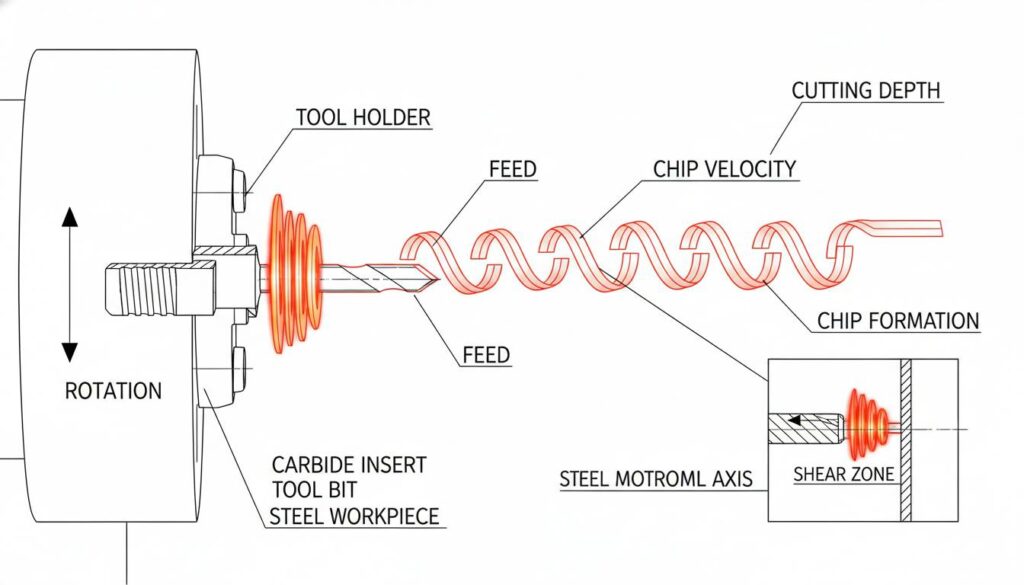
Technical Figure: Close-up of a lathe machine tool bit cutting into a spinning steel rod. Show hot metal chips curling away from the cutting point.
Key Characteristics
- Direct Contact: The tool and the metal always touch.
- Friction: Because they rub together, it creates friction and heat.
- Tool Wear: The cutting tool gets dull over time, just like a pencil gets dull when you write.
If you tried to cut a steel pipe with a plastic knife, what would happen? Why is it important for the tool to be harder than the material it is cutting?
Unconventional Machining: The “Energy” Method
Unconventional (or Non-Traditional) machining is different. It does not use a sharp knife to push through the metal. Instead, it uses energy.
How It Works
Think of using a magnifying glass to burn a hole in a leaf using the sun. You are not touching the leaf with the glass. You are focusing energy (heat) onto it.
In unconventional machining, we remove material using:
- Heat (Lasers or plasma)
- Electricity (Sparks)
- Chemicals (Acids)
- High Velocity (Water pressure)
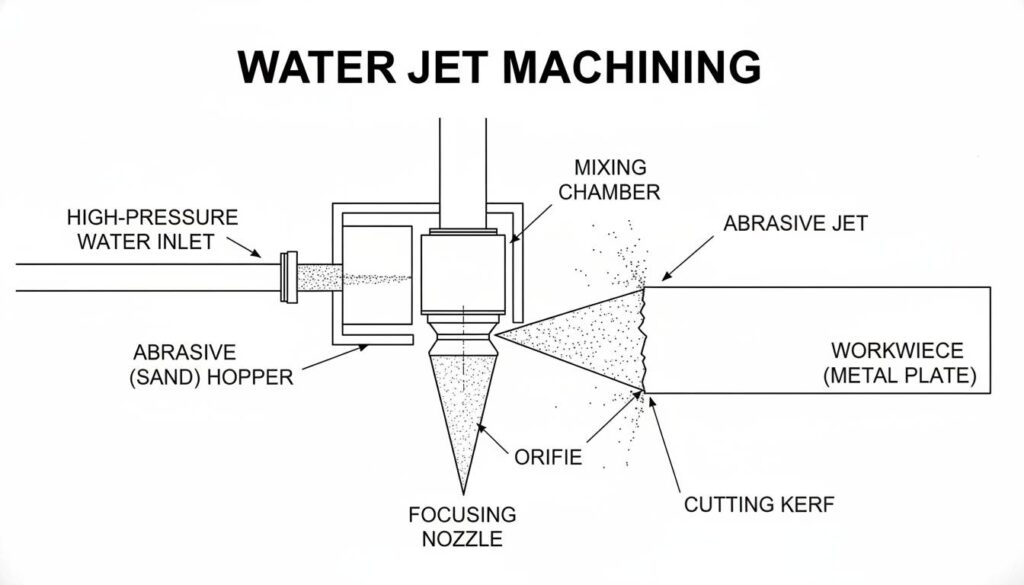
Technical Figure: A diagram showing a nozzle shooting a high-speed stream of water mixed with sand (abrasive) cutting through a thick metal plate. Label ‘Water Jet Machining.
Key Characteristics
- No Direct Contact: Usually, the tool does not touch the workpiece.
- Any Hardness: Since we aren’t using a physical blade, we can cut super-hard materials (like titanium or diamond) easily.
- Quiet(er): Some of these processes make less noise than grinding metal against metal.
Imagine you need to cut a shape out of a very thin, fragile sheet of glass. Would you use a hammer and chisel (Conventional) or a laser beam (Unconventional)? Why?
Major Differences: The Comparison
Here is how these two methods stack up against each other.
1. The Cutting Tool
- Conventional: Uses a physical tool made of hard metal or ceramic. The tool has a sharp edge.
- Unconventional: The “tool” is often a beam of light, a stream of water, or an electrical spark.

Technical Figure: Side-by-side comparison icon set. Left: A drill bit. Right: A lightning bolt icon representing electrical discharge.
2. Accuracy and Precision
- Conventional: Good for big, simple shapes. It is hard to make microscopic details because the tool is too big.
- Unconventional: Extremely precise. A laser can cut a hole smaller than a human hair.
3. Waste Material
- Conventional: Produces “chips” (curls of metal). These are easy to recycle.
- Unconventional: Produces dust, smoke, or sludge. This can be harder to clean up.
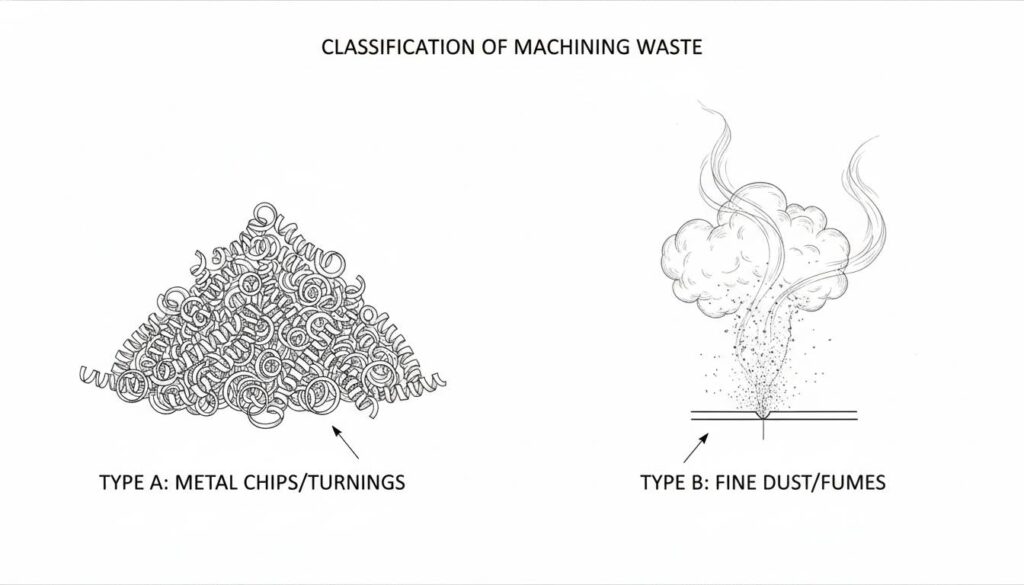
Technical Figure: Illustration of waste types. Left: Pile of curly metal shavings. Right: Fine dust particles and smoke rising from a cut.
4. Cost
- Conventional: Cheaper. A drill press costs much less than a laser machine.
- Unconventional: Expensive. The machines use a lot of electricity and cost a lot of money to buy.
Examples of Each Process
Conventional Examples
- Turning: Spinning a log of metal and shaving the sides (Lathe).
- Milling: A spinning cutter moves across a flat piece of metal.
- Drilling: Making round holes.
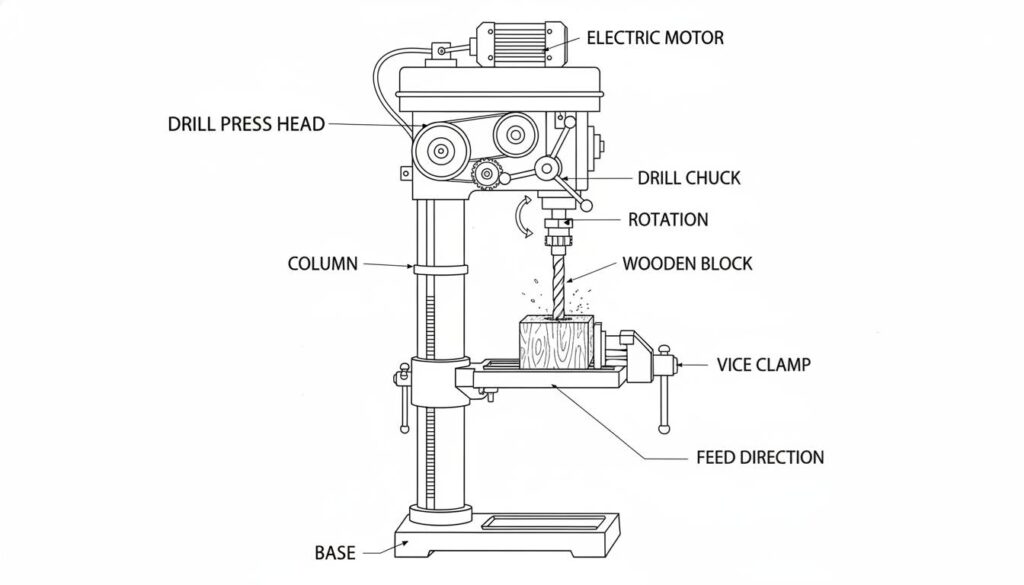
Technical Figure: A workshop scene showing a drill press making a hole in a wooden block. Simple and clear.
Unconventional Examples
- Laser Beam Machining (LBM): Using light heat to melt material.
- Water Jet Machining (WJM): Using high-pressure water to blast material away.
- Electrical Discharge Machining (EDM): Using lightning-like sparks to vaporize metal.
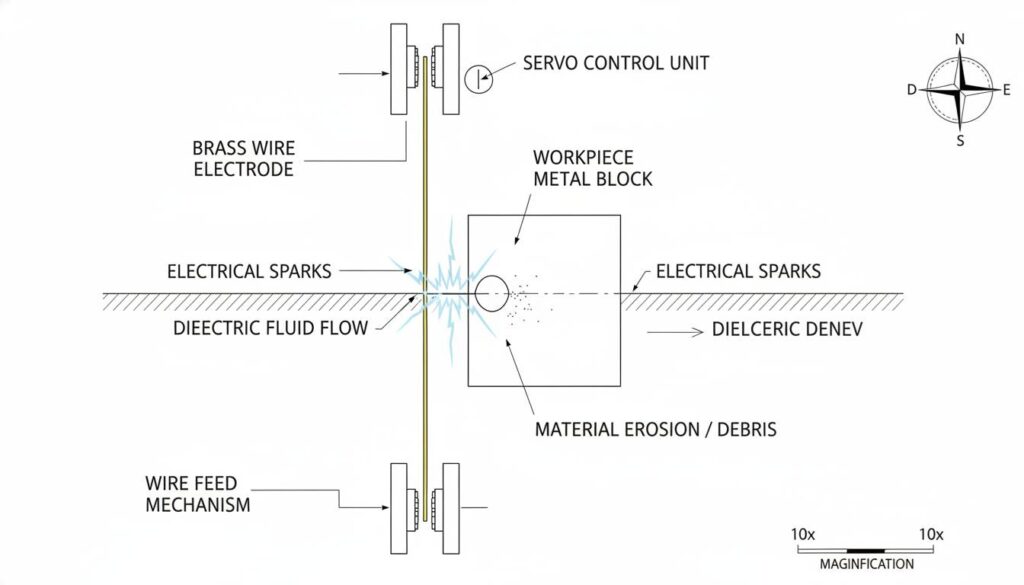
Technical Figure: Close up of an EDM machine. A brass wire is near a metal block, and blue sparks are jumping between them, eroding the metal.
Summary Table
| Feature | Conventional Machining | Unconventional Machining |
| Contact | Tool touches metal | Usually no contact |
| Tool Life | Wears out | Minimal wear |
| Material | Softer than tool | Any hardness |
| Speed | Faster for simple parts | Slower, very precise |
| Energy | Mechanical force | Thermal / electrical / chemical |
· Conventional machining is fast, cheap, and great for everyday parts.
·!– /wp:paragraph –>
· Factories use both, depending on shape, material, cost, and accuracy needs.
If unconventional machining is more precise, why do factories still use drilling and milling so often?
Even though unconventional machining is more precise, conventional machining wins in many everyday situations.
Here’s why 👇
• Lower cost
Conventional machines (drills, mills, lathes) are much cheaper to buy, run, and maintain than lasers or EDM machines.
• Faster for simple jobs
If you just need straight holes, flat surfaces, or round shafts, drilling and milling are much quicker.
• High production speed
Factories often make thousands of identical parts.
Conventional machining is perfect for mass production.
• Easy setup and operation
Setting up a drill or mill takes minutes, while unconventional machines need careful programming and control.
• Strong, durable results
Conventional machining doesn’t melt material, so it avoids heat damage in many parts.
Simple Way to Remember It
- Conventional machining = fast, cheap, strong, everyday work
- Unconventional machining = precise, complex, expensive, special cases
Factories choose the method that gives good enough accuracy at the lowest cost and highest speed.
