A power system is a giant network. It connects the place where electricity is made to the place where it is used. Think of it like a pizza delivery service. You have the kitchen (generation), the delivery truck (transmission), and the customer (utilization).
Focus Keyword: Power Systems Functions, Electricity Generation, Transmission, Distribution, Electrical Grid
The power system has five main jobs. We will look at each one.
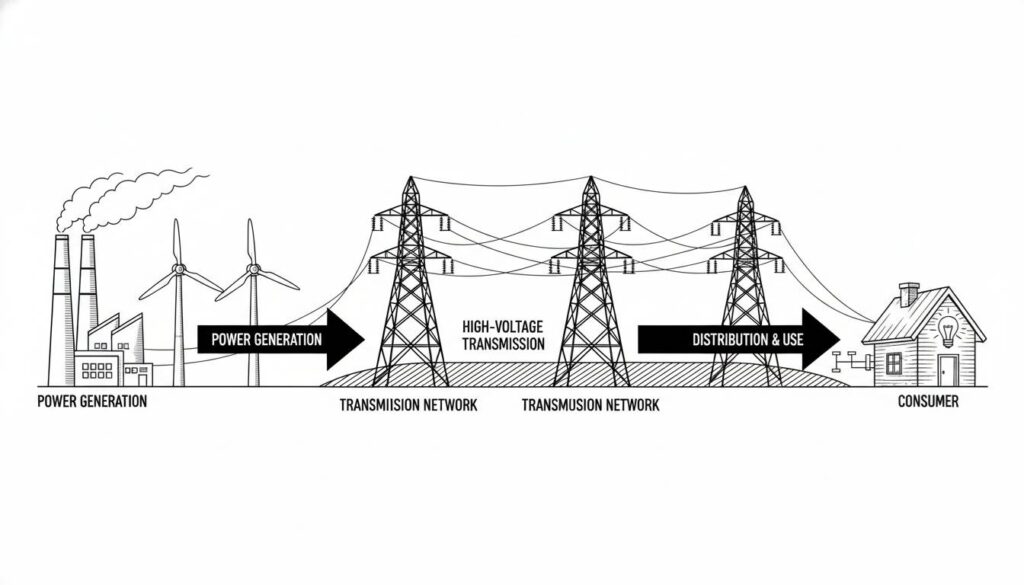
Technical Figure: A simplified infographic showing the journey of electricity. Left side: A power plant with smoke stacks or wind turbines. Middle: Tall metal transmission towers crossing a field. Right: A house with a lightbulb glowing. Arrows show the flow from left to right.
Generation: Making the Electricity
The first function is Generation. This is where we create electrical energy. We do not create energy from nothing. We change one type of energy into electricity.
How It Works
Most power plants use a machine called a generator. Inside a generator, magnets spin around coils of wire. This spinning pushes electrons. It is like spinning the pedals on a bike to make the wheels turn.
Sources of Energy
To spin the generator, we need fuel.
- Thermal: Burning coal or gas to boil water. The steam pushes the generator.
- Hydro: Falling water pushes the generator.
- Renewable: Wind pushes giant blades to spin the generator.
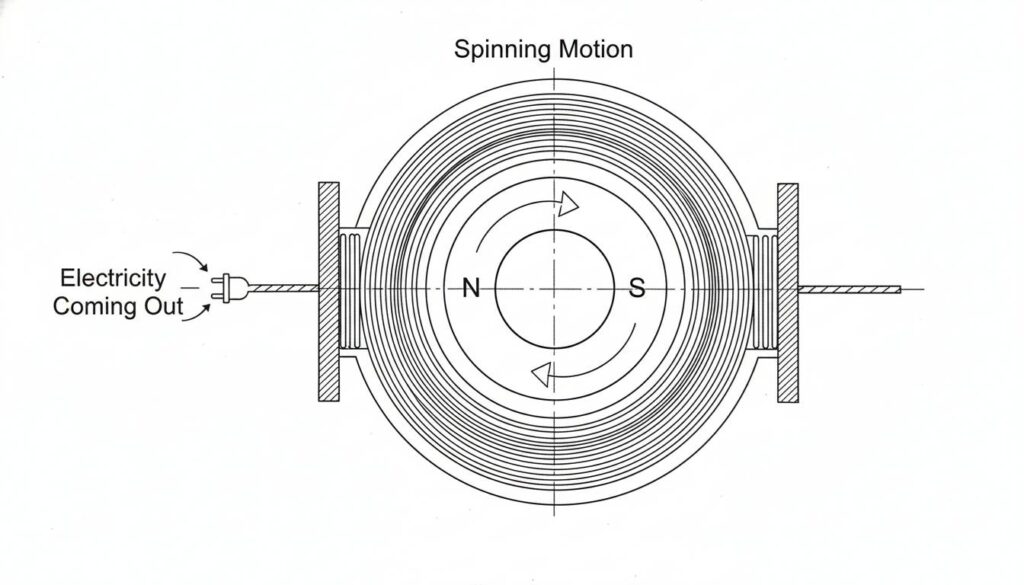
Technical Figure: A cross-section diagram of a simple generator. Show a magnet spinning inside a coil of copper wire. Label the ‘Spinning Motion’ and the ‘Electricity Coming Out’.
If we stop burning coal or the wind stops blowing, the generator stops spinning. What happens to the lights in your house immediately after that?
Transmission: Moving Power Long Distances
Power plants are usually far away from cities. We need to move that electricity a long way. This function is called Transmission.
The High-Voltage Highway
Imagine trying to push water through a very long garden hose. If the pressure is low, the water barely comes out the end. If the pressure is high, it shoots out fast.
In electricity:
- Voltage is the pressure.
- Current is the flow.
To send electricity miles away without losing it, we increase the voltage (pressure) very high. We use huge metal towers and thick cables to carry this high-voltage power.
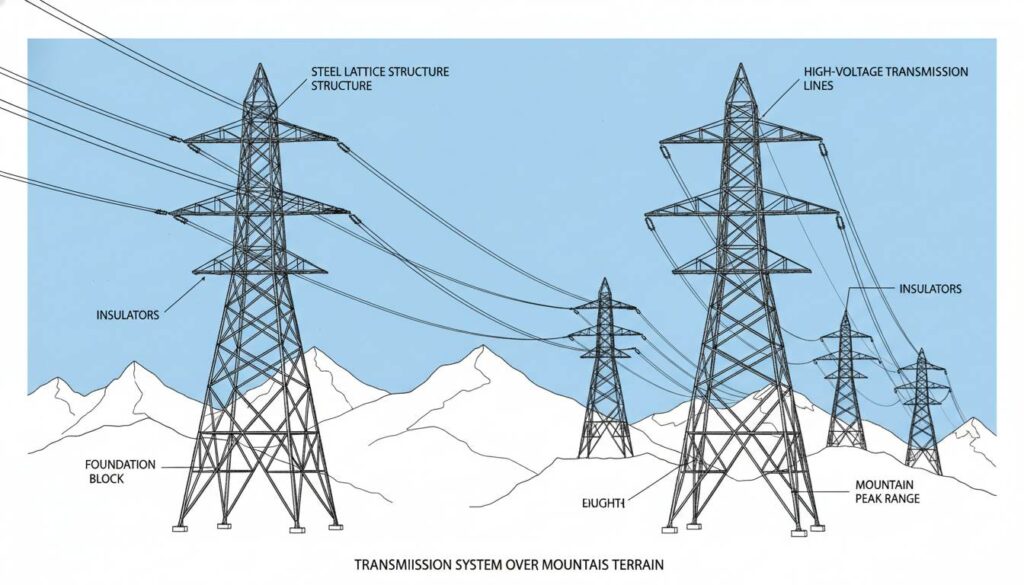
Technical Figure: A landscape view of large steel lattice transmission towers carrying thick wires over a mountain range. The sky is blue, emphasizing the height of the towers.
Step-Up Transformers
Before the electricity leaves the power plant, it goes through a Step-Up Transformer. This machine boosts the voltage up. It prepares the electricity for the long trip.
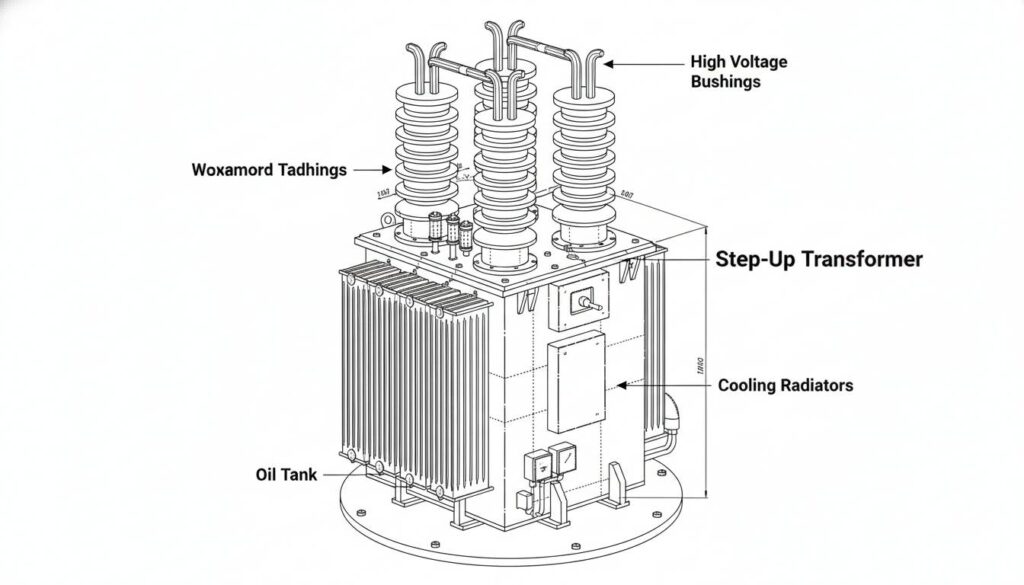
Technical Figure: A close-up of a large industrial electrical transformer in a substation. It is a big metal box with ceramic bushings (insulators) on top. Label it ‘Step-Up Transformer’.
Why do you think we put transmission wires high up on tall metal towers instead of laying them on the ground? Think about safety and what high voltage might do.
Transformation: Changing the Pressure
We cannot use high-voltage electricity in our homes. It is too strong. It would blow up your TV. We need to lower the pressure. This is the function of Transformation.
Step-Down Transformers
When the electricity gets near a city, it goes to a Substation. Here, a Step-Down Transformer lowers the voltage.
Think of a fire hose. It has huge pressure. You cannot drink from it. You need to reduce the flow to a kitchen tap so you can fill a glass safely. The transformer acts like a valve that lowers the pressure.
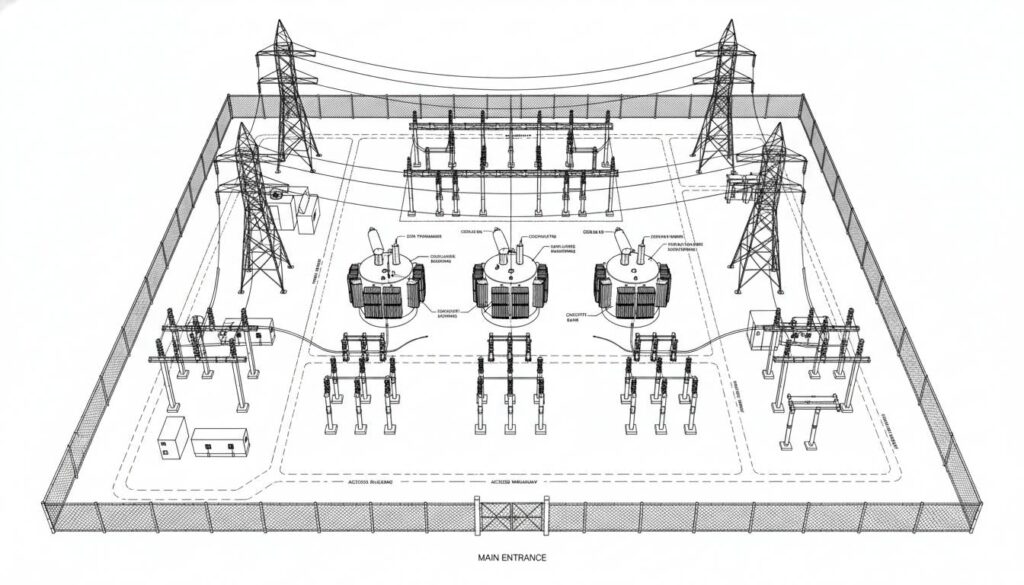
Technical Figure: A view of an electrical substation. It is a fenced-in area with many wires, switches, and transformers. It looks like a maze of metal and cables.
Distribution: The Local Delivery
Now the voltage is lower, but it is still too high for your wall socket. The Distribution system takes over. This is the “last mile” of delivery.
The Neighborhood Network
You see this system every day. It includes:
- Wooden Poles: Holding wires along the street.
- Underground Cables: Buried wires in newer neighborhoods.
- Service Drop: The wire that connects the pole to your specific house.
Before entering your house, a small transformer (often a cylinder on the pole) lowers the voltage one last time to a safe level (usually 110V or 220V).
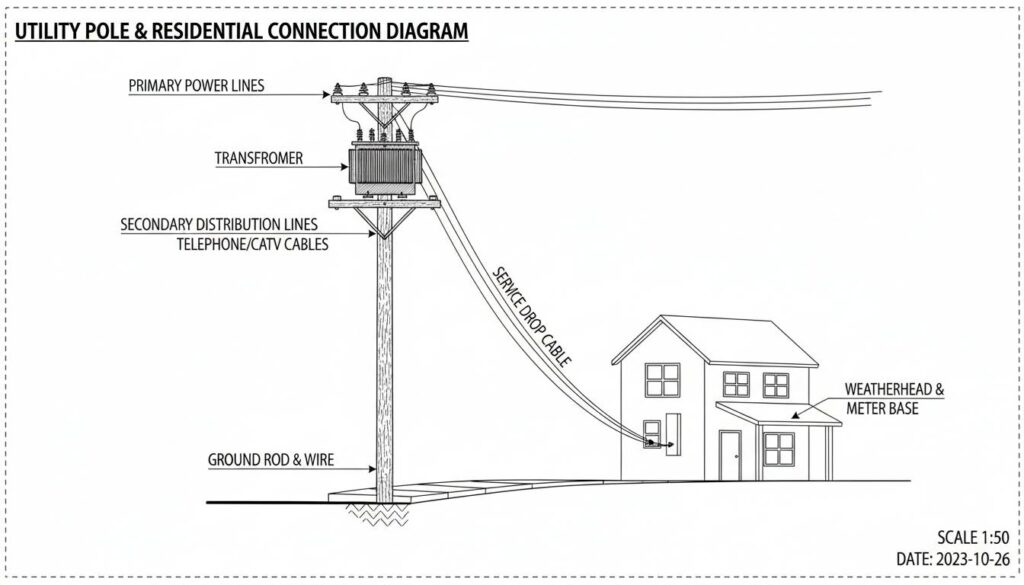
Technical Figure: A wooden utility pole on a street corner. It has a grey cylindrical transformer drum attached near the top. Wires connect from the pole to a nearby house.
Look at the power lines on your street. Are they as thick as the ones on the giant metal towers? Why do you think the wires get thinner as they get closer to your house?
Protection and Control: Keeping It Safe
The final function is keeping the system safe. Electricity is dangerous. If a tree falls on a line, or lightning strikes, we need to stop the power immediately.
Circuit Breakers and Fuses
These are automatic switches.
- The Job: They watch the flow of electricity.
- The Action: If the flow gets too high (like a surge), they “trip” or break the connection. This cuts the power off to prevent fires.
It is like a seatbelt in a car. It does nothing while you drive normally, but it locks tight if there is a crash.
Technical Figure: An open electrical breaker panel (fuse box) found in a home. Rows of black switches are visible. One switch is flipped to the ‘OFF’ position with a red indicator.
Control Centers
Engineers sit in rooms with many screens. They watch the whole system. If a factory turns on a huge machine, the engineers make sure the generators produce a little more power to match the need. This keeps the supply steady.
If you plug too many heaters into one outlet, the circuit breaker “trips” and the power goes out in that room. Why does the system do this instead of just letting the power keep flowing?
