Discover how a simple stream of liquid carves metal without ever touching it.
Imagine writing your name in the sand with a high-pressure water hose, but instead of sand, you are carving hard metal. Jet ECM (Jet Electrochemical Machining) works just like that, using a charged stream of saltwater to dissolve metal atom by atom.
It is a special way to shape parts without heat or contact tools. This means the metal never gets bent, stressed, or melted during the process.
What Is Jet ECM?
Jet ECM is a manufacturing process that uses a nozzle to shoot a stream of electrolyte fluid at a workpiece. An electric current runs through this stream, acting like an invisible cutting tool that removes material exactly where the liquid hits.
- Non-contact machining (no tool wear).
- Uses a nozzle to direct the energy.
- Works on very hard metals.
- Creates smooth surfaces instantly.
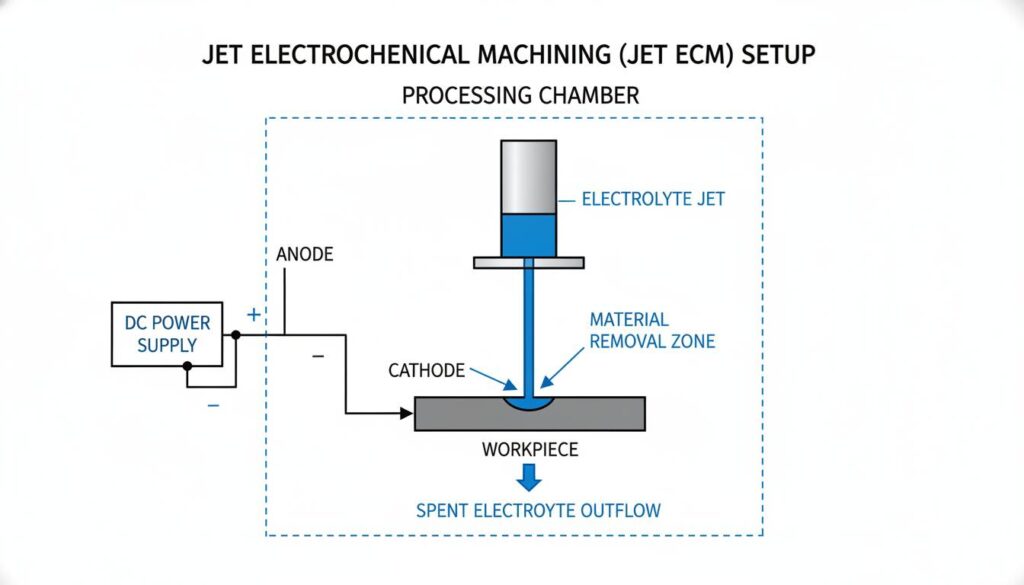
Technical Diagram: High quality 16:9 aspect ratio diagram showing the basic setup of Jet ECM: a nozzle, the electrolyte jet stream, the workpiece, and the power supply connection.
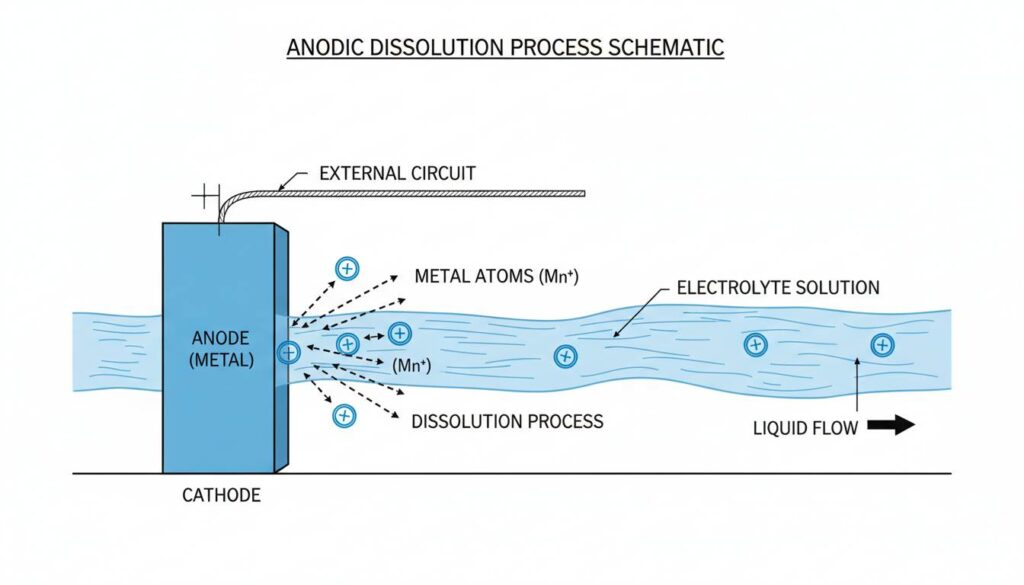
Technical Diagram: High quality 16:9 aspect ratio close-up illustration of the “anodic dissolution” process where metal atoms float away into the liquid stream.
Why JECM Technology Matters
Traditional tools, like drills or mills, can break when cutting super-hard materials like titanium. JECM technology solves this because the “tool” is just a liquid stream that never gets dull or breaks. It allows engineers to make tiny, complex shapes that regular tools simply cannot reach.
- Eliminates thermal stress (no heat damage).
- Allows for localized material removal on specific spots.
- Reduces the need for polishing afterwards.
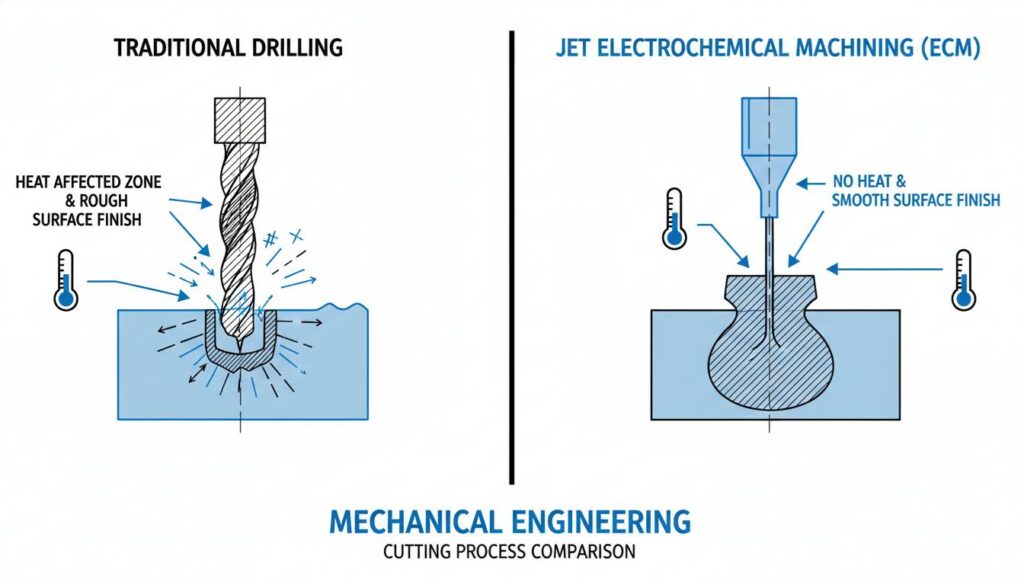
Technical Diagram: High quality 16:9 aspect ratio comparison graphic: Left side shows a rough drill bit cut with heat marks; Right side shows a smooth, cool Jet ECM cut.
Jet ECM Benefits
- High Precision: It cuts exactly where you point the nozzle.
- Smooth Finish: Parts come out shiny and ready to use.
- No Burrs: There are no sharp, jagged edges left behind.
- Versatility: It works on curved and uneven surfaces easily.
- Speed: High-pressure jet ECM speeds up the cutting process significantly.
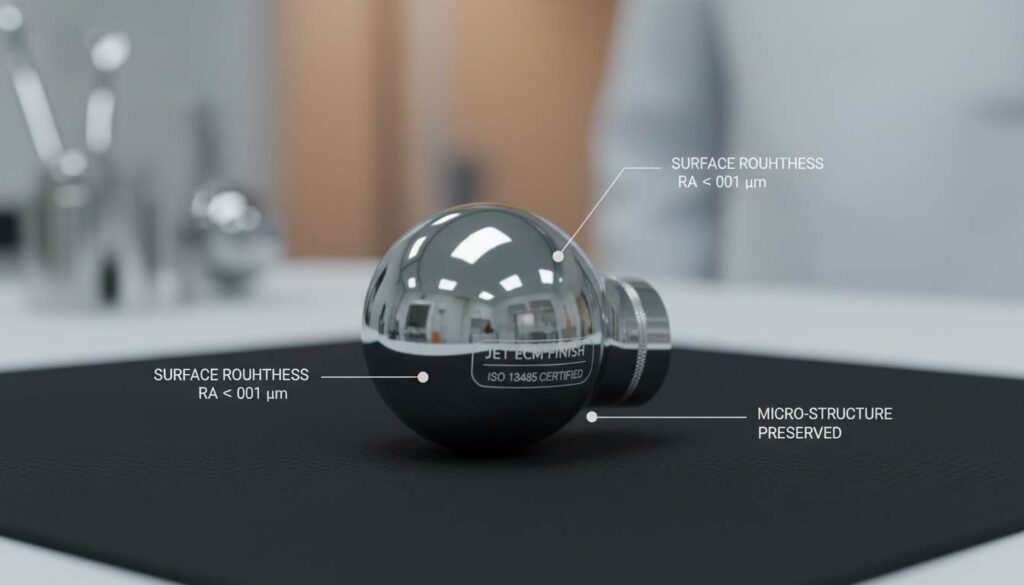
Technical Diagram: High quality 16:9 aspect ratio photo of a finished medical implant component with a mirror-like surface finish created by Jet ECM.
How Jet ECM Fits Into Daily Life / Industry
While you might not see the machine in your garage, the parts it makes are everywhere. From the engines in airplanes to the fuel injectors in cars, this technology keeps things running smoothly.
Common Jet ECM Uses Include:
- Creating cooling holes in turbine blades.
- Making molds for coins or jewelry.
- Rapid prototyping with JECM for new product designs.
- Manufacturing medical stents and implants.
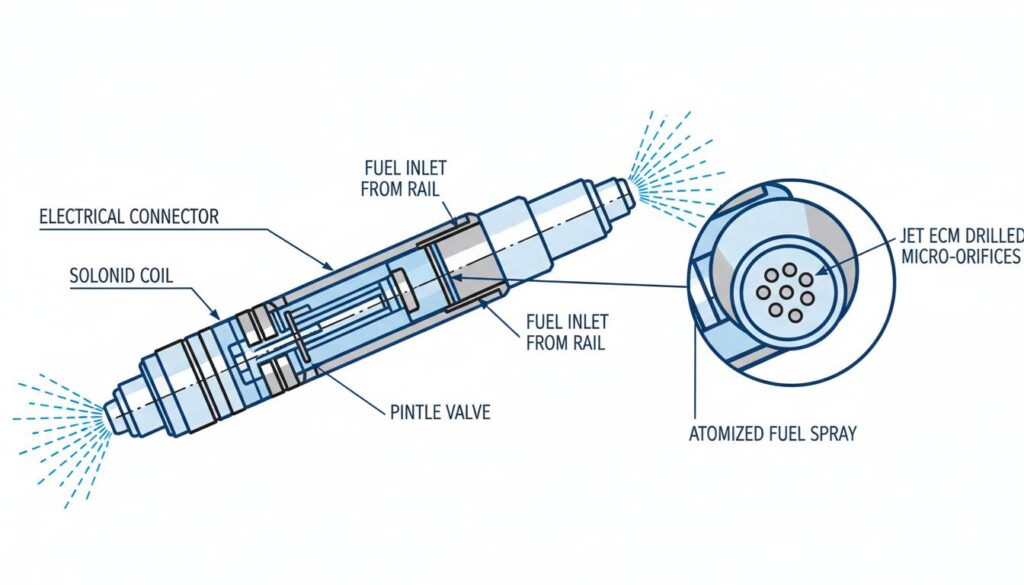
Technical Diagram: High quality 16:9 aspect ratio cutaway view of a car fuel injector showing tiny, precise holes drilled by Jet ECM.
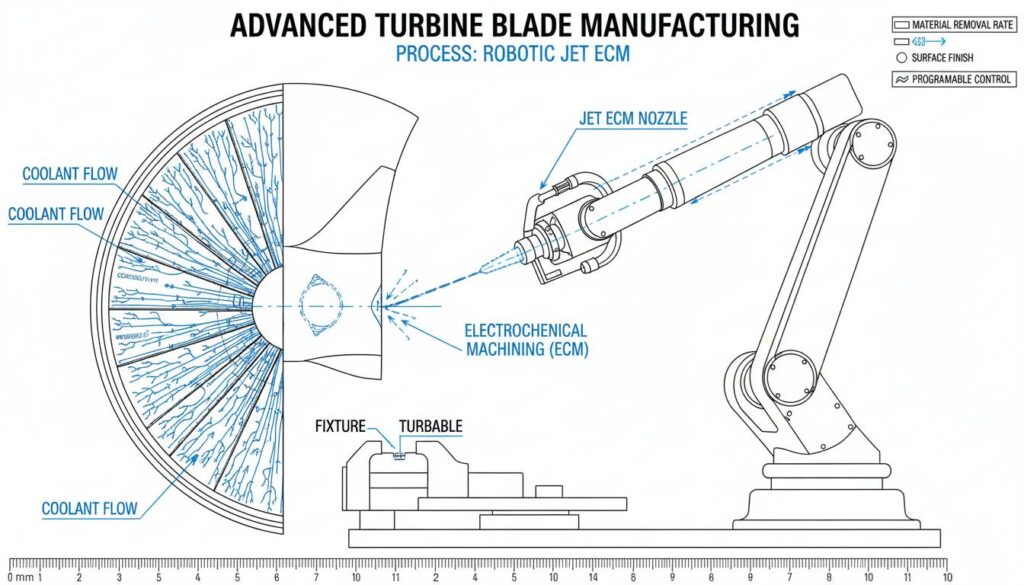
Technical Diagram: High quality 16:9 aspect ratio visualization of a turbine blade with complex cooling channels being machined by a robotic Jet ECM arm.
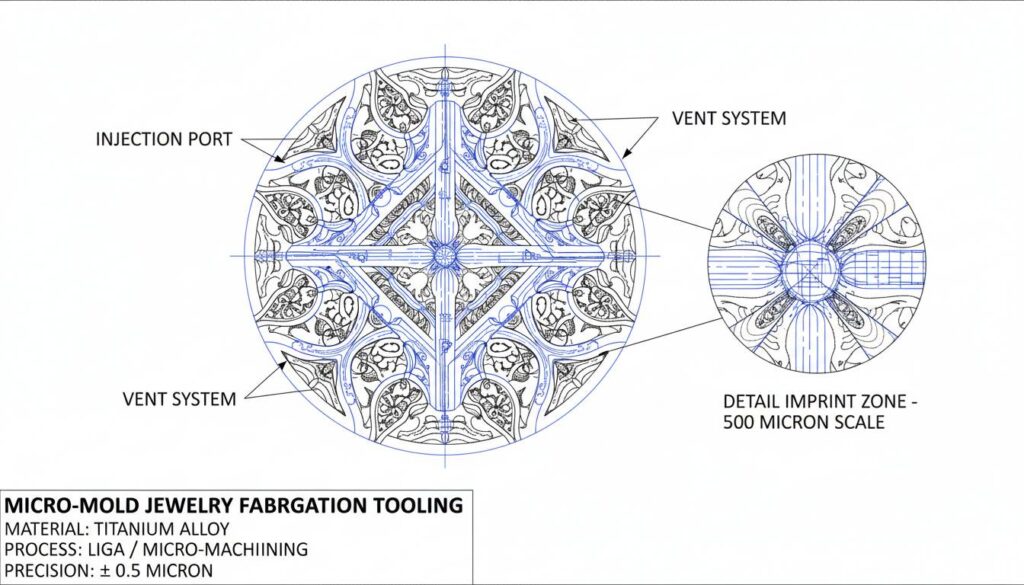
Technical Diagram: High quality 16:9 aspect ratio macro photography shot of a micro-mold used for creating detailed jewelry patterns, highlighting the precision.
Jet ECM in Professional Practice
Engineers spend a lot of time on nozzle design optimization to make sure the stream is perfect. They adjust the speed of the liquid and the electricity to control how deep the cut goes. It is like tuning a radio to get the clearest signal, but for cutting metal.
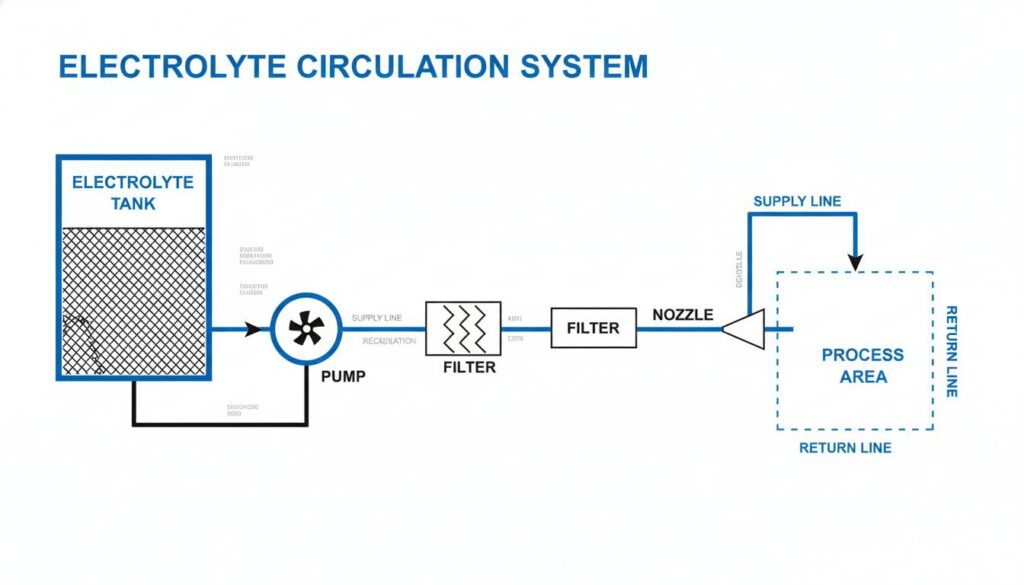
Technical Diagram: High quality 16:9 aspect ratio schematic flowchart showing the electrolyte circulation system: tank, pump, filter, nozzle, and return line.
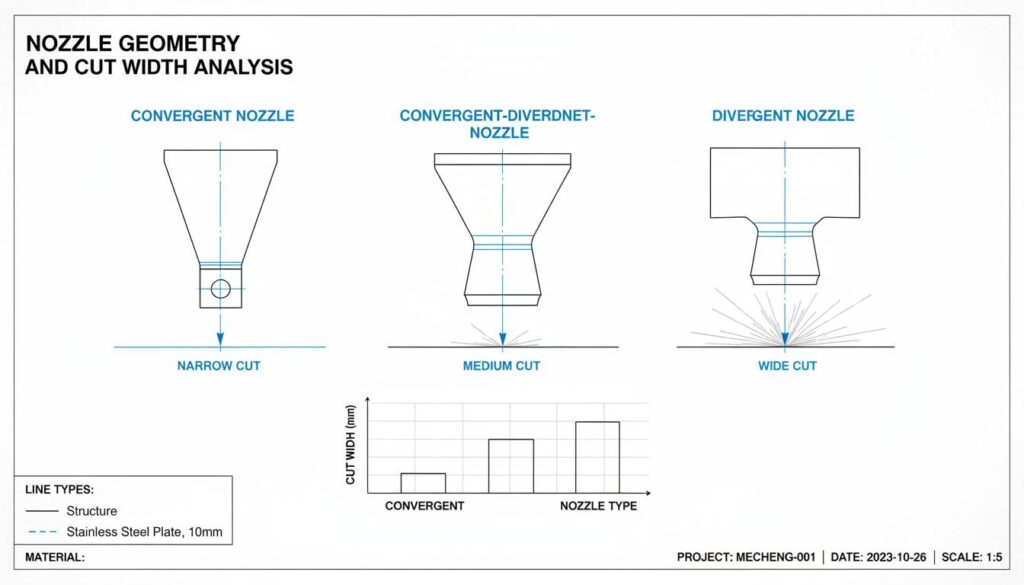
Technical Diagram: High quality 16:9 aspect ratio engineering blueprint showing different nozzle shapes and how they affect the width of the cut on the metal.
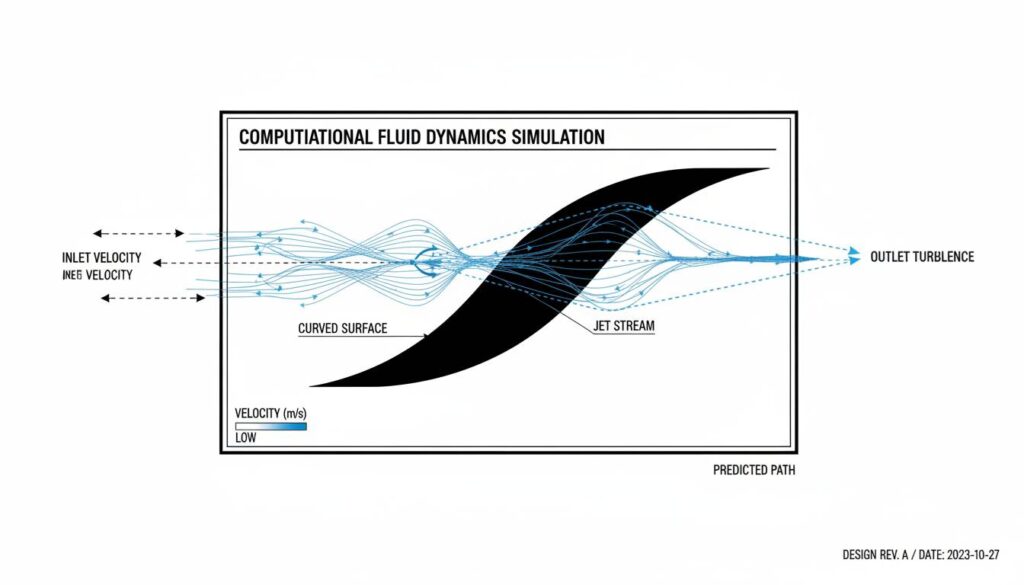
Technical Diagram: High quality 16:9 aspect ratio 3D simulation screen showing the predicted path of the jet stream over a curved surface.
Is Jet ECM Beginner-Friendly?
No, not for DIY hobbyists. While the concept is simple, the equipment requires high voltage, dangerous chemicals, and expensive pumps. However, understanding the concept is very easy for beginners in engineering.
Popular Jet ECM Pairings
- EDM (Electrical Discharge Machining): Uses sparks instead of liquid to cut.
- CNC Milling: Uses spinning cutters; often used before Jet ECM.
- Electrolytes: The salt solutions (like Sodium Nitrate) used to carry the current.
- CAD/CAM Software: Used to program the path of the nozzle.
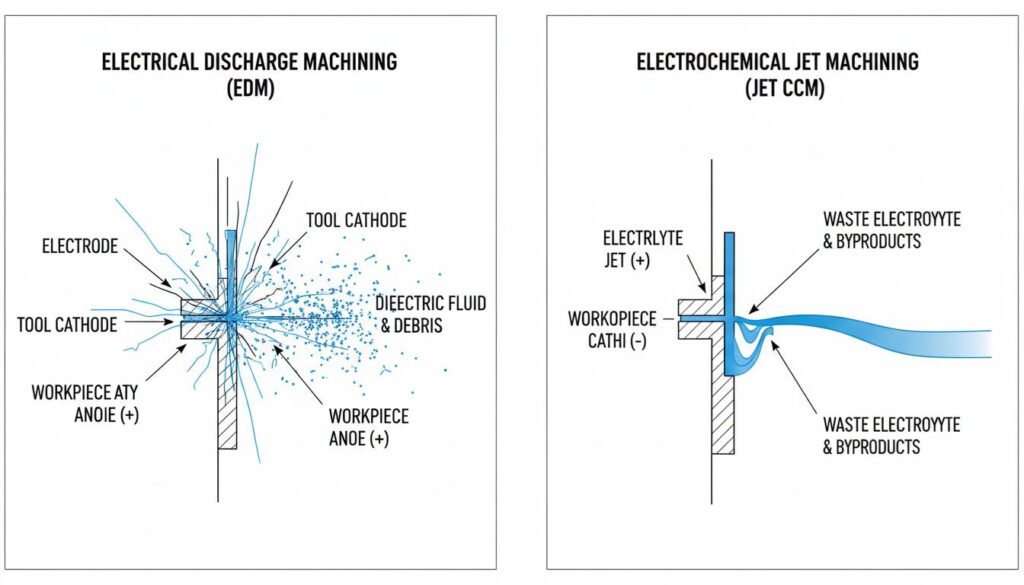
Technical Diagram: High quality 16:9 aspect ratio split screen comparison: Sparks flying in EDM versus the clean liquid stream of Jet ECM.
Why Jet ECM Is a Must-Have
As electronics get smaller and engines get more powerful, we need tools that are gentle yet strong. Jet ECM offers the unique ability to shape the hardest metals without touching them. It is the future of making high-tech parts that last longer.
- Extends the life of the part (no stress cracks).
- Reduces manufacturing steps (cuts and polishes at once).
- Handles complex geometries easily.
- Environmentally cleaner than oil-based machining.
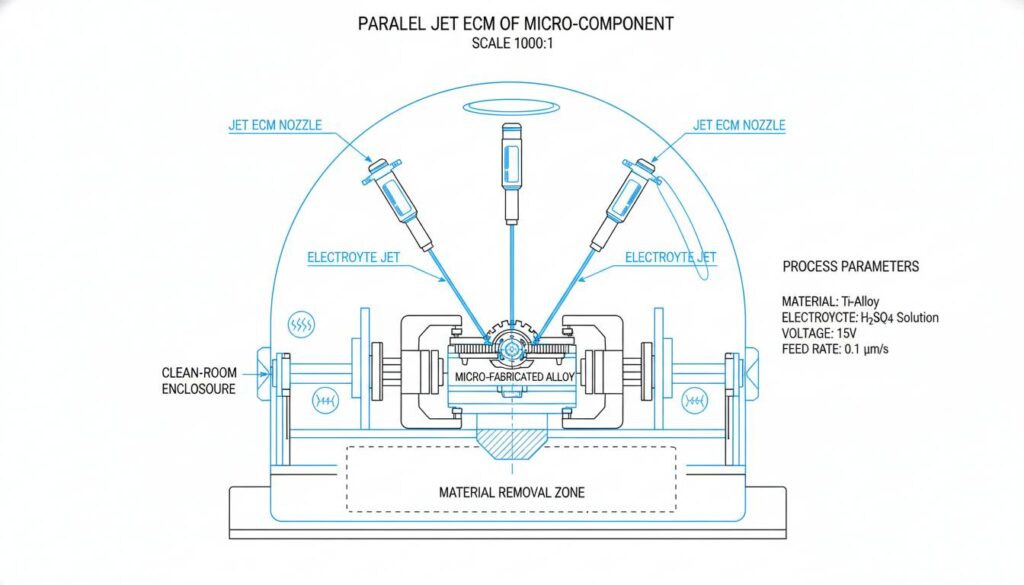
Technical Diagram: High quality 16:9 aspect ratio futuristic visualization of a micro-component being machined by multiple Jet ECM nozzles simultaneously in a clean-room environment.
FAQ
Q: Does the nozzle touch the metal?
A: No, there is always a small gap filled with the liquid stream.
Q: Can it cut plastic or wood?
A: No, the material must be able to conduct electricity (like metal).
Q: Is the process slow?
A: It can be slower than drilling, but high-pressure jet ECM is making it much faster.
Q: What liquid is used?
A: Usually a saltwater solution called an electrolyte, which helps carry the electricity.
