Choosing the wrong machining process can increase costs, slow production, and damage parts.
If you’re comparing ECM vs EDM, this guide will help you make the right decision fast — without technical overload.
By the end, you’ll know:
• The real difference between ECM and EDM
• Which process delivers better surface quality
• When EDM is the smarter choice
• When ECM saves time and money
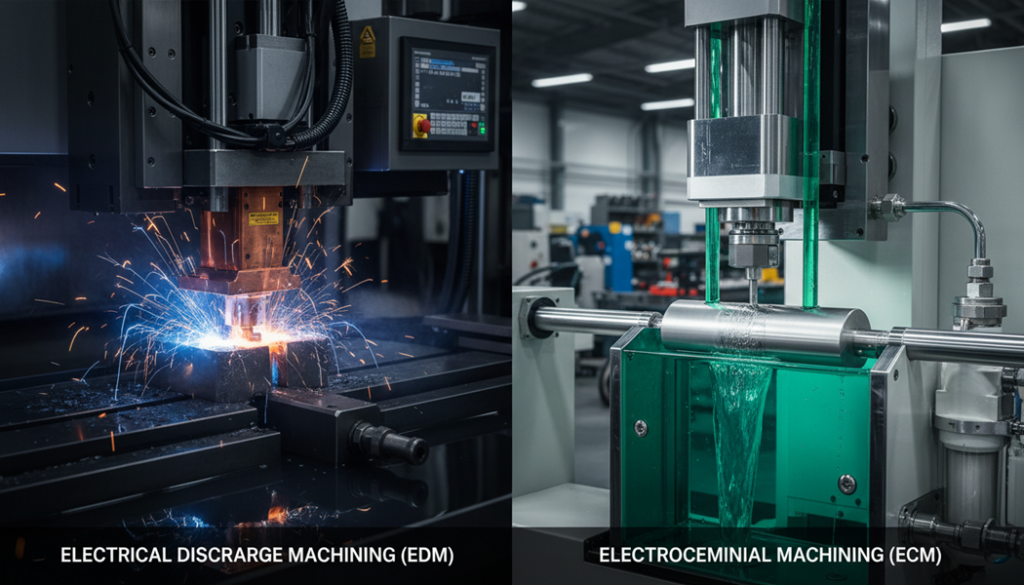
EDM vs ECM
What Is the Difference Between ECM and EDM? (Quick Answer)
• EDM (Electrical Discharge Machining) removes material using controlled electrical sparks
• ECM (Electrochemical Machining) removes material using electrochemical dissolution
Short version:
• EDM uses heat
• ECM uses chemistry
That one difference affects surface finish, speed, tool life, and part quality.
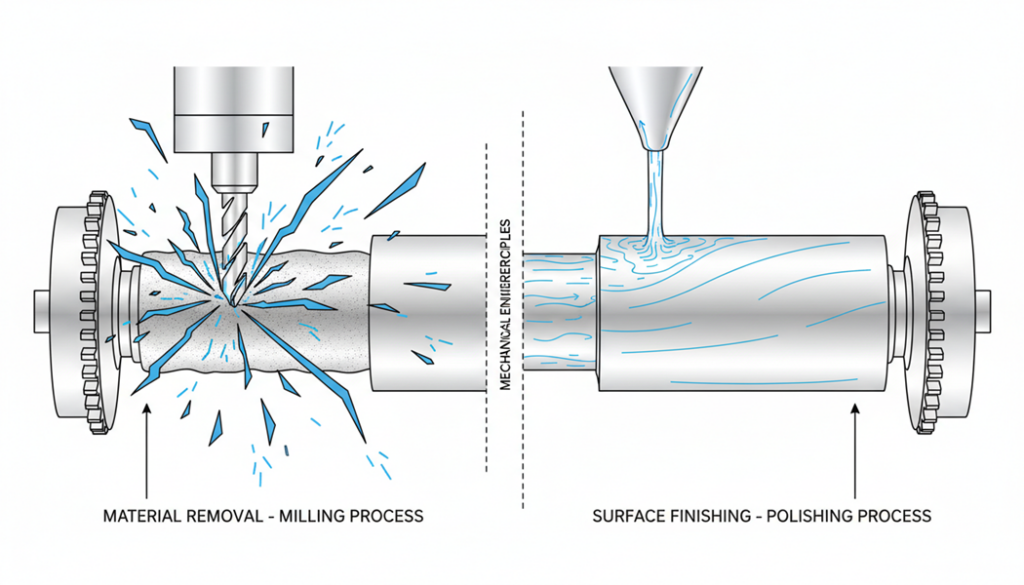
Technical Diagram: High quality 16:9 aspect ratio, close-up 3D illustration of a metal part being machined. Left side shows jagged sparks hitting the surface, right side shows smooth fluid flow polishing the surface.
What Is Electrical Discharge Machining (EDM)?
EDM is a non-contact thermal machining process used to cut electrically conductive materials.
How EDM Works
• An electrode approaches the workpiece
• Electrical sparks jump the gap
• Each spark melts and vaporizes material
• A dielectric fluid cools the area and removes debris
Key Benefits of EDM
• Excellent for complex geometries
• Can machine very hard materials
• Ideal for fine details and sharp corners
Limitations of EDM
• Leaves a heat-affected zone (HAZ)
• Produces a recast layer
• Electrode wear increases operating cost
• Slower for large material removal
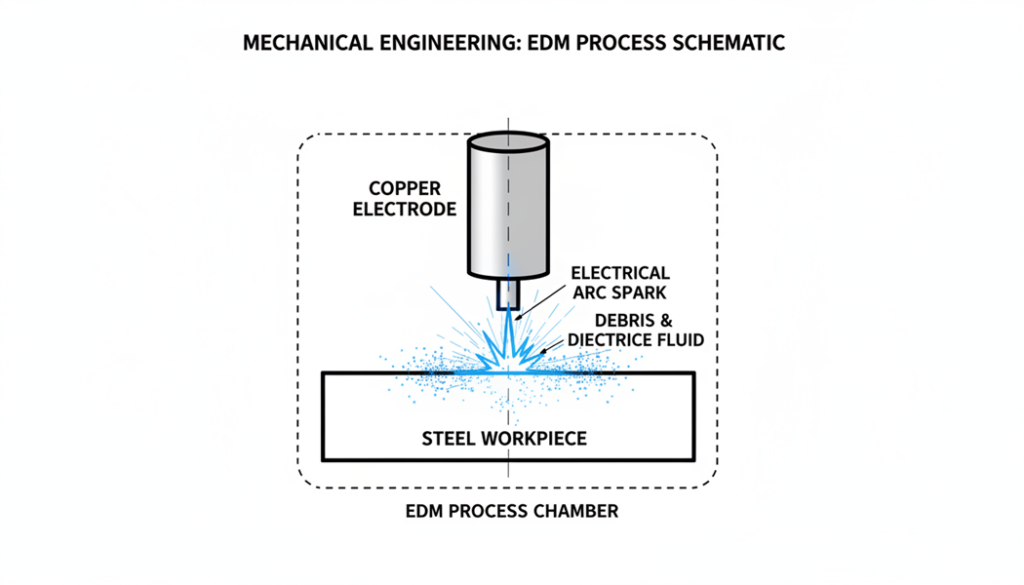
Technical Diagram: High quality 16:9 aspect ratio, macro photography shot of an EDM electrode creating a bright electrical arc spark against a steel workpiece.
What Is Electrochemical Machining (ECM)?
ECM is a non-thermal, non-contact machining process that removes metal atom by atom.
How ECM Works
• The workpiece acts as the anode
• The tool acts as the cathode
• An electrolyte flows between them
• Metal dissolves and is flushed away
Key Benefits of ECM
• No heat damage
• No tool wear
• Burr-free, stress-free surfaces
• Very fast for high-volume production
Limitations of ECM
• Higher initial equipment cost
• Limited to conductive materials only
• Less suitable for ultra-fine micro-features
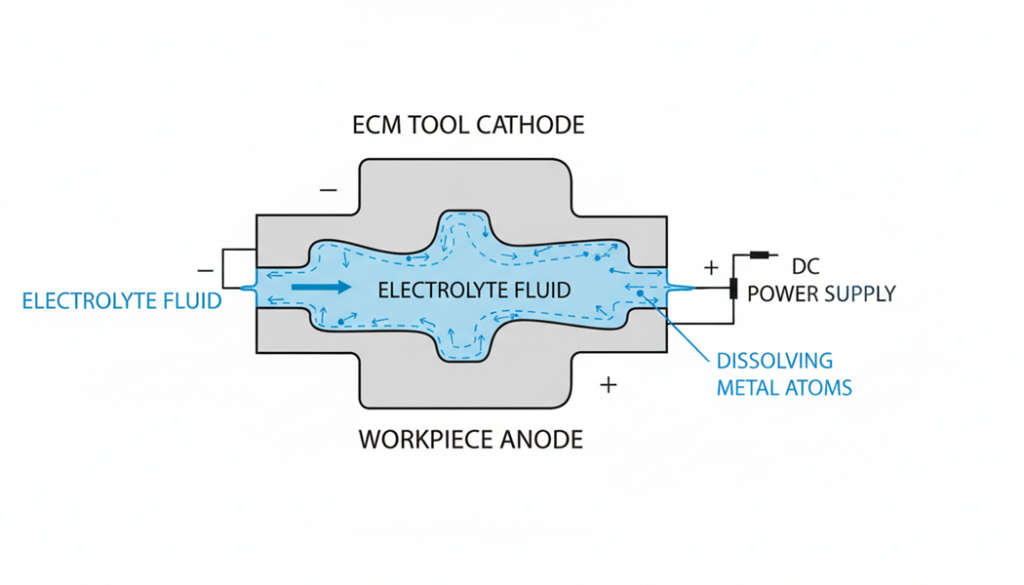
Technical Diagram: High quality 16:9 aspect ratio, cross-section diagram showing ECM tool cathode and workpiece anode with electrolyte fluid flowing between them, dissolving atoms.
ECM vs EDM: Side-by-Side Comparison
| Feature | ECM | EDM |
|---|---|---|
| Material removal | Electrochemical | Thermal spark erosion |
| Heat-affected zone | None | Yes |
| Recast layer | None | Yes |
| Surface finish | Excellent, burr-free | Variable |
| Tool wear | None | Yes |
| Speed | Fast | Slower |
| Best for | Surface integrity | Micro-features |
| Materials | Conductive only | Conductive only |
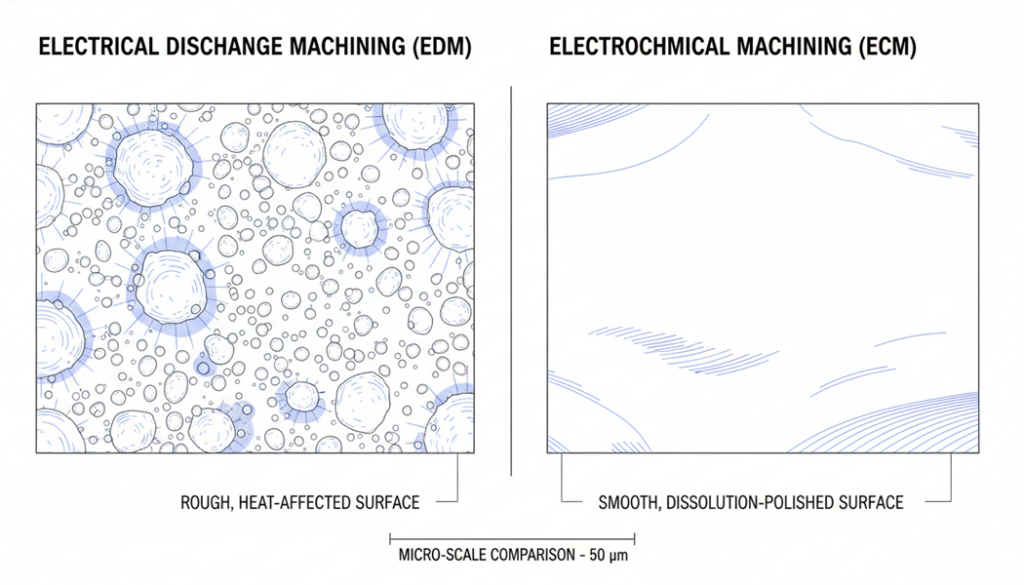
Technical Diagram: High quality 16:9 aspect ratio, microscopic view comparison. Left side: Rough, cratered surface from EDM heat. Right side: Smooth, polished surface from ECM dissolution.
When Should You Choose EDM?
EDM is the better choice when geometry matters more than surface condition.
Choose EDM if you need:
• Sharp internal corners
• Micro-holes and fine features
• Deep cavities
• Mold and die components
Common EDM applications:
• Injection molds
• Aerospace tooling
• Die manufacturing
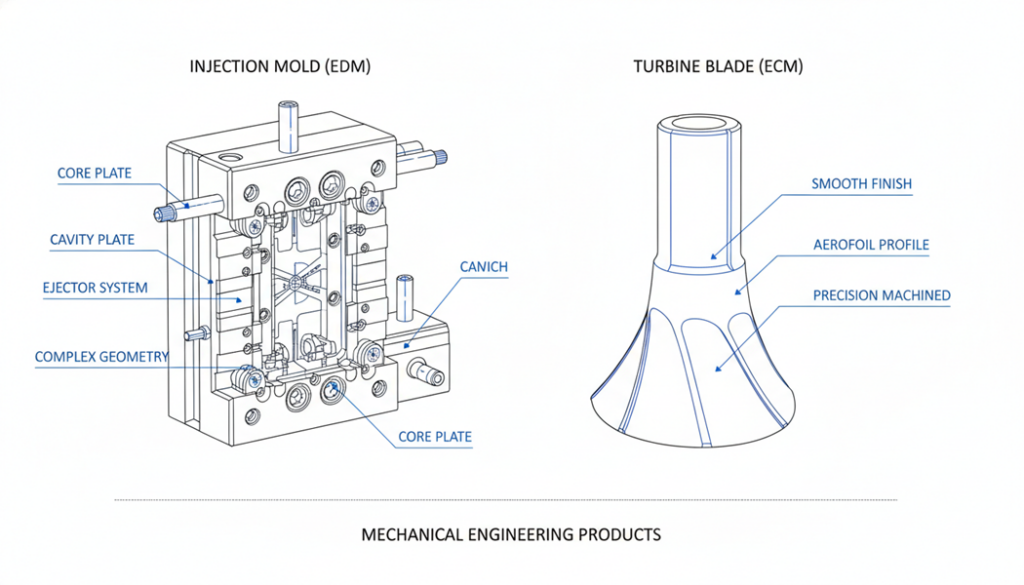
Technical Diagram: High quality 16:9 aspect ratio, studio shot of a complex injection mold (EDM product) sitting next to a shiny, smooth turbine blade (ECM product).
When Should You Choose ECM?
ECM is the better choice when surface quality and speed are critical.
Choose ECM if you need:
• Zero thermal damage
• Burr-free components
• High production rates
• Long tool life
Common ECM applications:
• Turbine blades
• Medical implants
• Fuel system components
• Aerospace flow channels
ECM vs EDM Decision Flow (Fast Buyer Logic)
• Surface integrity matters most? → ECM
• Tiny features or sharp corners? → EDM
• High-volume production? → ECM
• Tool wear acceptable? → EDM
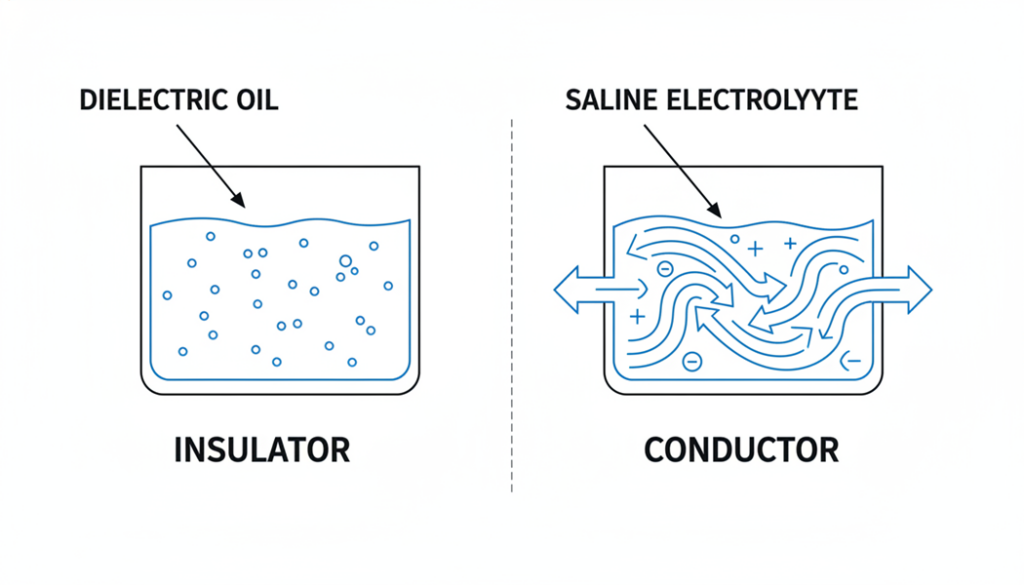
Technical Diagram: High quality 16:9 aspect ratio, split screen illustration. Left: A tank of dielectric oil. Right: A tank of flowing saline electrolyte.
Cost Considerations: ECM vs EDM
EDM costs include:
• Electrode replacement
• Longer machining time
• Secondary finishing
ECM costs include:
• Higher upfront equipment investment
• Lower long-term operating cost
• Minimal post-processing
Bottom line:
• Low volume + complex geometry → EDM
• High volume + premium surface quality → ECM
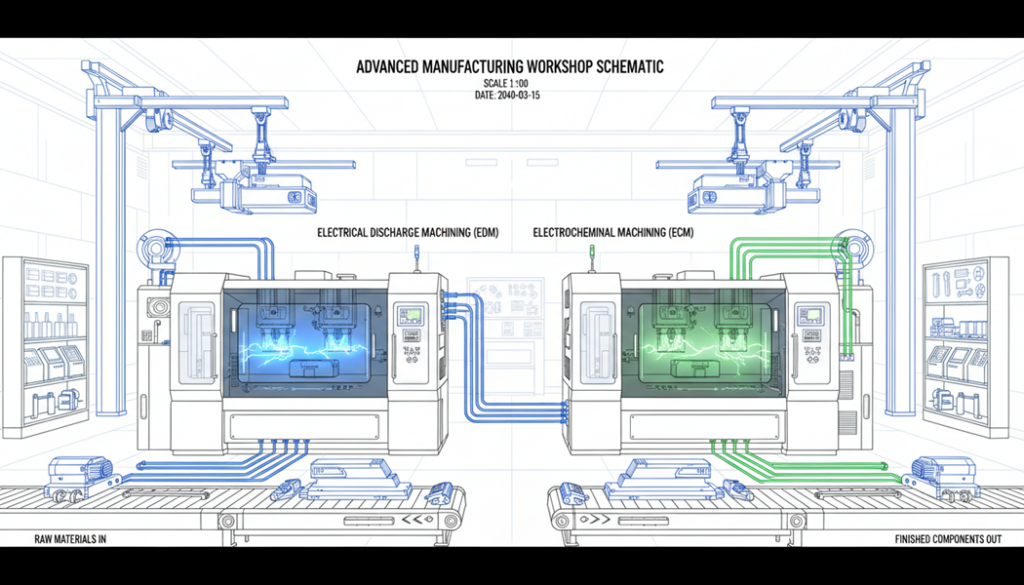
Technical Diagram: High quality 16:9 aspect ratio, futuristic manufacturing workshop showing a glowing EDM machine and a sleek ECM machine working side-by-side.
Frequently Asked Questions
Can ECM or EDM machine non-conductive materials?
No. Both processes require electrically conductive materials.
Which machining process has better surface finish?
ECM produces superior surface finish with no heat damage.
Is ECM faster than EDM?
Yes — for suitable applications, ECM removes material much faster.
Final Verdict: ECM vs EDM
There is no “better” process — only the right process for the job.
• Choose EDM for intricate geometry
• Choose ECM for flawless surfaces and speed
Making the right choice early can cut production time, reduce scrap, and improve part performance.
Ready to Choose the Right Process?
If you’re:
• Comparing ECM vs EDM for a real project
• Unsure which process fits your material and geometry
• Looking to reduce machining cost or lead time
👉 Talk to a machining expert before committing.
A short consultation can save weeks of rework and thousands in cost.
