When manufacturers compare Electrochemical Machining (ECM) and Electrical Discharge Machining (EDM), the conversation often focuses on accuracy or geometry.
But in reality, the machining fluid—ECM electrolytes vs EDM dielectric fluids—is what defines surface quality, tool life, safety, and operating cost.
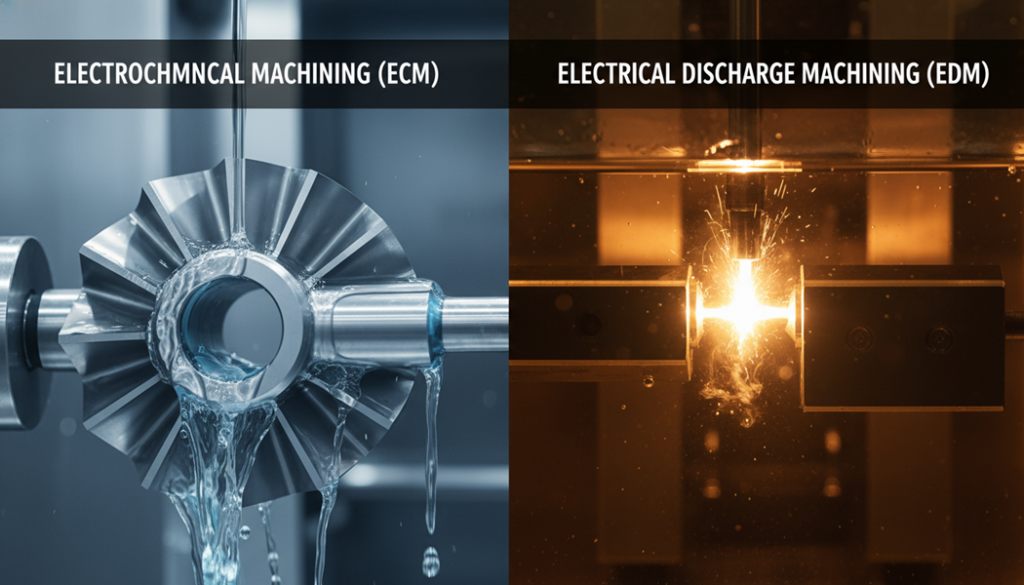
Technical Diagram: Electrochemical Machining Electrolyte vs EDM Fluids
What Is Electrochemical Machining (ECM)?
• ECM is a non-contact, non-thermal machining process
• Material is removed by electrochemical dissolution
• The cutting tool never touches the workpiece
Because there is no heat and no mechanical force, ECM delivers:
• Burr-free surfaces
• No heat-affected zone (HAZ)
• Zero tool wear
At the heart of this process is the electrochemical machining electrolyte.
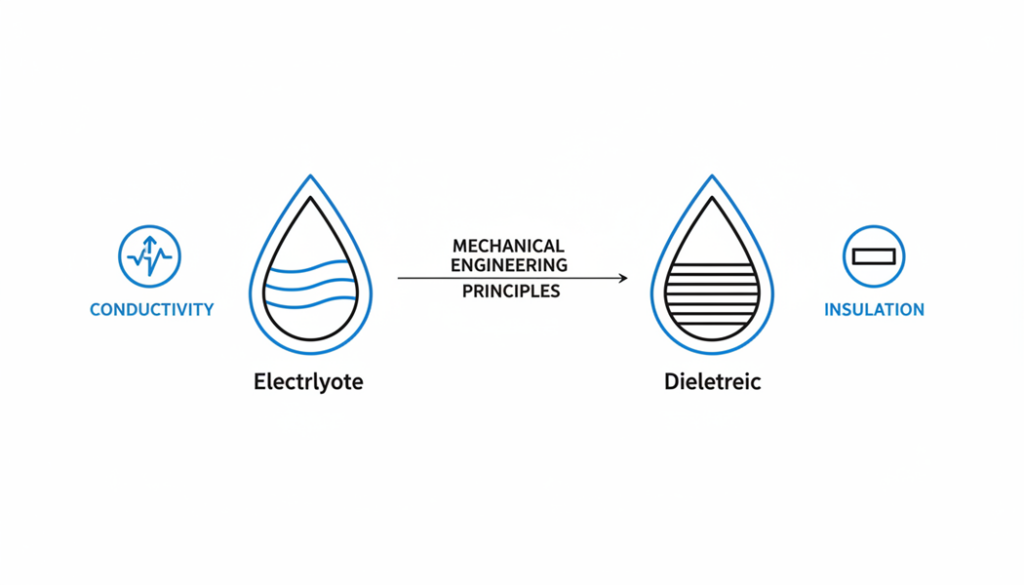
Technical Diagram: High quality 16:9 aspect ratio infographic illustration showing a drop of saltwater (labeled Electrolyte) next to a drop of oil (labeled Dielectric), with icons representing “Conductivity” and “Insulation” respectively.
What Is an Electrochemical Machining Electrolyte?
An ECM electrolyte is a conductive liquid, usually a salt-based aqueous solution, that flows through the gap between the tool and workpiece.
Primary Functions of an ECM Electrolyte
• Conduct electrical current
• Enable anodic dissolution of metal
• Transport dissolved metal ions away
• Maintain dimensional accuracy and surface finish
Without the electrolyte, ECM cannot function.
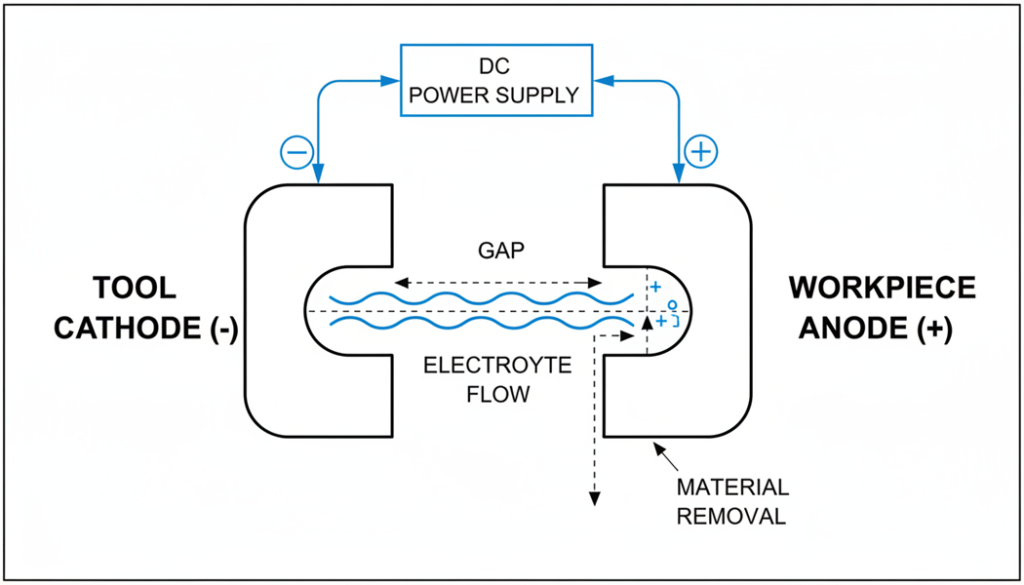
Technical Diagram: High quality 16:9 aspect ratio schematic diagram showing the ECM process: a tool cathode, a workpiece anode, and blue electrolyte flowing between them, labeled clearly.
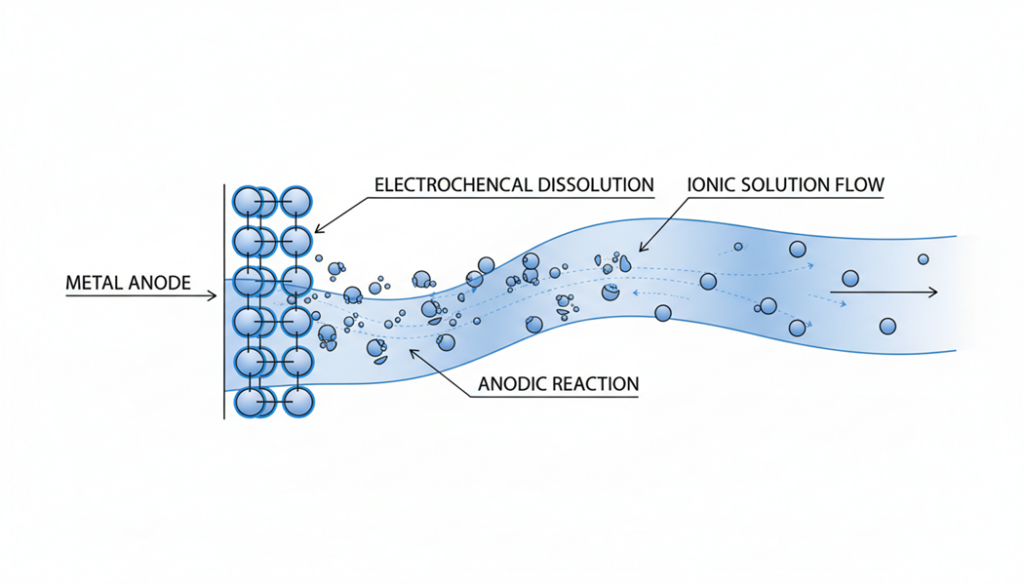
Technical Diagram: High quality 16:9 aspect ratio close-up 3D render of metal atoms dissolving into a flowing liquid stream, representing electrochemical dissolution without sparks.
How ECM Electrolytes Work
• The workpiece acts as the anode
• The tool acts as the cathode
• The electrolyte fills the inter-electrode gap
When voltage is applied:
• Metal atoms leave the workpiece as ions
• The electrolyte carries these ions away
• Material removal occurs without heat or stress
This is why ECM produces smooth, stress-free surfaces that often require no secondary finishing.
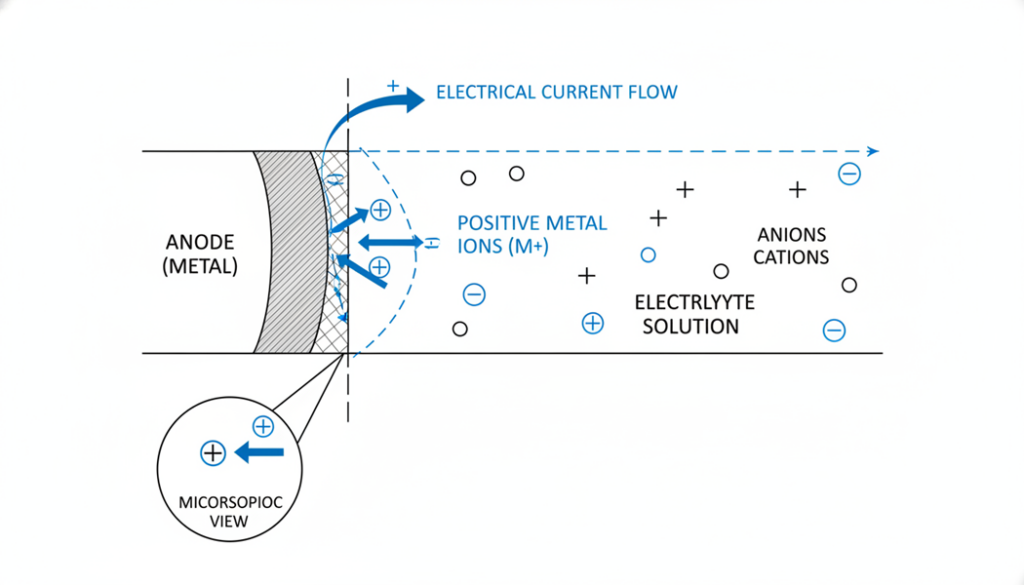
Technical Diagram: High quality 16:9 aspect ratio microscopic visualization of positive metal ions moving from a metal surface into a salt solution, driven by an electrical current.
Common Types of Electrochemical Machining Electrolytes
Sodium Nitrate Electrolyte (NaNO₃)
Why it’s widely used
• Stable machining conditions
• Good surface finish
• Lower corrosion risk than chlorides
Typical materials
• Carbon steels
• Stainless steels
• Nickel-based alloys
Passivating Electrolytes
• Form a thin oxide layer during machining
• Limit unwanted or stray material removal
Benefits
• Improved shape accuracy
• Better edge definition
• Higher surface integrity
Common in aerospace and high-precision applications.
Sodium Chloride (NaCl) Electrolytes
• Very high electrical conductivity
• High material removal rates
Drawbacks
• Increased corrosion
• Rougher surface finish
• Higher maintenance demands
Used when speed matters more than surface quality.
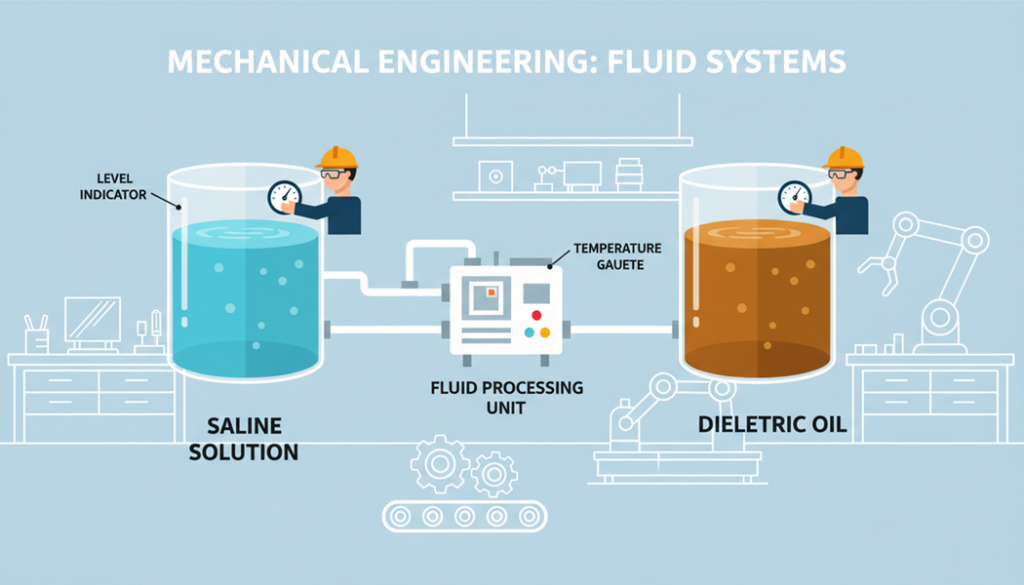
Technical Diagram: High quality 16:9 aspect ratio workshop scene showing an operator checking a tank of clear blue saline solution next to a tank of amber dielectric oil
What Are EDM Fluids (Dielectric Fluids)?
An EDM fluid, also called a dielectric, plays a completely different role.
Unlike ECM electrolytes, EDM fluids must be electrically insulating.
Functions of EDM Fluids
• Control and localize electrical sparks
• Prevent continuous arcing
• Cool the electrode and workpiece
• Flush molten metal debris
Common EDM fluids
• Hydrocarbon-based EDM oils
• Deionized water (wire EDM)
ECM Electrolyte vs EDM Fluid: Direct Comparison
| Feature | ECM Electrolyte | EDM Fluid (Dielectric) |
|---|---|---|
| Electrical behavior | Conductive | Insulating |
| Material removal | Electrochemical dissolution | Thermal melting & vaporization |
| Heat generation | None | Extremely high (localized) |
| Surface integrity | Stress-free, burr-free | Recast layer & HAZ possible |
| Tool wear | None | Electrode wear present |
| Typical chemistry | Salt-based aqueous solution | Oil or deionized water |
| Fire risk | None | Present (oil-based EDM) |
| Post-processing | Minimal or none | Often required |
Key takeaway:
ECM electrolytes enable chemical removal, while EDM fluids enable controlled thermal erosion.
Industry-Specific Applications
Aerospace Industry
Why ECM electrolytes are preferred
• No heat-induced micro-cracks
• Smooth internal cooling channels
• High fatigue resistance
Typical components
• Turbine blades
• Compressor vanes
• Fuel nozzles
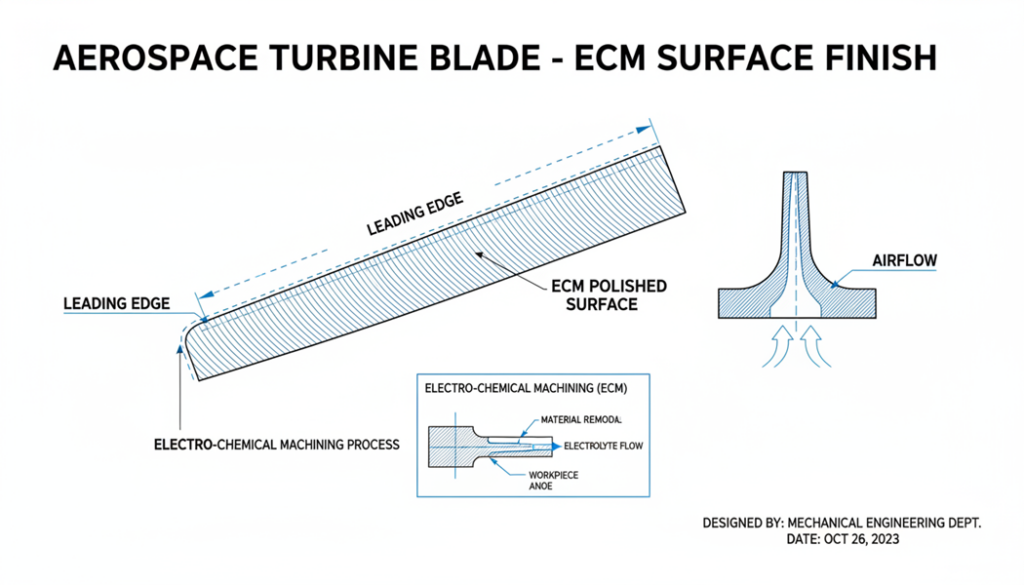
Technical Diagram: High quality 16:9 aspect ratio photograph of a gleaming, polished aerospace turbine blade resting on a dark surface, highlighting the mirror-like finish achieved by ECM.
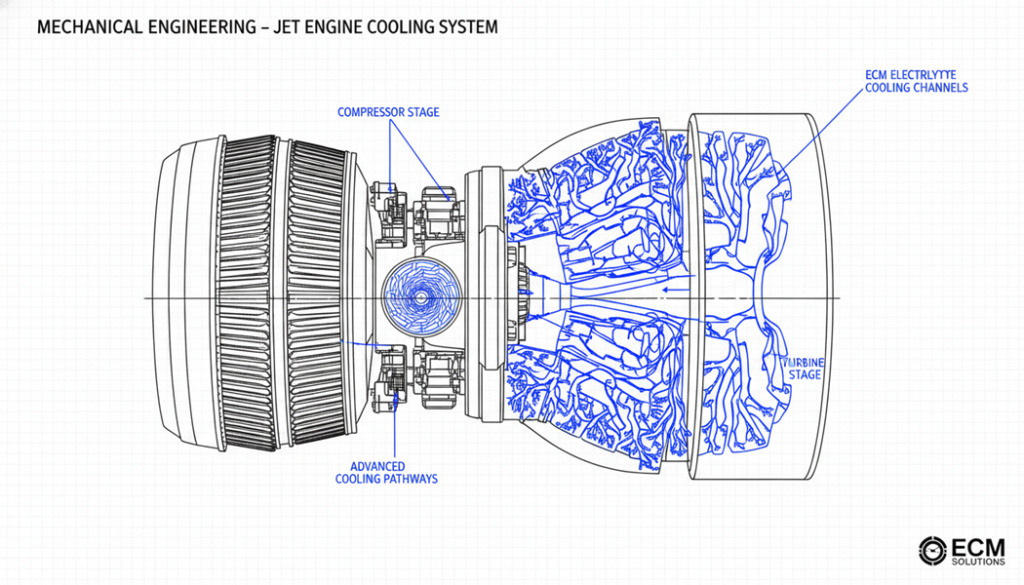
Technical Diagram: High quality 16:9 aspect ratio cutaway view of a jet engine, highlighting the complex internal cooling channels made possible by ECM electrolytes.
Medical Device Manufacturing
Key requirements
• Burr-free surfaces
• No residual stress
• Excellent surface integrity
Electrolyte focus
• High-purity sodium nitrate
• Tight filtration and pH control
Used for:
• Orthopedic implants
• Surgical instruments
• Cardiovascular components
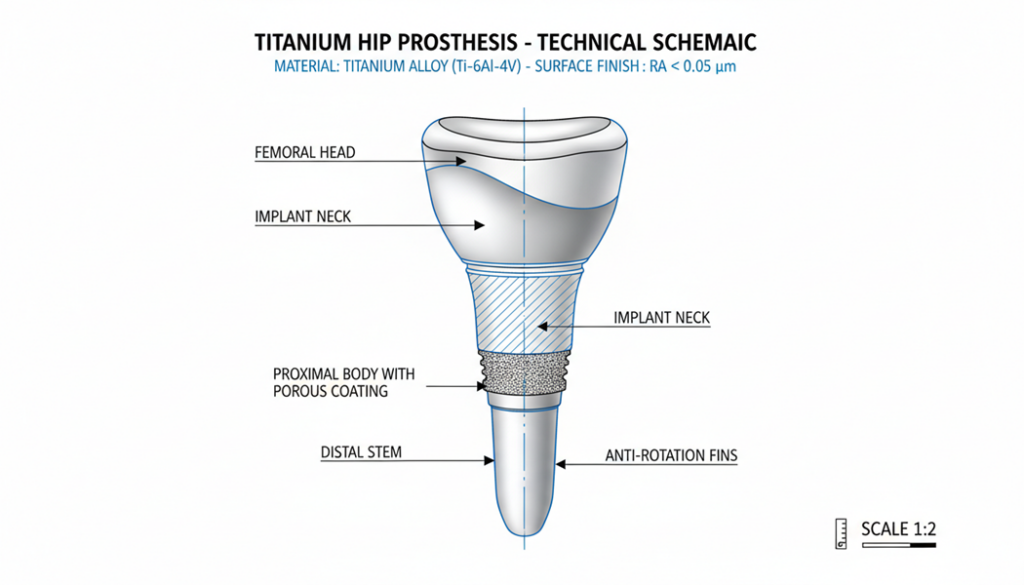
Technical Diagram: High quality 16:9 aspect ratio macro shot of a titanium medical hip implant with a perfectly smooth surface texture.
Energy & Power Generation
Why ECM excels
• Smooth internal flow paths
• No thermal distortion
• Efficient machining of large conductive parts
Applications
• Heat exchanger plates
• Turbine components
• Fuel system parts
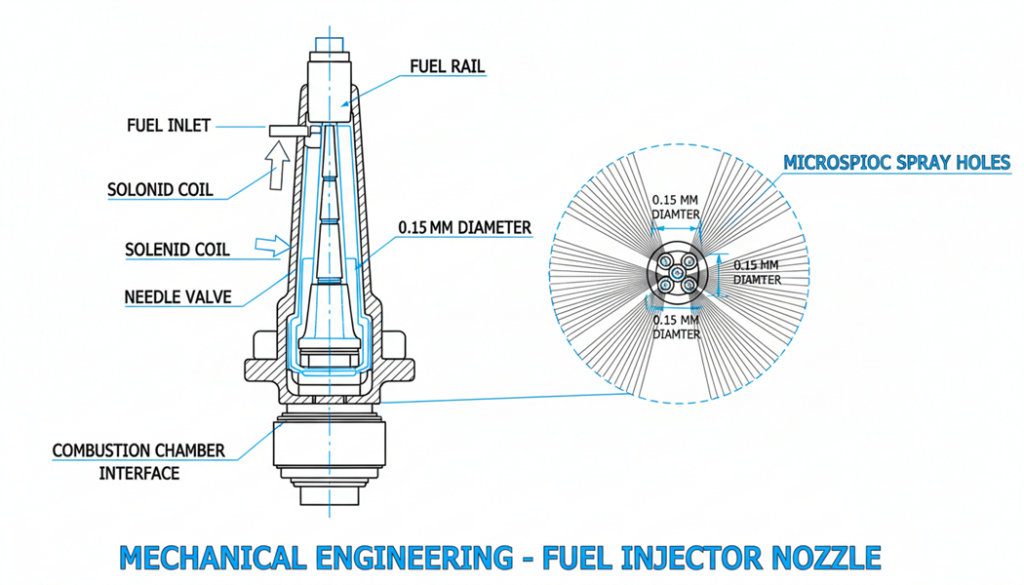
Technical Diagram: High quality 16:9 aspect ratio industrial photography of a fuel injector nozzle, showing the microscopic precision of the spray holes.
Maintenance: ECM Electrolytes vs EDM Fluids
ECM Electrolyte Maintenance
• Continuous filtration to remove sludge
• Temperature control for stability
• pH monitoring
• Corrosion management
Neglect leads to:
• Accuracy loss
• Poor surface finish
• Short electrolyte life
EDM Fluid Maintenance
• Particle filtration
• Fluid aging control
• Fire prevention systems
• Mist and fume extraction
Neglect leads to:
• Unstable sparking
• Increased electrode wear
• Safety risks
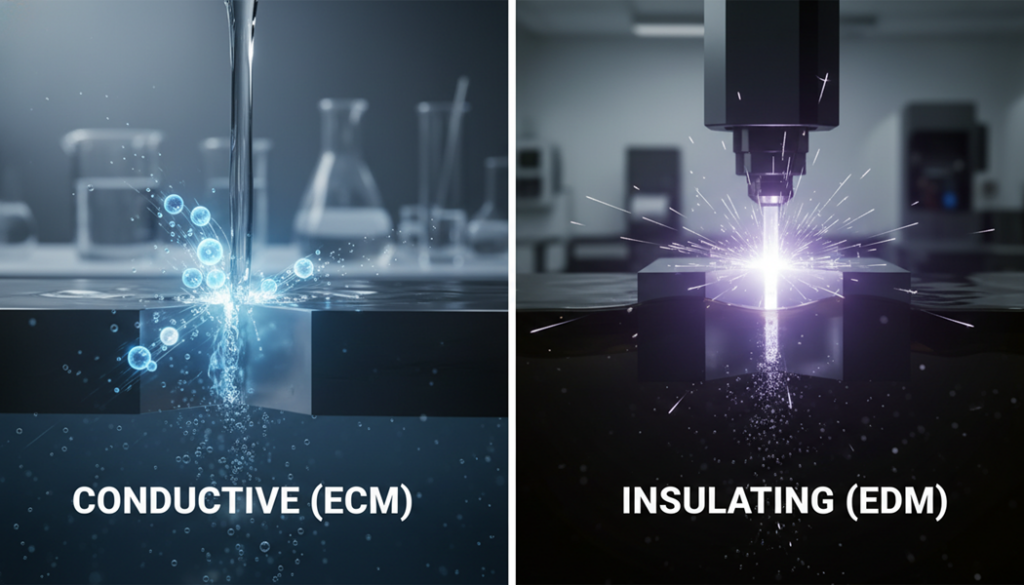
Technical Diagram: High quality 16:9 aspect ratio split infographic: Left side shows “Conductive” with ions flowing (ECM), Right side shows “Insulating” with a contained spark (EDM).
Safety and Environmental Considerations
• ECM electrolytes require chemical handling and regulated disposal
• EDM oils require fire protection and fume control
• Both require proper PPE and process monitoring
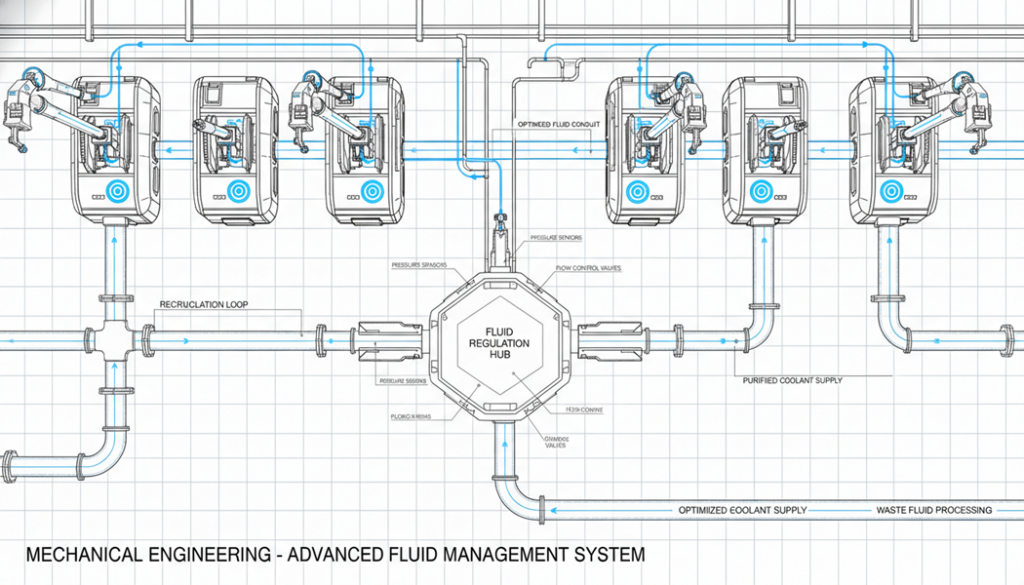
Technical Diagram: High quality 16:9 aspect ratio futuristic manufacturing floor with clean, automated machines, symbolizing the efficiency of optimized fluid management.
Conclusion
The difference between ECM electrolytes and EDM fluids is not minor—it defines how material is removed, how surfaces behave, and how safe and efficient the process is.
• ECM electrolytes enable cold, stress-free machining
• EDM fluids support precision thermal erosion
• The right choice depends on surface requirements, geometry, and production goals
Understanding machining fluids is key to choosing the right machining process.
