
Introduction

For engineering students and seasoned professionals, the internal combustion engine remains a subject of endless fascination and practical application. Among the most efficient and torque-rich designs to gain widespread adoption are those using Turbocharged Direct Injection, commonly known as TDI Engines. These powerplants, especially those popularized by Volkswagen and Audi, represent a significant leap in diesel efficiency and power density. This definitive guide from MechanicalEngineeringCourse.com strips away the jargon to provide a clear, authoritative look at what makes TDI engines tick, how they perform in the real world, and what specific knowledge is needed for their upkeep and analysis.
Key Takeaways
- TDI Engines combine Turbocharging, Direct Injection, and often a Common Rail system to deliver high torque and exceptional fuel efficiency.
- The primary advantages of TDI Engines are superior thermodynamic efficiency (fuel economy) and abundant low-end torque, making them ideal for highway cruising and towing.
- Key disadvantages stem from the complexity and maintenance needs of modern emissions systems, including the DPF, EGR, and SCR components.
- Strict adherence to maintenance schedules, especially using the correct low-SAPS TDI engine oil and timely timing belt changes, is critical for longevity.
- Modern TDI Engines, like the EA288 family, have evolved significantly post-Dieselgate with robust hardware solutions like SCR to meet emissions standards reliably.
What Are TDI Engines and How Does Their Core Technology Work?
The core of understanding TDI Engines lies in deconstructing its name, which reveals the three fundamental technologies that set it apart from other powertrain designs. A TDI engine is a specific type of four-stroke internal combustion engine operating on the Diesel cycle, but its efficiency and power characteristics come from a synergistic combination of key components.
What Defines Turbocharged Direct Injection Technology?
The primary definition of a TDI engine is a diesel engine that integrates a turbocharger with a direct fuel injection system. This combination is what allows for the high power density and efficiency these engines are known for. We can break this down further.
What is Turbocharging?
Turbocharging is a form of forced induction. The system uses the engine’s own exhaust gases to spin a turbine, which in turn spins a compressor wheel. This compressor forces a significantly greater mass of air into the engine’s cylinders than would be possible with natural aspiration. More air means more oxygen is available for combustion, allowing for more fuel to be burned efficiently, which directly translates to higher TDI engine horsepower and torque. The process can be understood through a simple list:
- Exhaust gas exits the cylinder.
- It spins a turbine wheel in the exhaust housing.
- A shaft connects the turbine to a compressor wheel in the intake housing.
- The compressor wheel draws in and pressurizes fresh air.
- This pressurized air (boost) is sent to the cylinders.
What Does Direct Injection Mean for a Diesel Engine?
Direct injection refers to the method of fuel delivery. In this system, fuel is sprayed directly into the main combustion chamber of each cylinder under extremely high pressure. This is a critical distinction from older indirect injection diesel engines, where fuel was injected into a pre-combustion chamber. The precision of direct injection diesel allows for much finer control over the combustion event, leading to better fuel atomization, a more complete burn, and ultimately, improved TDI engine fuel economy and reduced emissions. This precision is managed by a sophisticated engine control unit (ECU).
How Does TDI Work Compared to Standard Diesel Engines?
To fully appreciate the engineering advance of TDI engine technology, one must compare it to its predecessors. The key differentiator is the fuel delivery system, specifically the move towards electronically controlled high-pressure systems.
What is the Role of the Common Rail System?
Most modern TDI engines utilize a Common Rail Diesel (CRD) system. This is a fundamental element of how TDI works. This system decouples fuel pressurization from the injection event, allowing for greater control and efficiency. The process involves a few key steps:
- Fuel Pressurization: A single high pressure fuel pump (HPFP) generates immense pressure, often exceeding 2,000 bar (30,000 psi).
- Pressure Storage: This highly pressurized fuel is stored in a common fuel rail, a shared reservoir that supplies all the injectors.
- Electronic Control: The ECU precisely controls solenoid or piezoelectric injectors. It can command multiple, distinct injection events within a single combustion cycle (pilot, main, and post-injections) to manage noise, power, and emissions.
This level of control, especially when paired with a variable geometry turbocharger, allows the engine to maintain strong power across a wider RPM band, a key element of excellent TDI engine performance.

Why is This System Superior to Older Pump-Düse (PD) or Distributor Pump Systems?
Older Volkswagen TDI engines used either distributor pumps or a more advanced ‘Pumpe-Düse’ (Unit Injector) system. While innovative, the PD system combined the pump and injector into a single unit for each cylinder, driven by the camshaft. This mechanical limitation restricted the flexibility of injection timing and pressure compared to the electronic freedom offered by common rail direct injection. The CRD system’s ability to maintain high pressure independently of engine speed is a primary reason for the smoother, quieter, and cleaner operation of modern diesel engines.
Why Do Engineers Value TDI Engine Advantages Over Gasoline Alternatives?
When performing a direct comparison of TDI vs gasoline direct injection (GDI) engines, engineers focus on thermodynamic principles and real-world application benefits. The advantages of TDI design are rooted in the fundamental properties of the Diesel cycle and the fuel it uses.
What Are the Primary Benefits of a TDI Engine?
The core benefits of TDI engine use can be summarized into two main categories: superior efficiency and exceptional torque delivery. These characteristics make them highly suitable for a range of applications, from passenger cars to light-duty commercial vehicles.
- Superior Thermal Efficiency: The most cited benefit is exceptional TDI fuel efficiency. Diesel fuel has a higher energy density than gasoline, and the high compression ratios of the Diesel cycle extract more mechanical work from this energy. This often results in 25-40% better fuel economy compared to a gasoline engine of similar power output.
- Abundant Low-End Torque: The second major factor is the immediate availability of TDI engine torque. Due to the nature of turbocharging and the long stroke design, TDI engines produce significant pulling power at low engine speeds (typically 1500-2500 RPM). This massive diesel engine torque is ideal for acceleration, towing, and effortless highway cruising.

How Does a High Compression Ratio Impact Longevity and Power?
The high compression ratios required for compression ignition (often 16:1 to 20:1) are the reason TDI engines are built so robustly. The internal components must withstand immense pressures and temperatures, which directly contributes to their reputation for durability and long service life.
What Materials and Design Principles Contribute to TDI Engine Longevity?
To handle the stress, diesel engine components are typically over-engineered compared to their gasoline counterparts. This includes forged crankshafts, stronger connecting rods, and more robust block construction. A professional engineer recognizes that this inherent structural strength is why many high mileage TDI units operate well past 300,000 miles, provided proper TDI maintenance is performed. This durability is a major selling point for those looking at used TDI engines for sale and a key factor in their overall TDI engine lifespan.
How Does Compression Relate to Power Output?
In the Diesel cycle, a higher compression ratio leads to a higher temperature of the compressed air charge. When fuel is injected, it ignites more rapidly and completely, resulting in a more forceful power stroke. This efficient energy conversion is a cornerstone of the engine’s power delivery. The combination of high compression and turbocharging is what allows a relatively small displacement turbo diesel engine to produce torque figures comparable to much larger gasoline engines.
What Are the Key Disadvantages and Common Problems of TDI Engines?
While the efficiency and torque of TDI Engines are significant engineering achievements, they are not without their drawbacks. The complexity required to meet modern emissions standards introduces specific challenges and potential points of failure that prospective owners and technicians must understand. These factors contribute to the perceived disadvantages of TDI engine ownership.
What Are the Major Operational Disadvantages of TDI Engines?
The primary disadvantages of TDI ownership stem from the cost and complexity of their components, particularly the emissions control systems. These systems are essential for modern environmental compliance but add layers of potential maintenance needs.
- Emissions Control System Complexity: To meet strict TDI engine emissions mandates, these powerplants require complex after-treatment systems. This includes the TDI engine DPF (diesel particulate filter) for soot and the TDI engine EGR (exhaust gas recirculation) valve for NOx reduction, along with Selective Catalytic Reduction (SCR) systems on newer models. These add cost, weight, and potential failure points.
- Higher Initial and Repair Costs: The robust construction and high-pressure fuel system components make TDI engines more expensive to manufacture than comparable gasoline engines. This cost is passed on to the consumer. Repair costs can also be higher, as components like high-pressure fuel pumps and injectors are costly to replace.
- Cold Weather Performance: While vastly improved, diesel fuel can still be susceptible to ‘gelling’ in extreme cold, which can clog fuel lines and filters. Engines may also require glow plugs to assist with starting and can take longer to reach optimal operating temperature compared to gasoline counterparts.

What Are the Most Common TDI Engine Problems Engineers Encounter?
Understanding potential failure modes is critical for diagnostics and preventative maintenance. Several well-documented TDI engine common issues are frequently discussed in engineering and service circles.
How Does the DPF Filter TDI System Require Specific Maintenance?
The diesel particulate filter is designed to trap soot from the exhaust. It must periodically clean itself through a process called regeneration, where the trapped soot is burned off at high temperatures. This process requires sustained highway driving. If a vehicle is used only for short trips, the DPF can become clogged, leading to a significant drop in TDI performance, warning lights, and potentially a very expensive replacement. A clogged DPF filter TDI is one of the most frequent TDI problems for urban drivers.
Why is the EGR Valve a Common Failure Point?
The exhaust gas recirculation system routes a portion of exhaust gas back into the intake to cool combustion temperatures and reduce NOx formation. Over time, the EGR valve TDI and its associated cooler can become clogged with carbon and soot. This can cause the valve to stick open or closed, leading to rough idling, poor performance, and failed emissions tests. Cleaning or replacing the EGR system is a common maintenance task.
What is High-Pressure Fuel Pump (HPFP) Failure?
On certain generations of TDI engines, particularly the early common rail models, the high pressure fuel pump was a known weak point. A catastrophic failure of the HPFP can send microscopic metal shavings throughout the entire fuel system. This contaminates the fuel rail, lines, and injectors, often requiring a complete fuel system replacement, which is one of the most expensive potential TDI engine problems.
What are Common Fuel Injector Issues in Diesel Engines?
Because injectors operate under extreme pressure and with very fine tolerances, they are susceptible to wear and contamination. Fuel injector issues diesel engines face can include clogged nozzles, leaking seals, or electronic failure. Symptoms can range from a rough idle and poor fuel economy to excessive smoke from the exhaust. Proper fuel quality and regular filter changes are essential to prevent premature injector failure.
How Should Engineers Approach Routine TDI Engine Maintenance and Service?
Proper, preventative TDI engine maintenance is non-negotiable for maximizing TDI engine longevity and reliability. The precision required by the high-pressure fuel injection system diesel operates on means that fluid quality, component cleanliness, and strict adherence to service schedules are paramount. A systematic approach is required.
What Are the Essential TDI Maintenance Procedures?
A successful maintenance plan for TDI engines focuses on the fluids and filters that protect its most sensitive and expensive components. We will outline the critical service items every owner or technician must track according to manufacturer TDI engine specifications.
Why is the Correct TDI Engine Oil Type Critical?
This is arguably the most important aspect of TDI maintenance. You must always use the manufacturer-specified TDI engine oil type. For modern TDI engines with a DPF, this is typically a low-ash, low-SAPS (Sulphated Ash, Phosphorus, and Sulfur) synthetic oil, such as one meeting VW 507.00 specification. Using the wrong TDI engine oil can introduce contaminants that will permanently poison the DPF and other emissions components, leading to catastrophic failure. Oil and filter changes should be performed strictly according to the recommended TDI engine service intervals.
What is the Importance of Fuel System Integrity?
The fuel system is the lifeblood of the engine. Regular replacement of the fuel filter is essential to protect the high-pressure fuel pump and injectors from water and particulate contamination. Using high-quality diesel fuel from reputable sources can also prevent premature wear. For those in cold climates, using an anti-gel additive in the winter is a wise preventative measure.

What Are the Specific Risks of Neglecting TDI Maintenance?
Ignoring scheduled maintenance on TDI engines is a direct path to expensive and complex failures. The interconnected nature of its systems means a small issue can quickly cascade into a major repair.
What Happens When a Timing Belt Fails?
Most four-cylinder TDI engines use a timing belt to synchronize the crankshaft and camshaft. This is a wear item with a specific replacement interval (e.g., every 80,000-120,000 miles, depending on the model). If the timing belt breaks, the pistons will collide with the valves, causing catastrophic internal engine damage that often requires a complete engine replacement. This is why adhering to the timing belt service interval is absolutely critical.
How Does Carbon Buildup Affect Performance?
Due to the EGR system and crankcase ventilation, the intake manifold on TDI engines can become severely restricted with carbon buildup over time. This chokes the engine of air, leading to a gradual loss of power, reduced fuel economy, and sluggish performance. Periodic intake manifold cleaning is a necessary service for many high mileage TDI vehicles to restore their original performance levels.
How Did the Dieselgate Scandal Influence Modern TDI Engine Technology?
The 2015 Dieselgate scandal, involving Volkswagen’s use of ‘defeat devices’ to manipulate emissions testing, fundamentally reshaped the public perception and future development of VW diesel engines and Audi diesel models. The event triggered a massive TDI engine recall and forced a significant engineering shift across the entire automotive industry, particularly impacting the trajectory of diesel engine technology.
What Was the Technical Nature of the ‘Defeat Device’?
The ‘defeat device’ was not a physical component but rather a sophisticated algorithm within the Engine Control Unit (ECU). This software was the core of the dieselgate scandal and its impact on TDI engines.
How Did the Software Differentiate Between Testing and Real-World Driving?
The ECU software was programmed to recognize the specific parameters of a laboratory emissions test. It monitored inputs such as steering wheel angle, vehicle speed, and duration of operation. When the software detected a testing cycle (i.e., no steering input, specific speed patterns), it would switch the engine to a special low-power, high-emissions-control mode. In this mode, systems like the EGR were operated at maximum capacity to reduce NOx emissions to legally compliant levels. However, once the software detected normal road driving, it would switch back to a different map that prioritized TDI engine performance and fuel economy, allowing NOx emissions to rise to levels far exceeding legal limits.
What Engineering Solutions Replaced Defeat Devices for Emissions Control?
In the wake of the scandal, the industry was forced to implement more robust, hardware-based solutions to manage TDI emissions legitimately. This accelerated the adoption and refinement of Selective Catalytic Reduction (SCR) systems across a wider range of diesel vehicles.
How Does Selective Catalytic Reduction (SCR) Improve NOx Management?
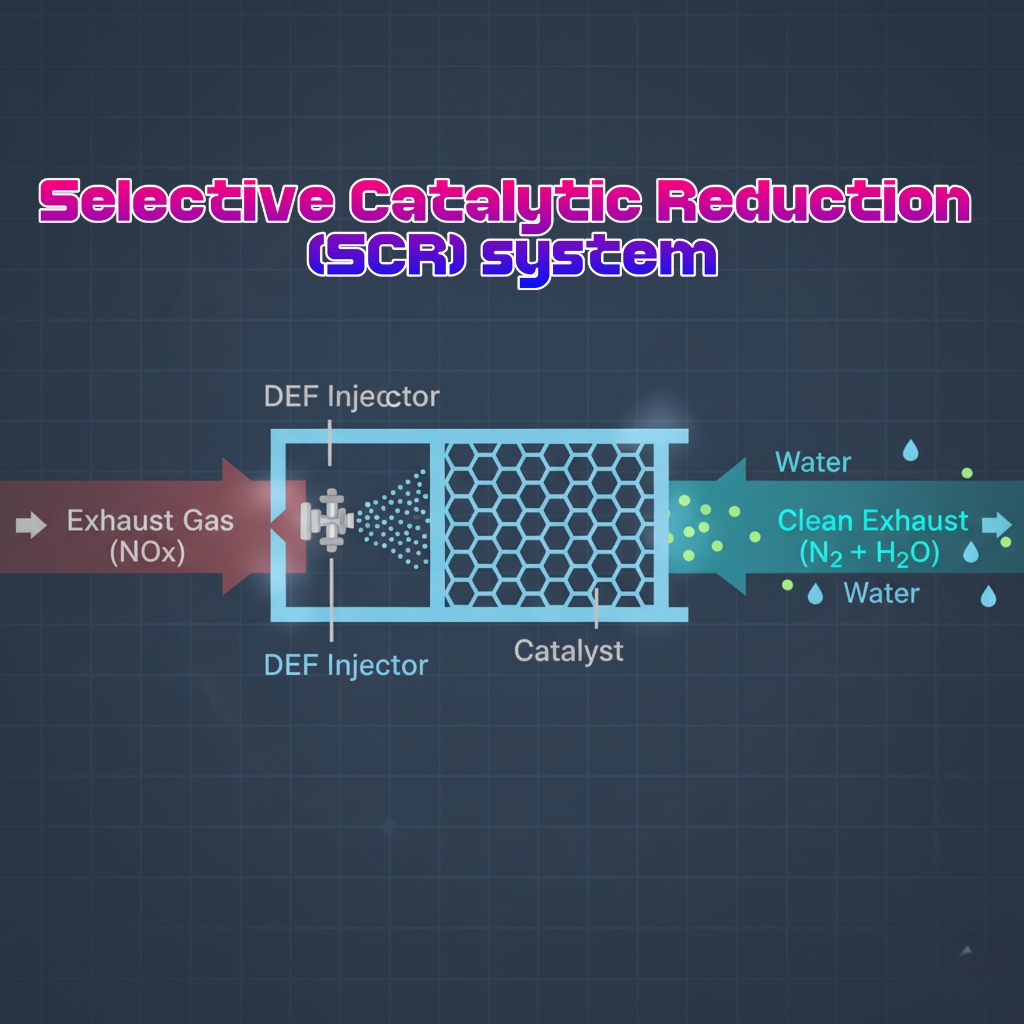
SCR is an advanced active emissions control system. It works by injecting a liquid reducing agent, typically automotive-grade urea known as Diesel Exhaust Fluid (DEF), into the exhaust stream. This fluid is atomized and mixes with the hot exhaust gases in a special catalytic converter.
What is the Chemical Reaction in an SCR System?Inside the SCR catalyst, the urea in the DEF reacts with the harmful nitrogen oxides (NOx). The chemical reaction converts the NOx into diatomic nitrogen (N2) and water (H2O), two harmless components of the air we breathe. This system is now standard on most contemporary turbocharged diesel engine platforms, ensuring compliance while attempting to retain the core benefits of TDI engine design.
What Was the Long-Term Impact on TDI Engine Development?
The history of TDI development was permanently altered. While the technology itself was sound, the scandal accelerated the industry’s shift towards electrification. For students of mechanical engineering, this era provides a powerful case study in ethical engineering, the challenges of regulatory compliance, and the rapid evolution of modern diesel engines under immense external pressure.
What Are the Best TDI Engine Models for Performance and Longevity?
When analyzing TDI engine reviews and historical data, certain engine families and specific codes stand out for their blend of performance, efficiency, and TDI engine reliability. For engineers and enthusiasts, knowing these distinctions is key to selecting a dependable powerplant, whether for a project car or a daily driver. The discussion often centers on the 2.0L four-cylinder and 3.0L V6 units.
Which Specific TDI Engine Models Have the Best Reputation?
The reputation of best TDI engine models is often tied to their specific generation and the technology they employ. The transition from Pumpe-Düse to Common Rail and the evolution of emissions systems are critical milestones.
What are the Characteristics of the EA189 Engine Family?
The 2.0L EA189 engine was a common rail engine that was at the center of the Dieselgate issue. Pre-fix, these engines were known for excellent power and fuel economy. Post-fix, some owners reported slight changes in performance. Mechanically, they are generally considered robust, but they are the generation most associated with potential HPFP issues and are subject to the emissions recall. Despite the controversy, a well-maintained EA189 can be a reliable unit.
What Improvements Did the EA288 Engine Bring?
The EA288 is the successor to the EA189 and was designed from the ground up to be compliant with stricter emissions standards. These TDI engines feature an integrated exhaust manifold, improved thermal management, and a more robust emissions system that includes SCR technology. The EA288 is generally considered one of the best TDI models for reliability in the modern era, having learned the lessons from its predecessor.
Are the V6 TDI Engines a Good Choice?
The larger 3.0L V6 TDI engines, found in many high-end Audi TDI and Volkswagen models, are renowned for their incredible smoothness and massive torque output. They showcase the peak of TDI performance, often producing over 400 lb-ft of torque. While more complex and expensive to maintain, they are generally considered very durable and offer a premium driving experience.

How Do Turbocharger Choices Affect TDI Performance Tuning?
For those interested in TDI performance tuning, the TDI engine turbocharger is a central component. The evolution of turbo technology has had a direct impact on both stock performance and tuning potential.
What is a Variable Geometry Turbocharger (VGT)?
A key piece of technology is the variable geometry turbocharger (VGT). Unlike a traditional turbo with a fixed housing, a VGT has adjustable vanes inside the turbine housing. At low RPM, the vanes close to narrow the path for exhaust gas, increasing its velocity and spinning the turbine up quickly to reduce lag. At high RPM, the vanes open to maximize flow and prevent over-boosting. This technology is a key reason for the broad, flat torque curve characteristic of TDI engines. A detailed turbocharger explained diagram would show these moving vanes clearly.
What is the Role of the Intercooler in High-Performance TDIs?
The intercooler function is essential for any turbocharged setup, especially in tuned TDI engines. The process of compressing air heats it significantly. Hot air is less dense, meaning it contains less oxygen per unit of volume, which limits power potential. An intercooler is an air-to-air or air-to-water radiator placed between the turbocharger and the engine’s intake. It cools the compressed air charge, making it denser. This dense, cool air allows for a more powerful and efficient combustion event. Upgrading the intercooler is a common step in TDI engine tuning to support higher boost levels.
How Do TDI Engines Compare to Other Modern Powertrains?
In the current automotive landscape, an engineer must be able to compare the strengths and weaknesses of various powertrain technologies. Evaluating TDI Engines against their direct competitors, like gasoline direct injection (TSI) and hybrid systems, provides a clearer picture of their ideal applications and operational trade-offs.
How Does a TDI Engine Compare to a Gasoline Direct Injection (GDI/TSI) Engine?
The most direct comparison for a Volkswagen TDI is often its gasoline counterpart, the TSI (Turbocharged Stratified Injection). This TDI vs TSI debate highlights fundamental differences in combustion and fuel type.
- Fuel Economy: The primary advantage for the TDI remains superior TDI engine fuel economy, especially in highway driving, due to higher energy density fuel and better thermal efficiency.
- Torque and Power Delivery: The TDI provides significantly more low-end torque, making it feel more effortless during acceleration from a stop or when climbing hills. The TSI engine, conversely, typically has a higher TDI engine horsepower rating and a wider RPM range, often feeling more responsive at higher engine speeds. The distinct TDI engine sound is also a noticeable difference.
- Complexity and Maintenance: Both systems are complex. However, the TDI’s emissions systems (DPF, EGR, SCR) add layers of maintenance not present on the TSI. The TSI can have its own issues, such as carbon buildup on intake valves. The TDI vs gasoline debate often comes down to driving style and priorities.

How Do TDI Engines Compare to Modern Hybrid Systems?
The comparison with hybrid powertrains is more nuanced, as their strengths are in different areas. A hybrid system combines an internal combustion engine with one or more electric motors.
Where Do Hybrids Excel Over TDI Engines?
Hybrids hold a distinct advantage in city driving and stop-and-go traffic. The electric motor can handle low-speed propulsion, and regenerative braking recaptures energy that would otherwise be lost. In this environment, a hybrid will almost always achieve better fuel economy than a TDI. They also tend to be quieter and smoother at low speeds.
Where Do TDI Engines Still Hold an Advantage?
For long-distance, high-speed highway cruising, the TDI engine often remains more efficient. At a constant speed, the diesel engine can operate in its most efficient range, and the benefits of the hybrid’s electric assistance are minimized. Furthermore, the substantial TDI torque makes diesel a superior choice for towing heavy loads, an area where many hybrid systems are not as capable.

Conclusion
The engineering behind TDI Engines represents a fascinating intersection of thermodynamics, precision fluid mechanics, and advanced electronic control. While they demand a higher level of specialized knowledge for maintenance compared to their gasoline counterparts, the rewards—exceptional fuel economy and substantial pulling power—are clear advantages for the professional engineer or efficiency-minded driver. The evolution of these powerplants, shaped by both innovation and regulation, provides invaluable lessons.
At MechanicalEngineeringCourse.com, we believe that deep theoretical knowledge, such as understanding the various diesel engine components and the principles of the fuel injection system diesel operates on, is what separates a good technician from an exceptional engineer. Continue your study of these powerful machines to build your career upon a foundation of practical, expert understanding.

Frequently Asked Questions
Are TDI engines reliable in the long term?
Yes, TDI engines are generally considered very reliable and are known for their longevity, often exceeding 300,000 miles. Their robust construction is designed to handle high compression. However, this TDI engine reliability is heavily dependent on strict adherence to maintenance schedules, especially using the correct oil and servicing the timing belt and fuel system at recommended intervals.
What is the life expectancy of a TDI engine?
The life expectancy of well-maintained TDI engines is one of their strongest attributes. It is not uncommon for these powerplants to last for 300,000 to 500,000 miles or more. The key to achieving this TDI engine lifespan is consistent, preventative maintenance, addressing minor issues before they become major, and using high-quality fluids and parts.
Is a TDI engine expensive to maintain?
Routine maintenance costs for TDI engines can be slightly higher than for comparable gasoline engines due to more expensive specialized oil and fuel filters. However, major repair costs, particularly for the high-pressure fuel system or emissions components, can be significant. Proactive maintenance is the best strategy to manage the long-term ownership costs of TDI engines.
Why did Volkswagen stop selling TDI engines in the US?
Volkswagen stopped selling new passenger cars with TDI engines in the United States primarily as a result of the 2015 ‘Dieselgate’ emissions scandal. The immense cost of the subsequent recalls, fines, and buybacks, combined with a strategic shift towards vehicle electrification, led the company to phase out its diesel offerings in the North American market.
What is the main advantage of a TDI engine?
The main advantage of TDI engines is their combination of high fuel efficiency and massive low-end torque. This makes them exceptionally good for long-distance highway driving, where they can achieve impressive mileage, and for tasks like towing, where their pulling power is a significant benefit over most gasoline engines.

I absolutely love your blog and find nearly all of
your post’s to be exactly what I’m looking for. can you offer guest writers to write content
to suit your needs? I wouldn’t mind creating a post or elaborating on a few of the subjects you write regardihg here.
Again, awesome blog!